Sword Fern Care & Identification Guide
The magnificent Sword Fern (Nephrolepis biserrata) is a robust and majestic relative of the Boston Fern, characterized by its exceptionally long, erect, and leathery green fronds. Commonly found in tropical wetlands, swamp margins, and secondary forests, it is highly prized by landscape designers for its structural elegance. Unlike its delicate indoor cousins, the Sword Fern exhibits higher resilience and can adapt to larger container environments or semi-shaded garden beds, provided it receives high humidity, consistent moisture, and highly organic, well-draining soil.





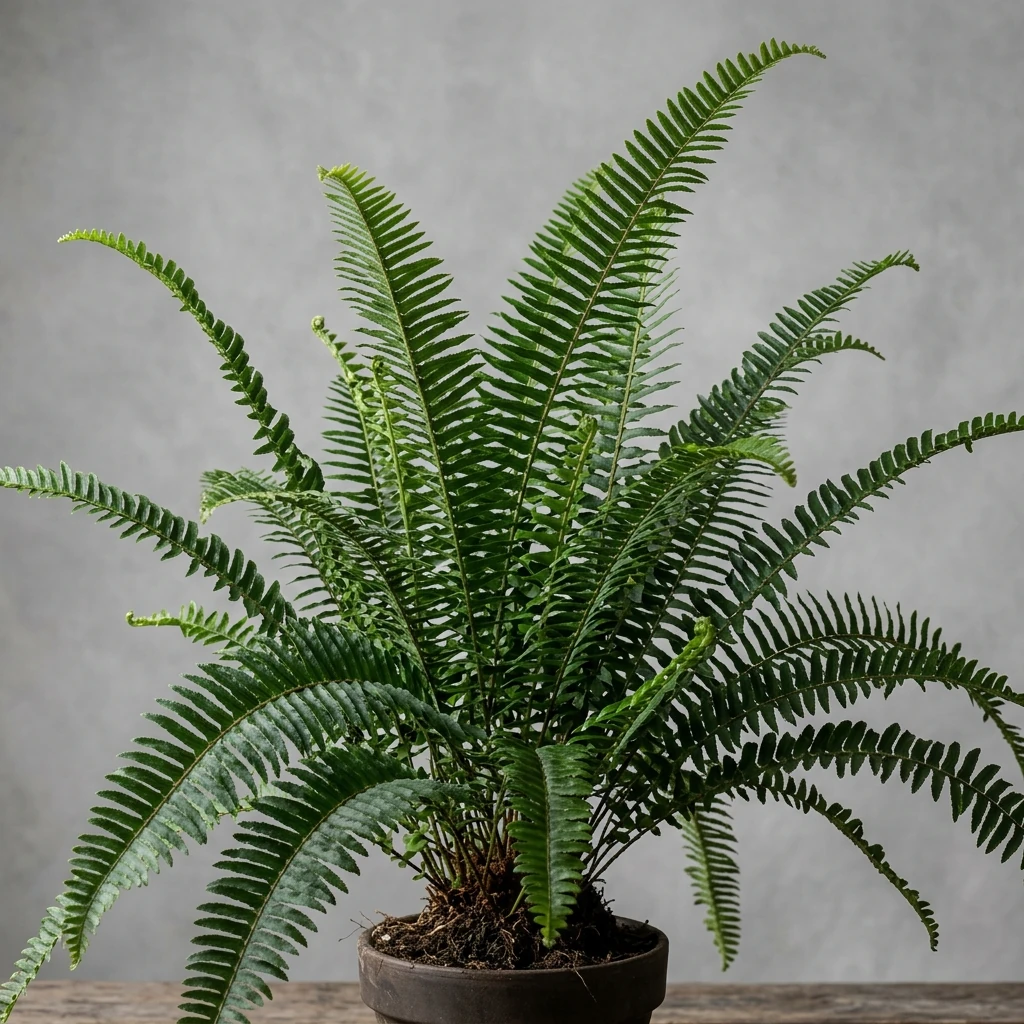
How to Identify Sword Fern
Identify Sword Fern immediately by its elegant and distinctive frond structure. Native to humid forest floors or mossy rocks, it features exquisite leaf patterns optimized to thrive under dappled canopy light.
-
✓
Distinctive Features: Bold, leathery, and erect sword-like fronds that can grow up to 4-5 feet long under optimal conditions.
-
✓
Typical Coloration: Vibrant lime-green to deep emerald, with rougher, darker brown scales on the stalks.
-
✓
Potential Confusions: Often confused with Boston Fern, but distinguished by its much larger size, stiffer erect growth, and tougher leaf texture.
11-Step Professional Care Guide
💧 【Watering & Moisture】 Water regularly to keep the soil consistently damp but never saturated. Because of its large size, it transpires water quickly; check moisture levels weekly.
☀️ 【Sunlight & Exposure】 Thrives in bright, filtered indirect light. Can tolerate slightly more morning sun than delicate ferns, but afternoon direct sun will scorch the leaves.
🪴 【Ideal Soil Mix】 Prefers a highly rich organic substrate. Blend 40% peat, 30% perlite, and 30% organic compost or composted pine bark to ensure massive nutrient holding and drainage.
🌡️ 【Temperature & Ventilation】 Ideal temperature range is 16°C to 27°C (61°F - 80°F). Can tolerate slightly higher temperatures than Boston Fern, but is sensitive to frost below 8°C (46°F).
✂️ 【Pruning & Grooming】 Cut away old, dry, or damaged large fronds at the base with sharp, clean shears to maintain a strong, architectural silhouette and promote new erect shoots.
🧪 【Fertilization】 Feed once every 4-6 weeks during spring and summer with a balanced organic liquid fertilizer diluted to half strength to support its large frond volume.
🏺 【Potting & Container】 Needs large, heavy containers to prevent the plant from tipping over as the massive fronds grow. Ensure excellent drainage and repot every 1-2 years.
🌱 【Propagation】 Propagate by separating the robust crowns or dividing the dense root ball in early spring. Ensure each division has a solid root system and dynamic growing points.
🐛 【Common Pests】 Scale insects and mealybugs can occasionally settle along the thick midribs of the fronds. Wipe them off with a cotton swab dipped in rubbing alcohol.
🦠 【Common Diseases】 Highly susceptible to root rot if soil is allowed to stay swampy and oxygen-depleted. Maintain porous soil and avoid clay pots without drainage holes.
🎓 【Botanist Advice】 Given its grand size, the Sword Fern is best displayed as a floor plant or in large patio containers. Keep it in a warm, sheltered spot away from drying winds.
Frequently Asked Questions
Q: How large can the Sword Fern actually grow?
A: Under warm, humid, and well-watered conditions, the erect fronds of Nephrolepis biserrata can easily reach 4 to 5 feet in length, making it a spectacular focal point.
Q: Can I grow the Sword Fern outdoors on a patio?
A: Yes, it thrives in warm, shaded patios or balconies. Ensure it is protected from harsh midday winds, which can tear the fronds, and bring it indoors if temperatures drop near freezing.
Q: Is the Sword Fern toxic to domestic animals?
A: No, Nephrolepis biserrata is non-toxic and perfectly safe for cats and dogs, offering peace of mind for pet owners.
Q: Why are the tips of my Sword Fern leaves drying out?
A: Dry tips are a classic indicator of underwatering or low atmospheric humidity. Ensure consistent moisture and mist the plant or place it in a humid area.
Keep Your Sword Fern Silky Green & Growing!
Use the Plant AI App to identify ferns immediately from your camera, diagnose crispy leaves, set precise moisture & watering alarms, and ask our AI Botanist expert care questions.