Southern Maidenhair Care & Identification Guide
The magnificent Southern Maidenhair (Adiantum capillus-veneris), also known as the Venus Hair Fern, is a legendary and elegant species celebrated since antiquity for its delicate, fan-shaped green leaflets and hair-thin, glossy black stalks. Commonly found clinging to moist limestone cliffs, alkaline dripping grottos, and shaded river banks, it thrives in calcareous environments. Extremely graceful, the Southern Maidenhair requires consistent soft moisture, alkaline peaty soil, high humidity, and protection from drying indoor drafts.





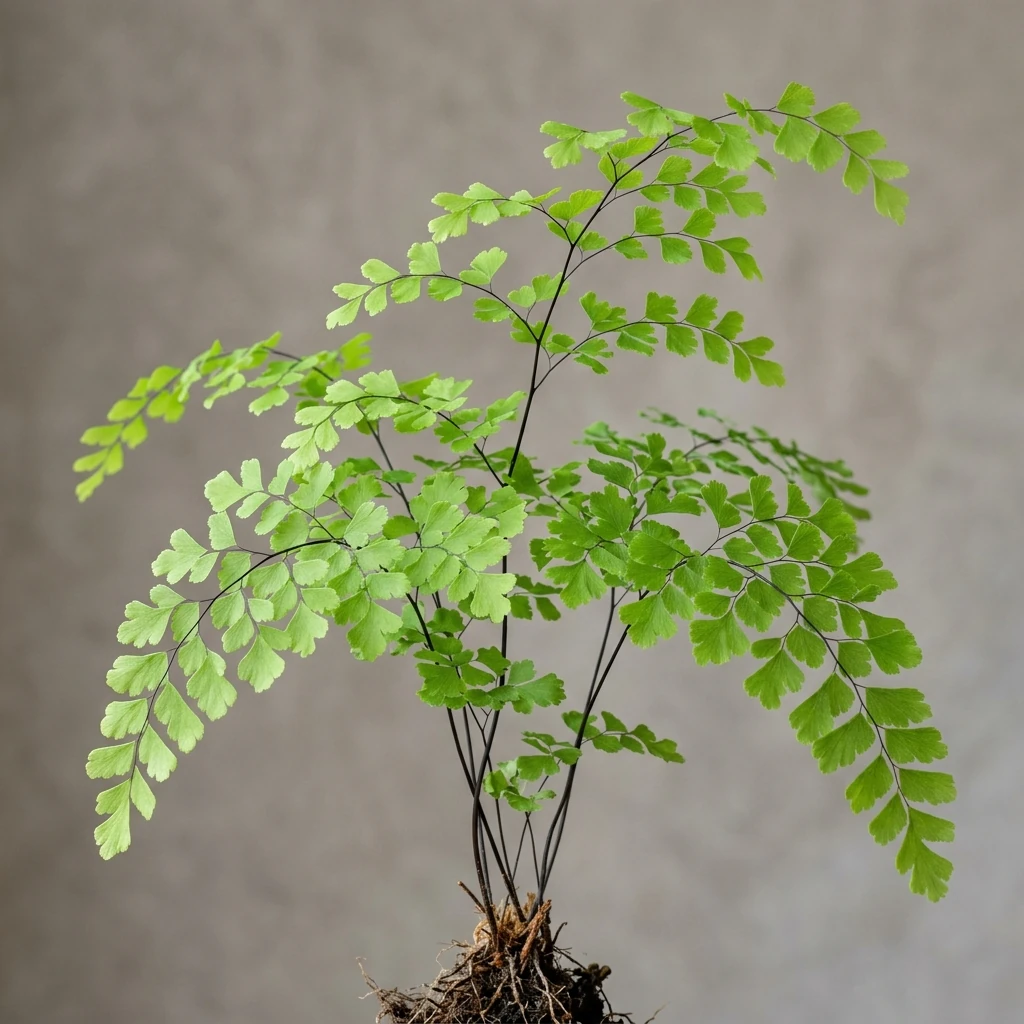
How to Identify Southern Maidenhair
Identify Southern Maidenhair immediately by its elegant and distinctive frond structure. Native to humid forest floors or mossy rocks, it features exquisite leaf patterns optimized to thrive under dappled canopy light.
-
✓
Distinctive Features: Delicate, cascading fan-shaped leaflets suspended on exceptionally thin, glossy black wiry stalks.
-
✓
Typical Coloration: Lively, bright lime-green leaflets with a delicate, translucent texture.
-
✓
Potential Confusions: Similar to Delta Maidenhair, but features more fan-shaped (rather than triangular) leaflets and a preference for limestone soils.
11-Step Professional Care Guide
💧 【Watering & Moisture】 Keep the soil consistently damp. Water immediately when the top 0.5 inches of soil feels dry. Never let the root ball go dry.
☀️ 【Sunlight & Exposure】 Requires bright, filtered indirect light. Place in a humid bathroom or kitchen windowsill. Avoid direct noon sun.
🪴 【Ideal Soil Mix】 Prefers alkaline, calcareous soil. Blend 50% peat moss, 30% perlite, 20% organic compost, and add a tablespoon of dolomitic limestone.
🌡️ 【Temperature & Ventilation】 Ideal temperature range is 15°C to 24°C (59°F - 75°F). Keep completely away from dry drafts and air conditioning.
✂️ 【Pruning & Grooming】 Trim old or shriveled fronds at the soil level to encourage new coiled green fiddleheads to sprout from the crown.
🧪 【Fertilization】 Feed once every 6 weeks from spring to early autumn with an organic liquid fertilizer diluted to one-quarter strength. Highly sensitive to chemical salts.
🏺 【Potting & Container】 Double-potting is excellent, allowing you to surround the inner plastic pot with damp peat to raise the humidity level naturally.
🌱 【Propagation】 Propagated by root division in spring. Gently divide the dense rootball, ensuring active crowns and roots are in each new pot.
🐛 【Common Pests】 Watch out for spider mites and scale insects. Maintain high humidity above 55% to keep spider mites away.
🦠 【Common Diseases】 Highly susceptible to root rot and crown rot if soil is compacted. Porous limestone soil is essential.
🎓 【Botanist Advice】 Known as 'Venus Hair', this fern has a historical reputation for herbal uses. It thrives when placed on a pebble tray filled with water to boost local humidity.
Frequently Asked Questions
Q: Why is it called the Venus Hair Fern?
A: The name comes from its exceptionally thin, delicate, and glossy black leaf stems (stipes), which resemble shiny, black, wavy strands of hair.
Q: Does the Southern Maidenhair need limestone in the soil?
A: Yes! In the wild, it clings to wet limestone rocks. Adding a little dolomitic lime or crushed shells to its peaty potting mix helps keep the pH slightly alkaline, which it loves.
Q: Is the Southern Maidenhair Fern safe for cats and dogs?
A: Yes, Adiantum capillus-veneris is completely non-toxic and pet-safe.
Q: Why is my Southern Maidenhair shriveling and dying?
A: This is almost always caused by low humidity (dry indoor air) or dry soil. Keep the soil damp, shield it from drafts, and place it on a humid pebble tray.
Keep Your Southern Maidenhair Silky Green & Growing!
Use the Plant AI App to identify ferns immediately from your camera, diagnose crispy leaves, set precise moisture & watering alarms, and ask our AI Botanist expert care questions.