Soft Shield Fern Care & Identification Guide
The magnificent Soft Shield Fern (Polystichum setiferum) is a highly spectacular evergreen cultivar, beloved for its exceptionally soft, silky-textured overlapping pinnules and symmetrical vase-shaped rosette. Originating from damp hedgerows and wooded slopes in Europe, its deeply divided, arching fronds form a grand, structural dome. Extremely popular, it is highly suited for shaded garden borders, requiring filtered indirect light, consistent moisture, and highly organic, well-draining soil.





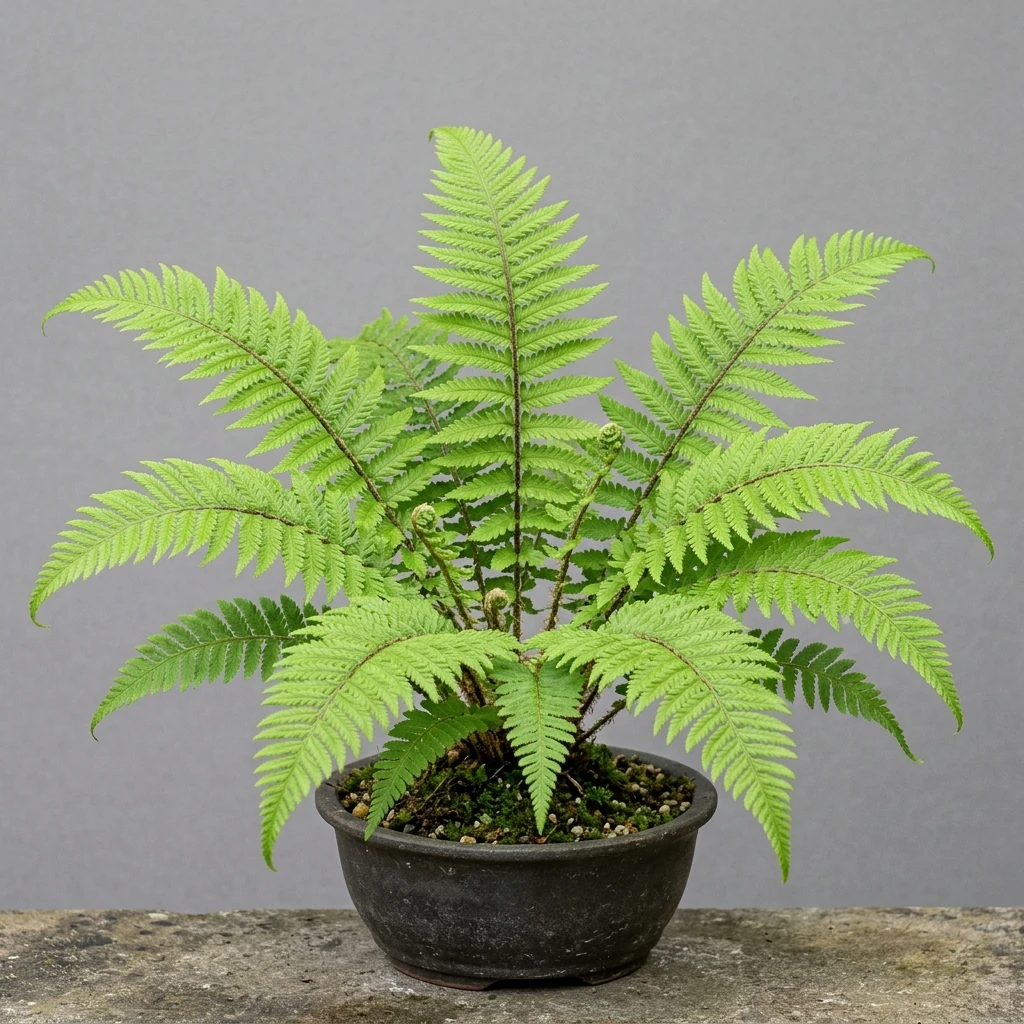
How to Identify Soft Shield Fern
Identify Soft Shield Fern immediately by its elegant and distinctive frond structure. Native to humid forest floors or mossy rocks, it features exquisite leaf patterns optimized to thrive under dappled canopy light.
-
✓
Distinctive Features: Twice-divided, soft, silky-textured arching fronds that form a highly symmetrical vase-like crown.
-
✓
Typical Coloration: Rich, deep grass-green, with sturdy stalks covered in dense golden-brown scales.
-
✓
Potential Confusions: Similar to Christmas Fern, but distinguished by its much softer, twice-divided leaves and shaggy scaled stems.
11-Step Professional Care Guide
💧 【Watering & Moisture】 Keep the soil consistently moist but never soggy. Water thoroughly when the top 0.5 inches of the soil feels slightly dry to the touch.
☀️ 【Sunlight & Exposure】 Requires partial shade to deep forest shade. Direct afternoon sun will instantly bleach and destroy the soft silky leaf texture.
🪴 【Ideal Soil Mix】 Prefers a rich, loose, slightly acidic leaf-mold substrate. Combine 50% composted leaf mold, 35% peat, and 15% perlite or sand.
🌡️ 【Temperature & Ventilation】 Cold-hardy (USDA Zone 5-9). Thrives in warm, humid summer climates. Indoors, keep away from warm air vents.
✂️ 【Pruning & Grooming】 Cut away old, winter-damaged outer leaves in early spring to keep the symmetrical central rosette looking tidy.
🧪 【Fertilization】 Feed once every 6 weeks from spring to summer with a highly diluted balanced organic fertilizer to support new frond development.
🏺 【Potting & Container】 Terracotta or plastic pots with drainage are suitable. Enjoys shallow, wide pots that allow its creeping rhizomes to spread.
🌱 【Propagation】 Propagated by carefully dividing mature crowns in early spring. Handle the delicate rootball with care and protect from drying breezes.
🐛 【Common Pests】 Generally pest-resistant. Watch for occasional scale insects along the leaf stems. Wipe off manually with neem oil.
🦠 【Common Diseases】 Low risk of disease, but root rot can occur if soil is heavy and waterlogged. Flawless drainage is key.
🎓 【Botanist Advice】 The Soft Shield Fern is highly prized for its soft texture. Plant it in a shaded garden border or near a patio where its magnificent silhouette can be easily admired!
Frequently Asked Questions
Q: Why does my Soft Shield Fern feel so soft?
A: This is a natural characteristics! Unlike standard rigid holly ferns, Polystichum setiferum has exceptionally fine, twice-divided, and overlapping pinnules with soft silky textures.
Q: How cold-hardy is the Soft Shield Fern?
A: It is extremely cold-hardy! Polystichum setiferum can survive winters down to Zone 5 (approx. -20°F or -29°C) under snow cover, maintaining its evergreen leaves.
Q: Is the Soft Shield Fern safe for pets?
A: Yes, it is completely non-toxic and pet-safe for cats, dogs, and all other pets.
Q: What causes the leaves of my fern to droop?
A: Drooping fronds are usually caused by dry soil or low humidity. Water the soil thoroughly and place the pot in a humid area to help the fronds bounce back.
Keep Your Soft Shield Fern Silky Green & Growing!
Use the Plant AI App to identify ferns immediately from your camera, diagnose crispy leaves, set precise moisture & watering alarms, and ask our AI Botanist expert care questions.