Shaggy Shield Fern Care & Identification Guide
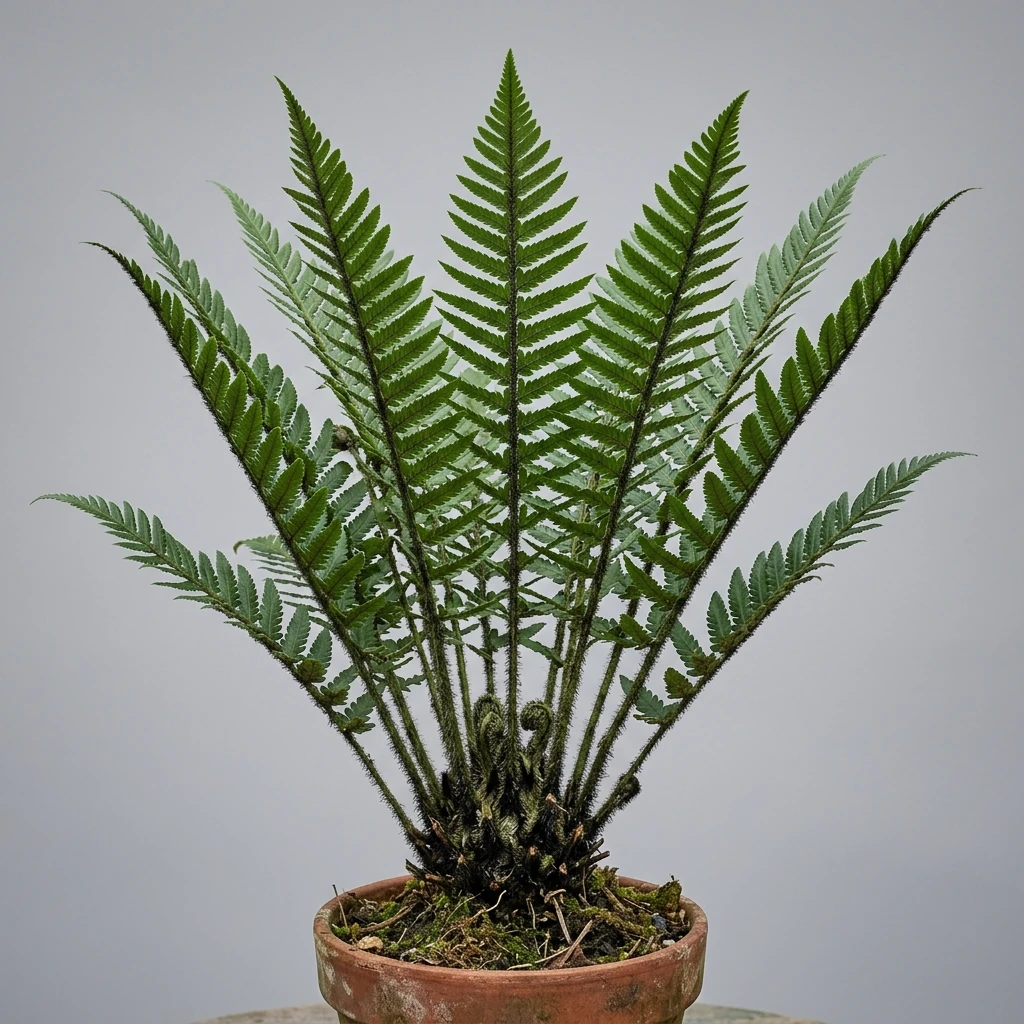
The magnificent Shaggy Shield Fern (Dryopteris atrata), also known as the Black Wood Fern, is an exceptionally unique and highly spectacular species celebrated for its dramatic, near-black chaffy scales. Native to damp rocky forests across East Asia, its upright, shuttlecock-like fronds feature sturdy stalks covered in dense, dark charcoal-colored scales that resemble hairy shags. This dark, textured aesthetic makes it highly prized by landscape designers. It requires bright indirect light, consistent dampness, and free-draining peaty organic soil.





How to Identify Shaggy Shield Fern
Identify Shaggy Shield Fern immediately by its elegant and distinctive frond structure. Native to humid forest floors or mossy rocks, it features exquisite leaf patterns optimized to thrive under dappled canopy light.
-
✓
Distinctive Features: Upright, vase-shaped shuttlecock of bright green fronds with stems covered in dense, near-black shaggy scales.
-
✓
Typical Coloration: Bright chartreuse new leaves contrasting sharply with dark charcoal scales, maturing to rich forest green.
-
✓
Potential Confusions: Similar to Male Fern, but instantly distinguished by the near-black (rather than golden-brown) color of its dense stem scales.
11-Step Professional Care Guide
💧 【Watering & Moisture】 Keep soil consistently damp. Water thoroughly when the top 0.5 inches of soil feels dry. Never let the root ball go dry.
☀️ 【Sunlight & Exposure】 Requires bright, filtered indirect light or partial shade to stimulate the beautiful color contrast of its dark scales.
🪴 【Ideal Soil Mix】 Prefers a highly organic, porous woodland soil. Combine 50% peat moss, 30% perlite, and 20% organic compost or vermiculite.
🌡️ 【Temperature & Ventilation】 Cold-hardy (USDA Zone 6-9). Thrives in warm, humid summer climates. Indoors, keep away from warm air vents.
✂️ 【Pruning & Grooming】 Trim old, dry outer fronds in late winter to keep the symmetrical dome neat and encourage colorful new growth in spring.
🧪 【Fertilization】 Feed once every 6 weeks from spring to early autumn with an organic liquid fertilizer diluted to half strength to fuel foliage growth.
🏺 【Potting & Container】 Looks stunning in decorative ceramic planters that highlight the dark, shaggy stems. Ensure excellent drainage.
🌱 【Propagation】 Propagated easily by dividing the mature root crown in spring, or by harvesting and sowing its spores.
🐛 【Common Pests】 Scale insects can occasionally settle along the rough, hairy midribs. Remove manually with insecticidal soap.
🦠 【Common Diseases】 Low risk of disease, but root rot can occur if soil is compacted and soggy. Porous soil is essential.
🎓 【Botanist Advice】 The Shaggy Shield Fern's black stems add gorgeous texture to shaded gardens. Plant it in a spot where it receives soft morning dappled light to highlight the dark scales!
Frequently Asked Questions
Q: Why is it called the Shaggy Shield Fern?
A: Because of its unique stems! The leaf stalks and main stem are densely covered in dark charcoal-colored, hair-like scales that resemble a hairy, shaggy coat.
Q: How cold-hardy is the Shaggy Shield Fern?
A: It is moderately hardy. It can survive in outdoor shaded gardens down to USDA Zone 6 (approx. -10°F or -23°C) under snow cover, maintaining its evergreen leaves.
Q: Is the Shaggy Shield Fern safe for pets?
A: Yes, Dryopteris atrata is completely non-toxic and pet-safe for cats, dogs, and all other pets.
Q: Why are my fern's fronds turning pale yellow?
A: Pale yellow fronds are usually caused by excessive direct sunlight or overwatering. Move it to a shaded, indirect spot and ensure its soil is free-draining.
Keep Your Shaggy Shield Fern Silky Green & Growing!
Use the Plant AI App to identify ferns immediately from your camera, diagnose crispy leaves, set precise moisture & watering alarms, and ask our AI Botanist expert care questions.