Ridley's Staghorn Care & Identification Guide
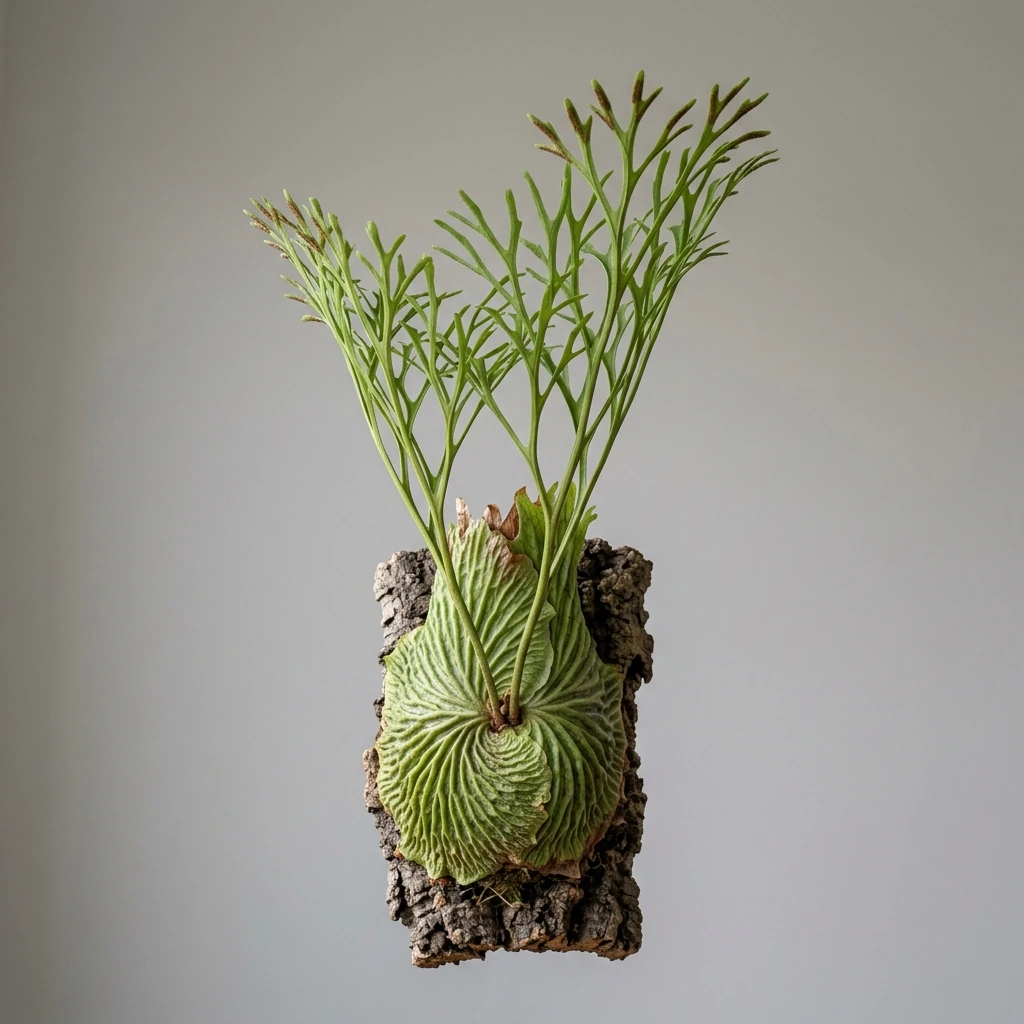
The magnificent Ridley's Staghorn (Platycerium ridleyi) is an exceptionally rare, highly spectacular, and prized tropical epiphyte, celebrated for its upright, deer-antler shaped fertile fronds and beautifully ribbed spiderweb nest fronds. Originating from high forest canopies in Southeast Asia, its deeply ribbed sterile fronds form a tight, rounded nest that clings closely to branches, while its fertile fronds stand upright like branching antlers. It requires bright filtered light, excellent air circulation, highly open chunk medium, and absolute protection from cold drafts.





How to Identify Ridley's Staghorn
Identify Ridley's Staghorn immediately by its elegant and distinctive frond structure. Native to humid forest floors or mossy rocks, it features exquisite leaf patterns optimized to thrive under dappled canopy light.
-
✓
Distinctive Features: Upright, deer-antler like fertile fronds topped with spoon-shaped spore lobes, and deeply ribbed spiderweb nest fronds.
-
✓
Typical Coloration: Lively bright green foliage contrasting with the tight, rounded green to tan base shield.
-
✓
Potential Confusions: Similar to Coronarium, but instantly distinguished by its upright, deer-antler like fertile fronds and rounded spiderweb base.
11-Step Professional Care Guide
💧 【Watering & Moisture】 Requires careful watering. Keep the moss backing damp but never soggy. Water using purified or rainwater only. Dislikes stagnant roots.
☀️ 【Sunlight & Exposure】 Requires bright, filtered indirect light. It grows high in the canopy; avoid deep shade or hot direct midday sun.
🪴 【Ideal Soil Mix】 Epiphytic. Best grown mounted on cork or cedar planks with premium long-fiber sphagnum and fine charcoal chunks to ensure massive air gaps.
🌡️ 【Temperature & Ventilation】 Strictly tropical warmth: 18°C to 30°C (64°F - 86°F). Highly sensitive to cold; protect strictly from drafts and frost.
✂️ 【Pruning & Grooming】 Cut away old, dry outer fronds in early spring. Clean the upright antler fronds gently with a soft brush to remove dust.
🧪 【Fertilization】 Feed monthly during spring and summer with a water-soluble balanced liquid fertilizer diluted to one-quarter strength behind the shield.
🏺 【Potting & Container】 Not suited for standard pots. Suspended wire baskets or cedar mounts are perfect to allow the deer-antler fronds to stand upright.
🌱 【Propagation】 Propagated strictly by sowing its fertile spores under warm, humid, sterile glass dome settings. Spores take months to germinate.
🐛 【Common Pests】 Scale insects can occasionally settle along the upright antler midribs. Treat manually with a cotton swab dipped in neem oil.
🦠 【Common Diseases】 Extreme risk of root rot and crown rot if the moss backing stays swampy. Flawless drainage and air circulation are vital.
🎓 【Botanist Advice】 The Ridley's Staghorn is a true canopy king. Display it suspended high in a warm courtyard or atrium where its spectacular deer-antler fronds can stand upright!
Frequently Asked Questions
Q: Why does my Ridley's Staghorn have spiderweb-like leaves?
A: This is a natural evolutionary feature! The deeply ribbed, spiderweb-like nest fronds form a tight, rounded shield that, in the wild, clings closely to branches, helping the fern collect water and organic debris.
Q: Is the Ridley's Staghorn difficult to care for?
A: Yes, it is considered one of the more challenging Platycerium to grow. It requires strictly warm temperatures, high humidity, and purified water with superior aeration.
Q: Is the Ridley's Staghorn safe for pets?
A: Yes, despite its rare and exotic appearance, it is completely non-toxic and safe for cats and dogs.
Q: How often should I water my Ridley's Staghorn?
A: Water when the moss backing feels dry but not crispy. It is highly sensitive to drying out, yet will rot instantly if kept soggy. Balance is key.
Keep Your Ridley's Staghorn Silky Green & Growing!
Use the Plant AI App to identify ferns immediately from your camera, diagnose crispy leaves, set precise moisture & watering alarms, and ask our AI Botanist expert care questions.