Ostrich Fern Care & Identification Guide
The magnificent Ostrich Fern (Matteuccia struthiopteris) is a colossal and highly spectacular deciduous native of moist woodlands and river banks across the Northern Hemisphere, celebrated for its majestic vase-like crown and edible spring fiddleheads. Its giant, feathery green sterile fronds resemble ostrich feathers, arching gracefully up to 4-6 feet tall. In late summer, it produces separate, stiff, woody dark brown fertile spikes that persist through winter. It requires rich, wet alluvial soils, consistent moisture, and partial to deep shade.





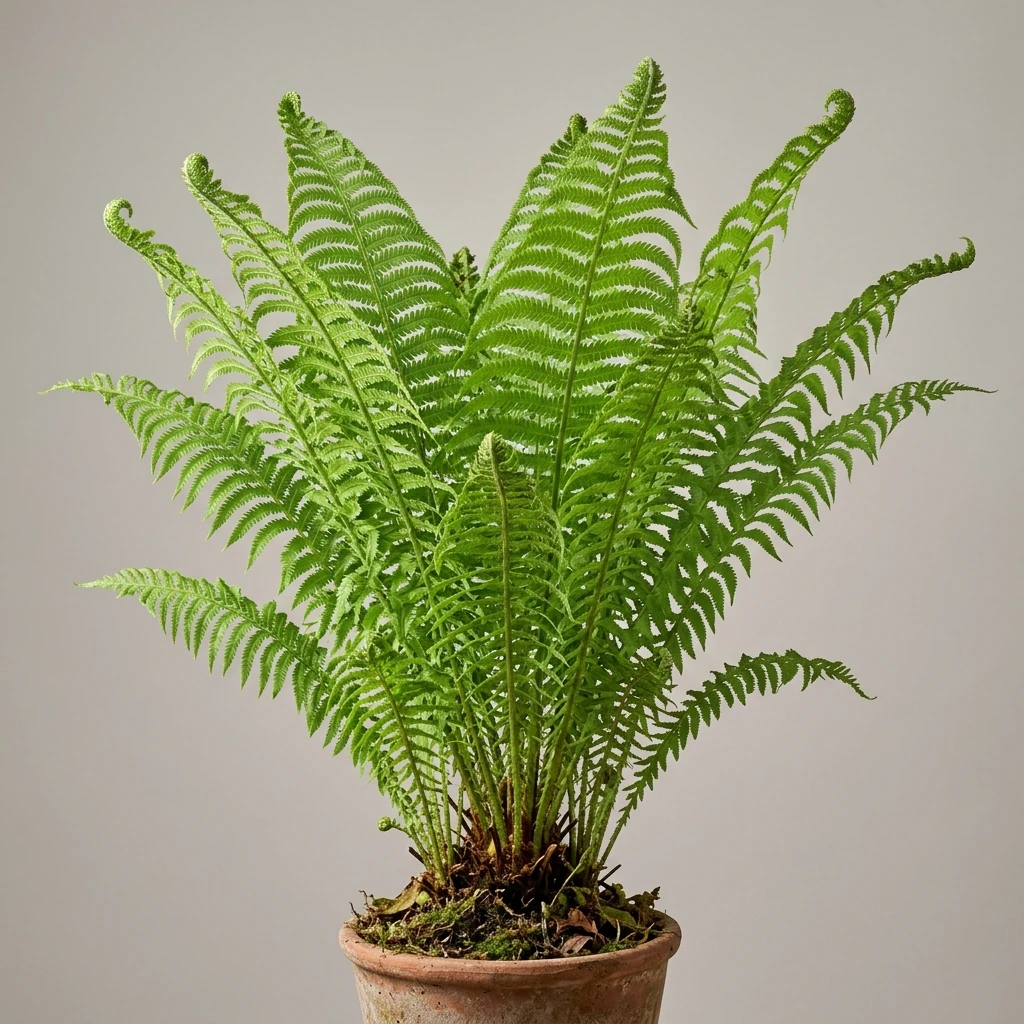
How to Identify Ostrich Fern
Identify Ostrich Fern immediately by its elegant and distinctive frond structure. Native to humid forest floors or mossy rocks, it features exquisite leaf patterns optimized to thrive under dappled canopy light.
-
✓
Distinctive Features: Imposing, symmetrical vase-shaped crown of ostrich-plume green fronds, with separate dark brown woody winter spikes.
-
✓
Typical Coloration: Lively bright green to emerald summer foliage, with dark brown to charcoal-colored woody fertile spikes.
-
✓
Potential Confusions: Similar to Cinnamon Fern, but distinguished by its much larger size, perfectly symmetrical crown, and woody winter spikes.
11-Step Professional Care Guide
💧 【Watering & Moisture】 Water abundantly. Soil must be kept consistently damp. Highly sensitive to drought; dry soil will cause its massive fronds to brown and collapse.
☀️ 【Sunlight & Exposure】 Requires partial shade to deep forest shade. Direct afternoon sun will instantly scorch and bleach the delicate feathery fronds.
🪴 【Ideal Soil Mix】 Prefers a rich, moisture-retentive organic medium. Blend 50% peat moss, 25% organic leaf mold, and 25% organic compost.
🌡️ 【Temperature & Ventilation】 Extremely cold-hardy (USDA Zone 3-7). Undergoes complete winter dormancy, dying back completely to its woody crown.
✂️ 【Pruning & Grooming】 Cut back all dead, collapsed fronds in late autumn. Do not cut the stiff woody brown fertile spikes; they look spectacular in winter snow.
🧪 【Fertilization】 Top-dress the soil surface with thick organic compost or leaf mold in early spring to encourage giant frond growth.
🏺 【Potting & Container】 Requires massive pots with excellent drainage to accommodate its wide-creeping runners and root mass.
🌱 【Propagation】 Easily propagated by separating the runners (underground stolons) that spread outward from the mother plant in early spring.
🐛 【Common Pests】 Watch out for fern caterpillars that can chew the giant leaves. Hand-pick them off or spray with organic insecticidal soap.
🦠 【Common Diseases】 Generally disease-free, but root rot can occur if soil is compacted and stagnant. Organic drainage is essential.
🎓 【Botanist Advice】 The Ostrich Fern is the ultimate structural accent for shade gardens. In spring, its tightly coiled fiddleheads are prized as a delicious culinary delicacy in North America and Japan (Kogomi)!
Frequently Asked Questions
Q: Are Ostrich Fern fiddleheads edible?
A: Yes! The tightly coiled spring fiddleheads of Matteuccia struthiopteris are a famous gourmet wild delicacy. They must be boiled or steamed thoroughly before eating.
Q: Why does my Ostrich Fern have stiff, dark brown sticks in winter?
A: These are fertile fronds! Unlike the green feathery summer leaves, these stiff woody spikes carry the spores. They turn dark brown, survive the winter, and release spores in early spring.
Q: Is the Ostrich Fern safe for dogs and cats?
A: Yes, the Ostrich Fern is completely non-toxic and pet-safe.
Q: How does the Ostrich Fern spread?
A: It spreads rapidly via underground runners called stolons, forming beautiful, dense woodland colonies over time if given ample moisture.
Keep Your Ostrich Fern Silky Green & Growing!
Use the Plant AI App to identify ferns immediately from your camera, diagnose crispy leaves, set precise moisture & watering alarms, and ask our AI Botanist expert care questions.