Marginal Wood Fern Care & Identification Guide
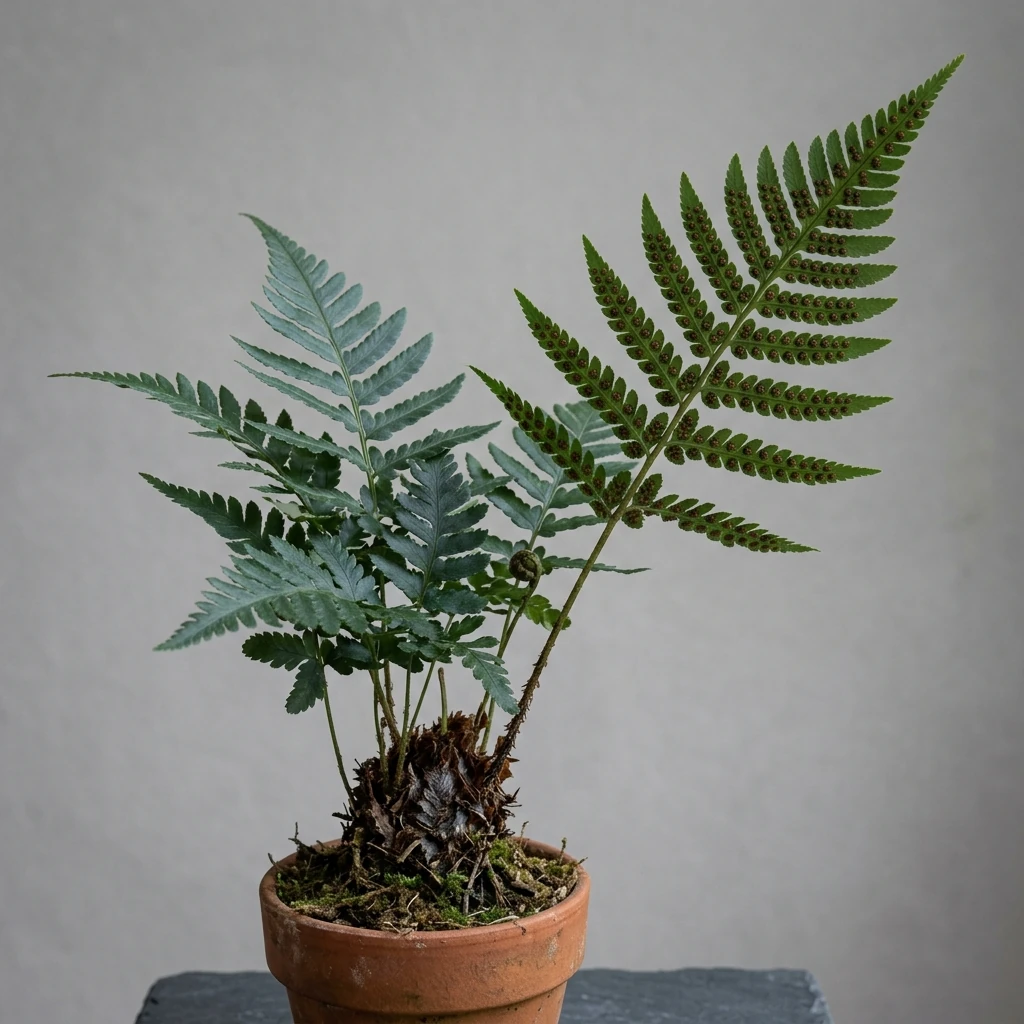
The magnificent Marginal Wood Fern (Dryopteris marginalis), also known as the Leather Woodfern, is an exceptionally robust evergreen native of eastern North America, celebrated for its unique spore arrangement. In a fascinating botanical signature, its spore-bearing structures (sori) are precisely lined along the extreme outer margins of its leaflets, making identification effortless. Extremely hardy, it grows in rock crevices and shaded mountain slopes, requiring filtered indirect light, gritty organic soil, and a moderated watering schedule.





How to Identify Marginal Wood Fern
Identify Marginal Wood Fern immediately by its elegant and distinctive frond structure. Native to humid forest floors or mossy rocks, it features exquisite leaf patterns optimized to thrive under dappled canopy light.
-
✓
Distinctive Features: Twice-divided leathery fronds with spore dots (sori) lined precisely along the very outer leaf margins.
-
✓
Typical Coloration: Cool, blue-green to grayish-green foliage, with pale brown or tan scales at the base of the stalks.
-
✓
Potential Confusions: Similar to Male Fern, but instantly distinguished by the precise marginal placement of its sori and its cooler, blue-green color.
11-Step Professional Care Guide
💧 【Watering & Moisture】 Water moderately. It is highly drought-tolerant once established. Allow the top 1 inch of soil to dry out slightly before watering. Avoid wet crown centers.
☀️ 【Sunlight & Exposure】 Requires partial shade to deep forest shade. Protect completely from harsh direct midday afternoon sun to prevent foliage scorch.
🪴 【Ideal Soil Mix】 Prefers a highly drained, peaty, sandy woodland soil. Combine 50% peat moss, 25% coarse sand, and 25% organic leaf compost.
🌡️ 【Temperature & Ventilation】 Extremely cold-hardy (USDA Zone 3-8). Excellent at surviving winter snow. Ensure good air movement in hot summer months.
✂️ 【Pruning & Grooming】 Cut back old, winter-worn outer fronds in early spring to keep the symmetrical vase shape tidy and promote new spring growth.
🧪 【Fertilization】 Feed very lightly once in early spring with a slow-release organic fertilizer. Avoid strong chemical feeds.
🏺 【Potting & Container】 Terracotta pots with drainage holes are ideal, helping to wick away excess moisture to protect the tough root crown.
🌱 【Propagation】 Propagated by carefully dividing its mature root crown in spring, or by harvesting the highly fertile marginal spores.
🐛 【Common Pests】 Generally highly resistant to pests. Watch for occasional scale insects along the leaf stems. Wipe off manually with neem oil.
🦠 【Common Diseases】 Highly susceptible to crown rot if water pools in the center of the crown in heavy clay soil. Ensure superior soil drainage.
🎓 【Botanist Advice】 The Marginal Wood Fern's cool blue-green foliage adds gorgeous texture to shaded gardens. Plant it on a slope or in rock crevices where it can drape beautifully without retaining excess crown water!
Frequently Asked Questions
Q: Why is it called the Marginal Wood Fern?
A: Because of its unique spore layout! The spore-bearing clusters (sori) on the underside of the leaves are lined up precisely along the very edges (margins) of the leaflets, which is a perfect identification key.
Q: How do I identify this fern from other Wood Ferns?
A: Look at the leaf undersides—if the circular spore dots are neatly arranged along the extreme outer edges rather than the center vein, and the foliage has a cool blue-green hue, it is Dryopteris marginalis.
Q: Is the Marginal Wood Fern safe for pets?
A: Yes, it is completely non-toxic and pet-safe for cats, dogs, and all other household pets.
Q: Is the Marginal Wood Fern evergreen?
A: Yes, it is fully evergreen in temperate climates, maintaining its cool blue-green color and structural beauty all through the winter months.
Keep Your Marginal Wood Fern Silky Green & Growing!
Use the Plant AI App to identify ferns immediately from your camera, diagnose crispy leaves, set precise moisture & watering alarms, and ask our AI Botanist expert care questions.