Male Fern Care & Identification Guide
The magnificent Male Fern (Dryopteris filix-mas) is a highly robust, legendary evergreen classic of European and North American shaded woodlands, celebrated since antiquity for its exceptional toughness and medicinal history. Growing in a grand, highly symmetrical upright crown that resembles a green shuttlecock, its sturdy rootstock can withstand extremely poor, rocky soils and severe frost. To cultivate this resilient woodland classic, it requires partial to full shade, consistently moist, well-draining soil, and protection from scorching noon winds.





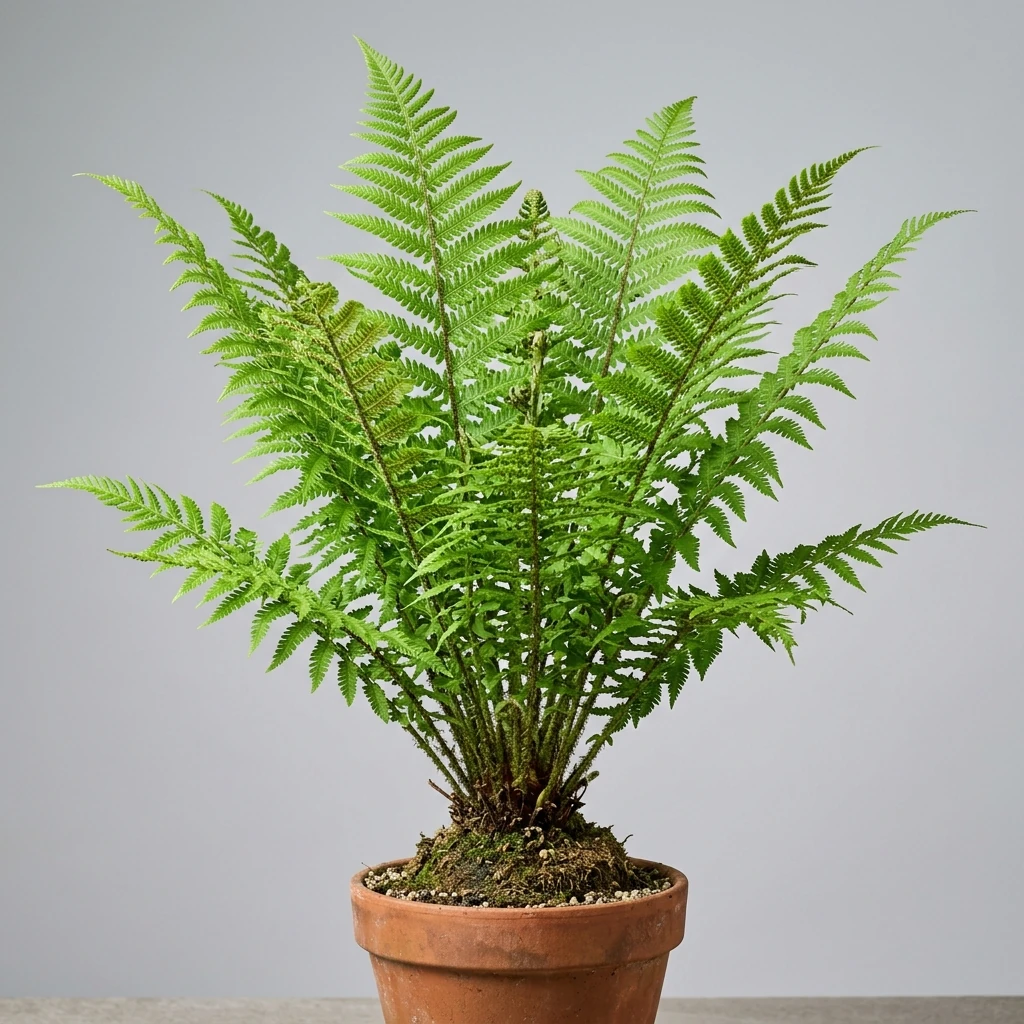
How to Identify Male Fern
Identify Male Fern immediately by its elegant and distinctive frond structure. Native to humid forest floors or mossy rocks, it features exquisite leaf patterns optimized to thrive under dappled canopy light.
-
✓
Distinctive Features: Grand, symmetrical vase-like shuttlecock crown of upright, twice-divided dark green fronds.
-
✓
Typical Coloration: Rich, deep matte green foliage, with sturdy stalks covered in dense golden-brown chaffy scales.
-
✓
Potential Confusions: Often confused with Lady Fern, but easily distinguished by its much coarser, sturdier leaves, more rigid upright crown, and evergreen habit.
11-Step Professional Care Guide
💧 【Watering & Moisture】 Water regularly to keep the soil damp. While remarkably drought-tolerant once established under woodland canopies, it thrives on consistent moisture.
☀️ 【Sunlight & Exposure】 Requires partial shade to deep shade. Will tolerate minor morning sun, but direct afternoon light will yellow and scorch the fronds.
🪴 【Ideal Soil Mix】 Highly adaptable. Prefers a rich woodland loam but tolerates poor rocky soils. Blend 50% peat, 30% organic compost, and 20% coarse sand.
🌡️ 【Temperature & Ventilation】 Exceptionally cold-hardy (USDA Zone 4-9). Excellent at surviving winter snow. Ensure good air movement in hot summer months.
✂️ 【Pruning & Grooming】 Cut back old, damaged outer fronds in early spring to keep the symmetrical shuttlecock tidy and make space for new fiddleheads.
🧪 【Fertilization】 Apply a slow-release organic granular fertilizer in spring, or feed once in spring with a highly diluted liquid organic feed.
🏺 【Potting & Container】 Large, heavy clay pots with drainage are ideal, preventing the grand upright plant from tipping over in the wind.
🌱 【Propagation】 Propagated by carefully dividing its mature, robust root crowns in spring, or by harvesting and sowing its highly fertile spores.
🐛 【Common Pests】 Generally highly pest-resistant. Watch for occasional slugs on the tender new spring fiddleheads in damp gardens.
🦠 【Common Diseases】 Highly resilient, but root rot can occur in compacted clay. Ensure the soil remains aerated and pot drains completely.
🎓 【Botanist Advice】 The Male Fern is one of the most indestructible structural plants for shaded garden borders. Its robust root crown was historically used in folklore to create natural protective amulets!
Frequently Asked Questions
Q: Why is it called the Male Fern?
A: The name goes back to ancient times! Early botanists paired it with the Lady Fern (Athyrium filix-femina), naming this species the 'Male Fern' because of its much sturdier, more robust, and coarser upright foliage.
Q: How drought-tolerant is the Male Fern once established?
A: It is remarkably tough! Once its root crown is established in a shaded garden, it can survive periods of dry shade far better than most delicate ferns, though it prefers consistent moisture.
Q: Is the Male Fern toxic to domestic animals?
A: No, Dryopteris filix-mas is completely non-toxic and pet-safe.
Q: Can I grow the Male Fern in dry, rocky shade?
A: Yes! Unlike delicate ferns that demand boggy mud, the Male Fern's strong root system is highly adapted to surviving in gravelly woodland slopes and dry shade under large trees.
Keep Your Male Fern Silky Green & Growing!
Use the Plant AI App to identify ferns immediately from your camera, diagnose crispy leaves, set precise moisture & watering alarms, and ask our AI Botanist expert care questions.