Long-leaved Brake Care & Identification Guide
The magnificent Long-Leaved Brake (Pteris vittata), also known as the Chinese Brake or Ladder Brake, is a highly spectacular evergreen species celebrated worldwide in botanical science as a legendary arsenic hyperaccumulator. Originating from rocky cliffs, old walls, and limestone river banks, its tough fronds feature long, narrow, comb-like leaflets that resemble a green ladder. Uniquely resilient, it has the extraordinary ability to absorb toxic arsenic from soils and water, storing it safely in its leaves. It requires bright filtered light, gritty alkaline soil, and moderate watering.





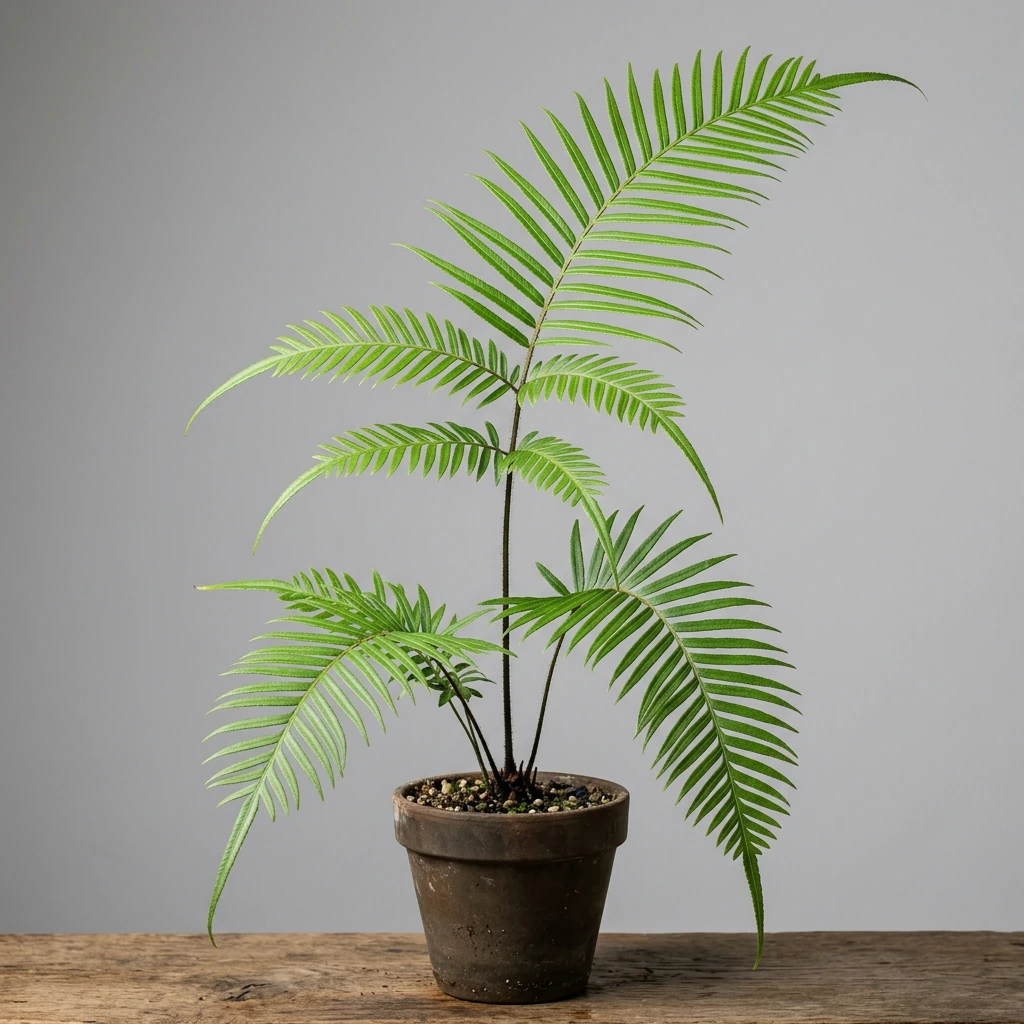
How to Identify Long-leaved Brake
Identify Long-leaved Brake immediately by its elegant and distinctive frond structure. Native to humid forest floors or mossy rocks, it features exquisite leaf patterns optimized to thrive under dappled canopy light.
-
✓
Distinctive Features: Erect, narrow fronds lined with long, straight, comb-like leaflets that resemble a green ladder.
-
✓
Typical Coloration: Rich grayish-green to bright grass-green foliage, with pale brown scales at the base.
-
✓
Potential Confusions: Similar to Sword Brake Fern, but distinguished by its much longer, uniform ladder-like leaflets and wild rock-clinging habit.
11-Step Professional Care Guide
💧 【Watering & Moisture】 Water moderately. Allow the top 1 inch of soil to dry out slightly before watering. Highly tolerant of dry soil compared to delicate ferns.
☀️ 【Sunlight & Exposure】 Thrives in bright indirect light to partial shade. Can tolerate minor morning sun, but direct afternoon light will yellow the leaves.
🪴 【Ideal Soil Mix】 Prefers alkaline, calcareous soil. Blend 50% peat moss, 30% perlite, 20% organic compost, and add a tablespoon of dolomitic limestone.
🌡️ 【Temperature & Ventilation】 Cold-hardy (USDA Zone 8). Highly tolerant of cool winds and light frost. Ensure excellent ventilation.
✂️ 【Pruning & Grooming】 Cut back old, winter-damaged fronds in early spring to keep the symmetrical vase shape looking neat and encourage colorful new growth.
🧪 【Fertilization】 Feed very lightly once in early spring with a slow-release organic fertilizer. Avoid strong chemical feeds.
🏺 【Potting & Container】 Terracotta pots with drainage holes are ideal, helping to wick away excess moisture and protect the tough root crown.
🌱 【Propagation】 Easily propagated by dividing the mature root crown in early spring. Gently separate the crowns, ensuring active roots on each division.
🐛 【Common Pests】 Generally highly resistant to pests. Watch for scale insects along the leaf stems. Wipe off manually.
🦠 【Common Diseases】 Highly susceptible to root rot if soil is compacted and soggy. Porous gritty limestone soil is essential.
🎓 【Botanist Advice】 The Long-Leaved Brake is a true scientific wonder, famous in ecological restoration (phytoremediation) for cleaning up heavy metal pollution in soils. It loves crushed limestone in its potting mix!
Frequently Asked Questions
Q: What is an arsenic hyperaccumulator?
A: It is an eco-friendly superpower! Pteris vittata is famous for its ability to absorb extremely high, toxic concentrations of the heavy metal arsenic from the soil, storing it in its foliage to clean the environment.
Q: Why are the leaves arranged like a ladder?
A: This is its classic ladder-like pinnate structure. The long, narrow leaflets are set horizontally and directly opposite each other, creating a clean geometric ladder shape.
Q: Is the Long-Leaved Brake safe for domestic pets?
A: Yes, Pteris vittata is completely non-toxic and pet-safe for cats, dogs, and all other household animals.
Q: Does this fern prefer alkaline limestone soil?
A: Yes! In the wild, it grows on old brick mortar and limestone cliffs. Adding dolomite lime or crushed shell grit to its mix perfectly mimics its native habitat.
Keep Your Long-leaved Brake Silky Green & Growing!
Use the Plant AI App to identify ferns immediately from your camera, diagnose crispy leaves, set precise moisture & watering alarms, and ask our AI Botanist expert care questions.