Licorice Fern Care & Identification Guide
The magnificent Licorice Fern (Polypodium glycyrrhiza) is an exceptionally unique evergreen winter-growing species native to the misty, moss-draped maple branches and wet rock faces of the Pacific Northwest. It is celebrated for its sweet, licorice-flavored rhizomes, which were traditionally chewed for their intense herbal sweetness. In the wild, it grows as an epiphyte, bursting into lush green growth during the rainy fall and winter seasons and going dormant in dry summers. It requires gritty organic bark mix, partial shade, and high humidity.





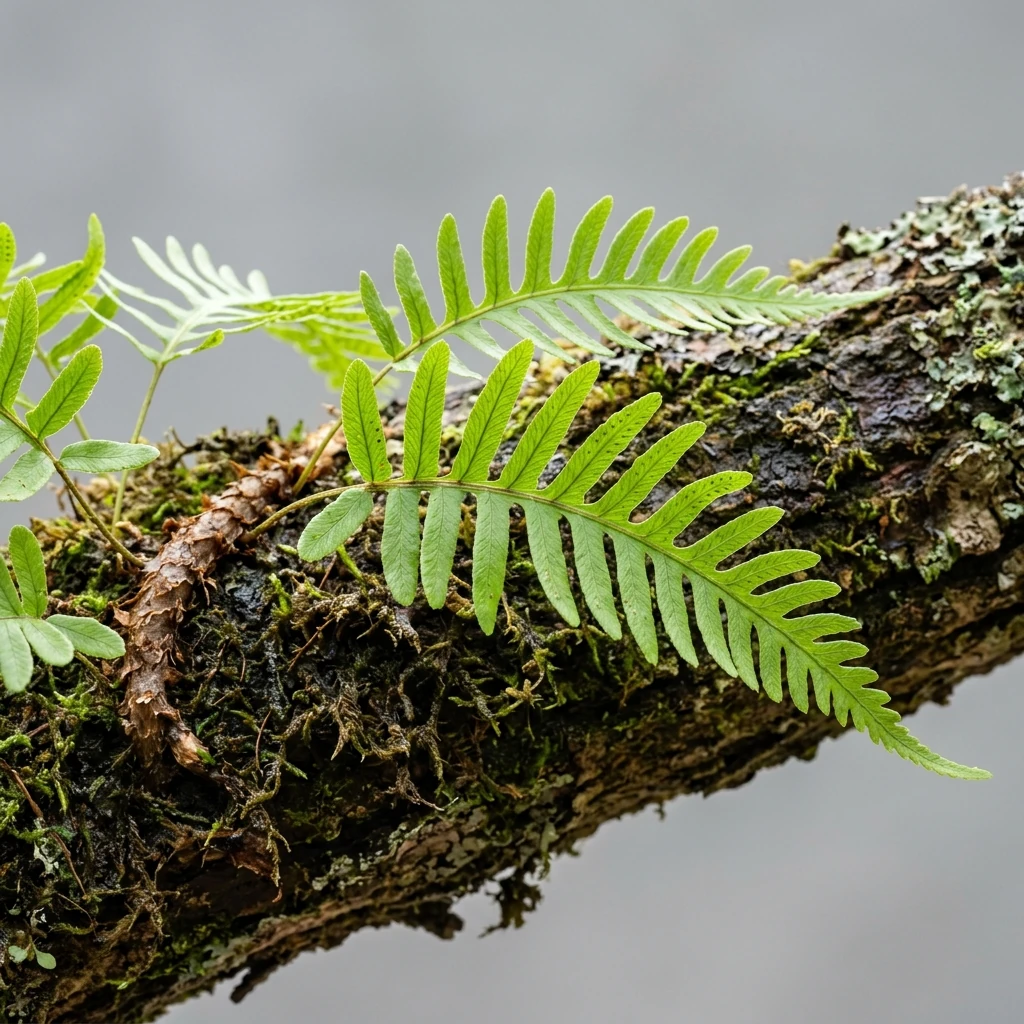
How to Identify Licorice Fern
Identify Licorice Fern immediately by its elegant and distinctive frond structure. Native to humid forest floors or mossy rocks, it features exquisite leaf patterns optimized to thrive under dappled canopy light.
-
✓
Distinctive Features: Narrow, single-pinnate arching fronds with highly distinctive sweet, licorice-scented creeping rhizomes.
-
✓
Typical Coloration: Vivid bright green to deep emerald foliage, with golden-yellow rounded spore spots (sori) beneath.
-
✓
Potential Confusions: Similar to Common Polypody, but easily distinguished by its intensely sweet licorice-tasting rhizome and winter-growing habit.
11-Step Professional Care Guide
💧 【Watering & Moisture】 Water moderately. Mimic its winter-growing habit: keep soil consistently damp in winter/spring, and allow it to dry out in summer.
☀️ 【Sunlight & Exposure】 Requires partial shade to deep forest shade. Indoors, place in a cool room with bright indirect light.
🪴 【Ideal Soil Mix】 Must be highly porous. Blend 50% coarse orchid bark, 30% sphagnum moss, and 20% perlite or charcoal chunks.
🌡️ 【Temperature & Ventilation】 Cool-hardy (USDA Zone 6-9). Prefers cool, damp, foggy conditions. Keep away from hot heating vents.
✂️ 【Pruning & Grooming】 Cut away old, dry outer fronds in late summer when the plant enters its natural warm-season dry dormancy.
🧪 【Fertilization】 Feed very lightly with a diluted organic fish emulsion once in late autumn as it starts its active winter growth.
🏺 【Potting & Container】 Grows beautifully mounted on cork bark slabs, in slatted wooden baskets, or in shallow terracotta pots.
🌱 【Propagation】 Propagated easily by dividing its creeping rhizome in early autumn. Ensure each division has active roots and a leaf.
🐛 【Common Pests】 Watch for slugs and snails that love to feed on the tender winter leaflets. Keep off the ground.
🦠 【Common Diseases】 Highly susceptible to root rot if soil is compacted and soggy. A coarse bark-heavy epiphyte mix is essential.
🎓 【Botanist Advice】 The Licorice Fern is a true PNW winter treasure. Plant it in a gritty moss-bark slab and hang it where it can catch the cool, humid air. It will sleep in the hot summer and wake up in winter!
Frequently Asked Questions
Q: Why is it called the Licorice Fern?
A: Because of its taste! The creeping green rhizomes (underground stems) contain a chemical called polypodine, which is 600 times sweeter than sugar and tastes like rich licorice.
Q: When does Licorice Fern grow?
A: It is a winter grower! Native to foggy coastlines, it sprouts in wet autumn, grows through winter, and goes dormant (dropping leaves) in dry summers.
Q: Is the Licorice Fern safe for household pets?
A: Yes, Polypodium glycyrrhiza is completely non-toxic and pet-safe for cats and dogs.
Q: Can I grow Licorice Fern on wood plaques?
A: Yes! As an epiphyte, mounting it on a slab of cork bark or cedar wood wrapped in sphagnum moss perfectly mimics how it grows on big trees.
Keep Your Licorice Fern Silky Green & Growing!
Use the Plant AI App to identify ferns immediately from your camera, diagnose crispy leaves, set precise moisture & watering alarms, and ask our AI Botanist expert care questions.