Japanese Shield Fern Care & Identification Guide
The magnificent Japanese Shield Fern (Dryopteris erythrosora 'Prolifica') is an exceptionally elegant and highly spectacular evergreen cultivar, celebrated for its bronze-pink new growth and bright red spore covers. Commonly found in moist forest floors and mountain slopes in East Asia, it features deeply divided, lustrous fronds. Uniquely, the indusia (covers protecting the spore clusters on the leaf undersides) are a brilliant cherry-red, resembling tiny shields. It requires bright indirect light, consistent dampness, and free-draining peaty organic soil.





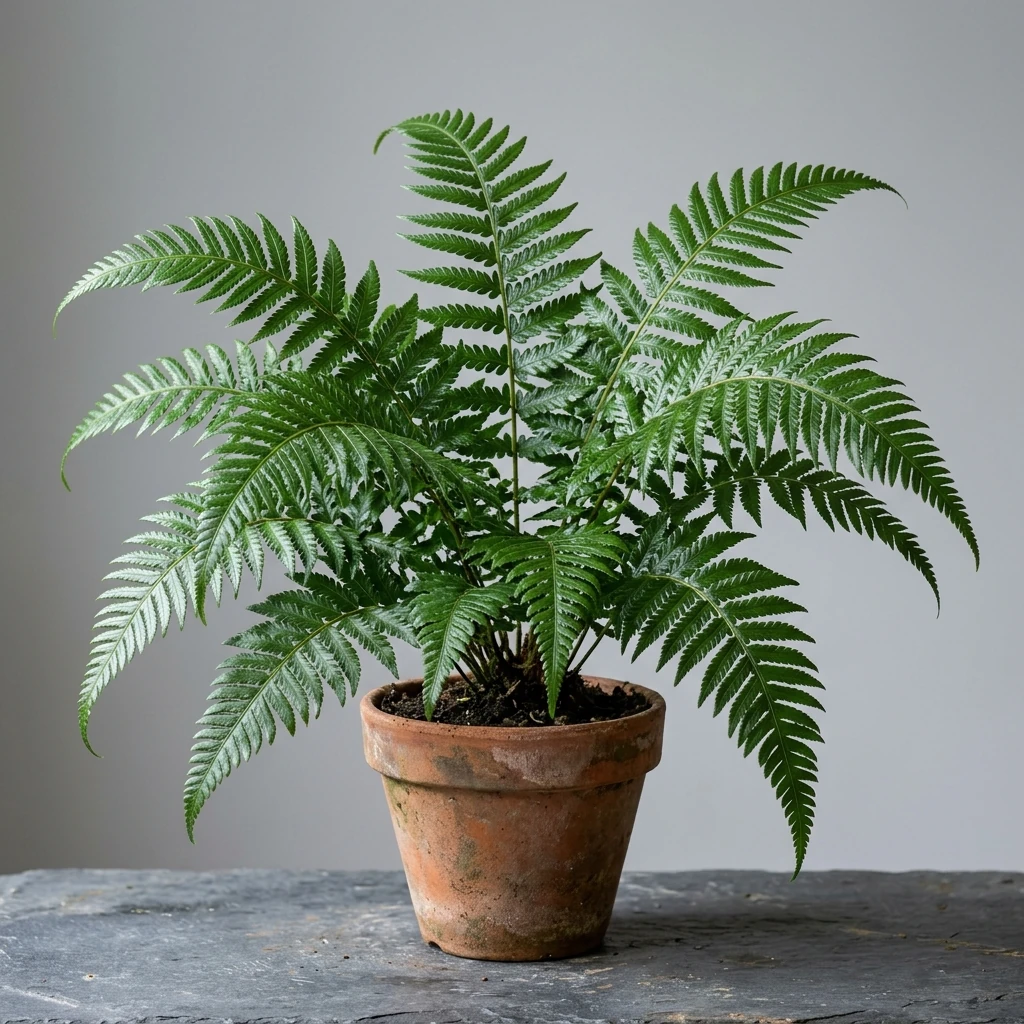
How to Identify Japanese Shield Fern
Identify Japanese Shield Fern immediately by its elegant and distinctive frond structure. Native to humid forest floors or mossy rocks, it features exquisite leaf patterns optimized to thrive under dappled canopy light.
-
✓
Distinctive Features: Lustrous, deeply divided evergreen fronds with cherry-red shield-like spore covers on the undersides.
-
✓
Typical Coloration: Apricot-bronze new spring foliage maturing to rich emerald green, accented by bright red spore dots.
-
✓
Potential Confusions: Similar to standard Autumn Fern, but distinguished by its more finely divided leaflets and exceptionally bright red spore covers.
11-Step Professional Care Guide
💧 【Watering & Moisture】 Keep soil consistently damp. Water thoroughly when the top 0.5 inches of soil feels dry. Never let the root ball go dry.
☀️ 【Sunlight & Exposure】 Requires bright, filtered indirect light or partial shade to stimulate the beautiful bronze new foliage and colorful red spore covers.
🪴 【Ideal Soil Mix】 Prefers a highly organic, porous woodland soil. Combine 50% peat moss, 30% perlite, and 20% organic compost or vermiculite.
🌡️ 【Temperature & Ventilation】 Cold-hardy (USDA Zone 6). Thrives in warm, humid summer climates. Indoors, keep away from warm air vents.
✂️ 【Pruning & Grooming】 Trim old, dry outer fronds in late winter to keep the symmetrical dome neat and encourage colorful new growth in spring.
🧪 【Fertilization】 Feed once every 6 weeks from spring to early autumn with an organic liquid fertilizer diluted to half strength to fuel foliage growth.
🏺 【Potting & Container】 Looks stunning in hanging baskets or ceramic planters that highlight the red spore undersides. Ensure excellent drainage.
🌱 【Propagation】 Propagated easily by dividing the mature root crown in spring, or by harvesting the highly fertile red spores.
🐛 【Common Pests】 Generally pest-resistant. Watch for scale insects along the leaf stems. Wipe off manually with a cotton swab.
🦠 【Common Diseases】 Low risk of disease, but root rot can occur if soil is compacted and swampy. Porous soil is essential.
🎓 【Botanist Advice】 The Japanese Shield Fern's bright red spore covers are highly ornamental. Plant it in a raised bed or hanging basket where the colorful undersides of the leaves can be easily viewed!
Frequently Asked Questions
Q: What are the bright red dots on the underside of my fern's leaves?
A: Those are the indusia! They are natural shield-like covers that protect the developing spore clusters. In this species, they turn a brilliant cherry-red, adding unique ornamental value.
Q: Why is it called the Shield Fern?
A: The name comes from the shape of the spore-covers (indusia) on the leaf undersides, which resemble tiny round medieval shields protecting the spores.
Q: Is the Japanese Shield Fern safe for pets?
A: Yes, Dryopteris erythrosora 'Prolifica' is completely non-toxic and pet-safe.
Q: Does this fern retain its leaves in winter?
A: Yes, it is fully evergreen in temperate climates, maintaining its lustrous green foliage and red spore accents all through the winter months.
Keep Your Japanese Shield Fern Silky Green & Growing!
Use the Plant AI App to identify ferns immediately from your camera, diagnose crispy leaves, set precise moisture & watering alarms, and ask our AI Botanist expert care questions.