Himalayan Maidenhair Care & Identification Guide
The magnificent Himalayan Maidenhair (Adiantum venustum), also known as the Evergreen Maidenhair, is a highly prized, exceptionally cold-hardy species celebrated for its outstanding winter resilience and beautiful color transitions. Originating from the damp forest floors of the Himalayas, its delicate, triangular fronds showcase spectacular bronze-pink tones in spring before maturing into deep green with blue-metallic undertones. Highly vigorous, it spreads through thin creeping rhizomes to form a dense evergreen carpet in shaded wood gardens.





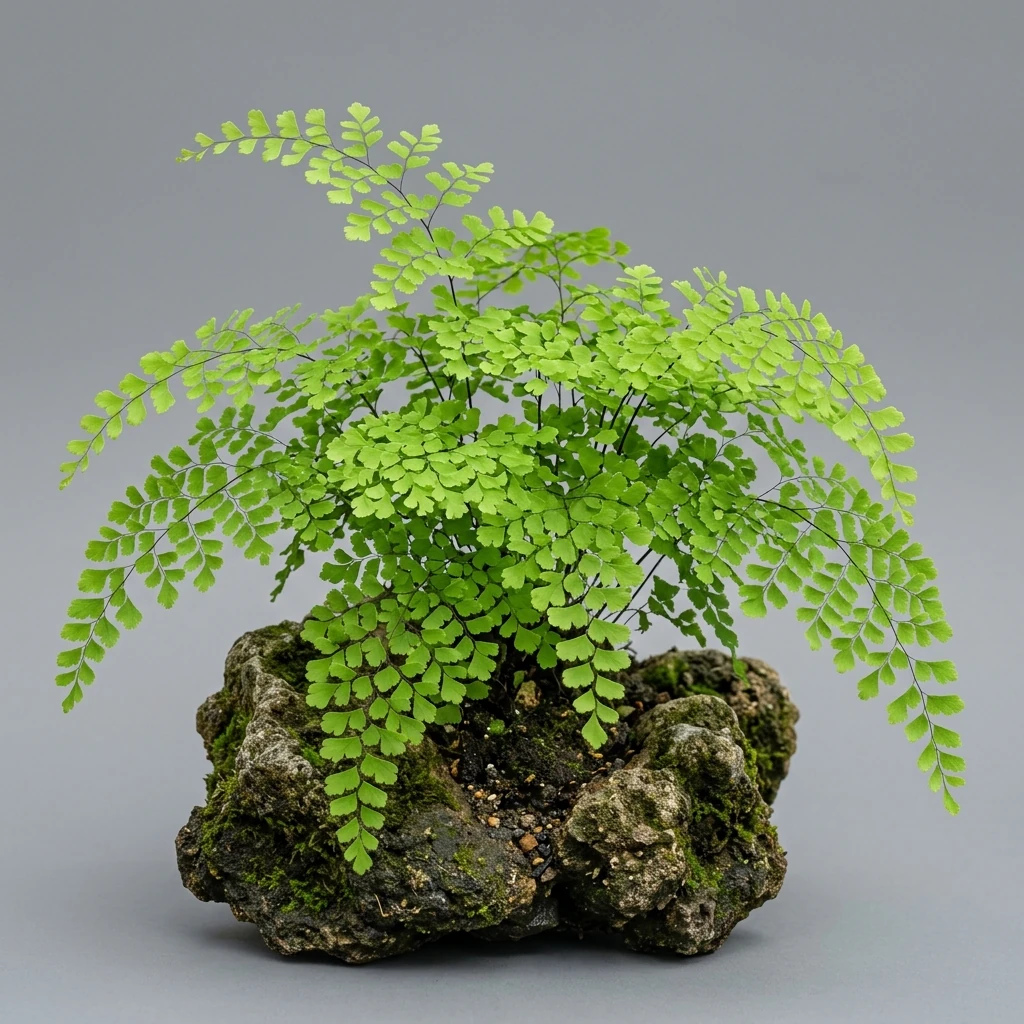
How to Identify Himalayan Maidenhair
Identify Himalayan Maidenhair immediately by its elegant and distinctive frond structure. Native to humid forest floors or mossy rocks, it features exquisite leaf patterns optimized to thrive under dappled canopy light.
-
✓
Distinctive Features: Delicate, lace-like triangular fronds that form a dense, low-growing groundcover carpet.
-
✓
Typical Coloration: Rich bronze-pink new growth in spring, maturing to deep emerald with a subtle bluish-metallic sheen.
-
✓
Potential Confusions: Much more robust and low-growing than Delta Maidenhair, with exceptional outdoor winter cold-hardiness.
11-Step Professional Care Guide
💧 【Watering & Moisture】 Water regularly to maintain uniform soil dampness. While slightly more resilient to brief dry spells than tropical ferns, it grows best in moist ground.
☀️ 【Sunlight & Exposure】 Thrives in partial shade to deep forest shade. Protect from hot, direct midday sun which will bleach the blue-green foliage.
🪴 【Ideal Soil Mix】 Prefers a rich, acidic, humus-heavy woodland soil. Blend 50% peat moss, 30% organic compost, and 20% sand or perlite for drainage.
🌡️ 【Temperature & Ventilation】 Exceptionally hardy (down to USDA Zone 5). It retains its green foliage through mild winters and goes semi-dormant in freezing snow.
✂️ 【Pruning & Grooming】 Cut away any old winter-damaged fronds in early spring to allow the stunning bronze-pink new fiddleheads to emerge cleanly.
🧪 【Fertilization】 Feed lightly in spring with a slow-release organic compost or highly diluted liquid balanced fertilizer. Avoid strong chemical feeds.
🏺 【Potting & Container】 Shallow wide bowls are perfect, allowing its thin, creeping rhizomes to spread and drape beautifully over the container edges.
🌱 【Propagation】 Easily propagated by dividing the creeping rhizome carpet in spring. Simply cut out a patch of rootball and transplant.
🐛 【Common Pests】 Generally highly pest-resistant, but watch for outdoor slugs and snails who love the tender new spring fiddleheads.
🦠 【Common Diseases】 Low risk of disease, but ensure soil is porous to avoid crown rot in heavy, waterlogged winter mud.
🎓 【Botanist Advice】 The Himalayan Maidenhair is one of the very few evergreen outdoor maidenhairs. It makes a magical, lacy groundcover under large trees or along shaded garden borders.
Frequently Asked Questions
Q: Is the Himalayan Maidenhair Fern truly evergreen?
A: Yes! In mild temperate climates, it retains its lush green foliage throughout the winter. In extremely cold regions with heavy snow, it may die back and resprout vigorously in spring.
Q: Why are my Himalayan Maidenhair new spring leaves pinkish-bronze?
A: This is a natural and highly prized characteristic! The new fronds emerge with a gorgeous bronze-pink blush to protect tender new cells from spring chill before turning green.
Q: Is this Himalayan fern safe for household pets?
A: Yes, Adiantum venustum is non-toxic and perfectly safe for cats, dogs, and all other household pets.
Q: How fast does it spread as a groundcover?
A: It spreads at a moderate, manageable pace via thin, wiry creeping rhizomes, forming a beautiful, dense, lacy green carpet within 2 to 3 years.
Keep Your Himalayan Maidenhair Silky Green & Growing!
Use the Plant AI App to identify ferns immediately from your camera, diagnose crispy leaves, set precise moisture & watering alarms, and ask our AI Botanist expert care questions.