Giant Staghorn Care & Identification Guide
The magnificent Giant Staghorn (Platycerium grande) is a colossal and highly spectacular tropical epiphyte, celebrated for its majestic, symmetrical fan-shaped nest fronds and grand structural presence. Originating from rainforest canopies in the Philippines, this slow-growing giant features massive, deeply divided sterile shield fronds that form an impressive green dome. Uniquely, it produces a single, large spore patch on its fertile fronds. To support its grand, heavy growth, it requires a spacious mounting board, consistent humidity, excellent root aeration, and protection from freezing winds.





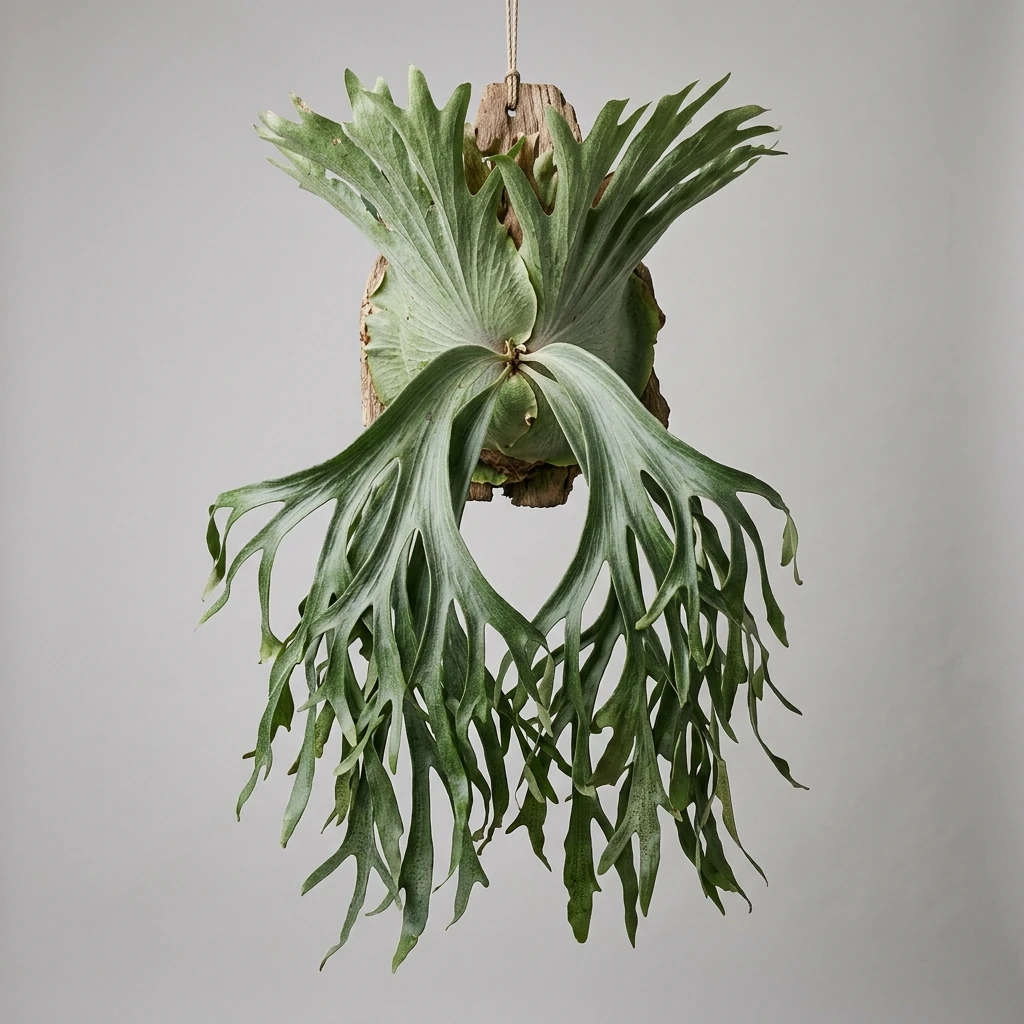
How to Identify Giant Staghorn
Identify Giant Staghorn immediately by its elegant and distinctive frond structure. Native to humid forest floors or mossy rocks, it features exquisite leaf patterns optimized to thrive under dappled canopy light.
-
✓
Distinctive Features: Colossal, symmetrical, wing-like sterile shield fronds up to 4-5 feet wide, with a single giant spore patch.
-
✓
Typical Coloration: Lively, bright apple-green foliage with a velvety silver-green sheen under filtered light.
-
✓
Potential Confusions: Often confused with Superbum Staghorn, but distinguished by the presence of two separate spore patches on Superbum and a single patch on Grande.
11-Step Professional Care Guide
💧 【Watering & Moisture】 Water moderately. As a giant species, it is highly sensitive to overwatering; allow the sphagnum moss backing to dry out completely before soaking again.
☀️ 【Sunlight & Exposure】 Requires bright, filtered indirect light or partial morning sun. Protect completely from harsh direct midday afternoon sun.
🪴 【Ideal Soil Mix】 Epiphytic. Best grown mounted on large, heavy cedar boards or nestled in loose wire baskets filled with sphagnum and orchid bark.
🌡️ 【Temperature & Ventilation】 Prefers warm tropical temperatures: 16°C to 28°C (61°F - 82°F). Protect from strong winds and frost.
✂️ 【Pruning & Grooming】 Minimal grooming required. Simply wipe its broad, glossy leaves with a damp cloth occasionally to remove dust.
🧪 【Fertilization】 Feed once a month during spring and summer with a water-soluble balanced liquid fertilizer diluted to one-quarter strength behind the shield.
🏺 【Potting & Container】 Not suited for standard pots. Requires massive, heavy mounting boards (18-24 inches) to support its rapid, giant weight.
🌱 【Propagation】 Propagated strictly by sowing its fertile spores under warm, humid, sterile glass dome settings. It does not produce pups.
🐛 【Common Pests】 Scale insects can occasionally settle along the midribs of the giant fronds. Wipe off manually with neem oil.
🦠 【Common Diseases】 Root rot can occur if its massive backing lacks drainage or stays soggy. Ensure superior drainage and good air movement.
🎓 【Botanist Advice】 The Giant Staghorn is the absolute ultimate 'centerpiece'. Hang it in a warm, sheltered patio where it has plenty of space to cascade, and water it deeply during warm summer months.
Frequently Asked Questions
Q: How big does the Giant Staghorn actually get?
A: It is a giant! In warm, humid environments, its bold arching wing-like shield fronds can easily reach 4 to 5 feet across, and the entire plant can spread up to 6 feet.
Q: Does the Giant Staghorn produce pups?
A: No, unlike the Common Staghorn, Platycerium grande is a solitary species that does not produce pup offshoots. It can only be propagated by sowing its spores.
Q: Is the Giant Staghorn Fern safe for pets?
A: Yes, despite its imposing size, it is a non-toxic Platycerium fern and is completely safe for household pets.
Q: What is the difference between Giant and Superbum Staghorn?
A: Look at the spore patches! Platycerium grande has a single, large spore patch on its fertile fronds, while Platycerium superbum has two separate spore patches.
Keep Your Giant Staghorn Silky Green & Growing!
Use the Plant AI App to identify ferns immediately from your camera, diagnose crispy leaves, set precise moisture & watering alarms, and ask our AI Botanist expert care questions.