Delta Maidenhair Care & Identification Guide
The magnificent Delta Maidenhair (Adiantum raddianum) is the most widely cultivated and beloved indoor maidenhair fern, celebrated for its densely packed, triangular fronds and elegant arching habit. Originating from damp, shaded ravines and mossy rock crevices in tropical South America, this delicate beauty features small, wedge-shaped green leaflets. The Delta Maidenhair is highly sensitive to dry air and mineral-heavy hard water; to keep it thriving, it demands consistent soft watering, high ambient humidity, and a highly aerated peaty soil mix.





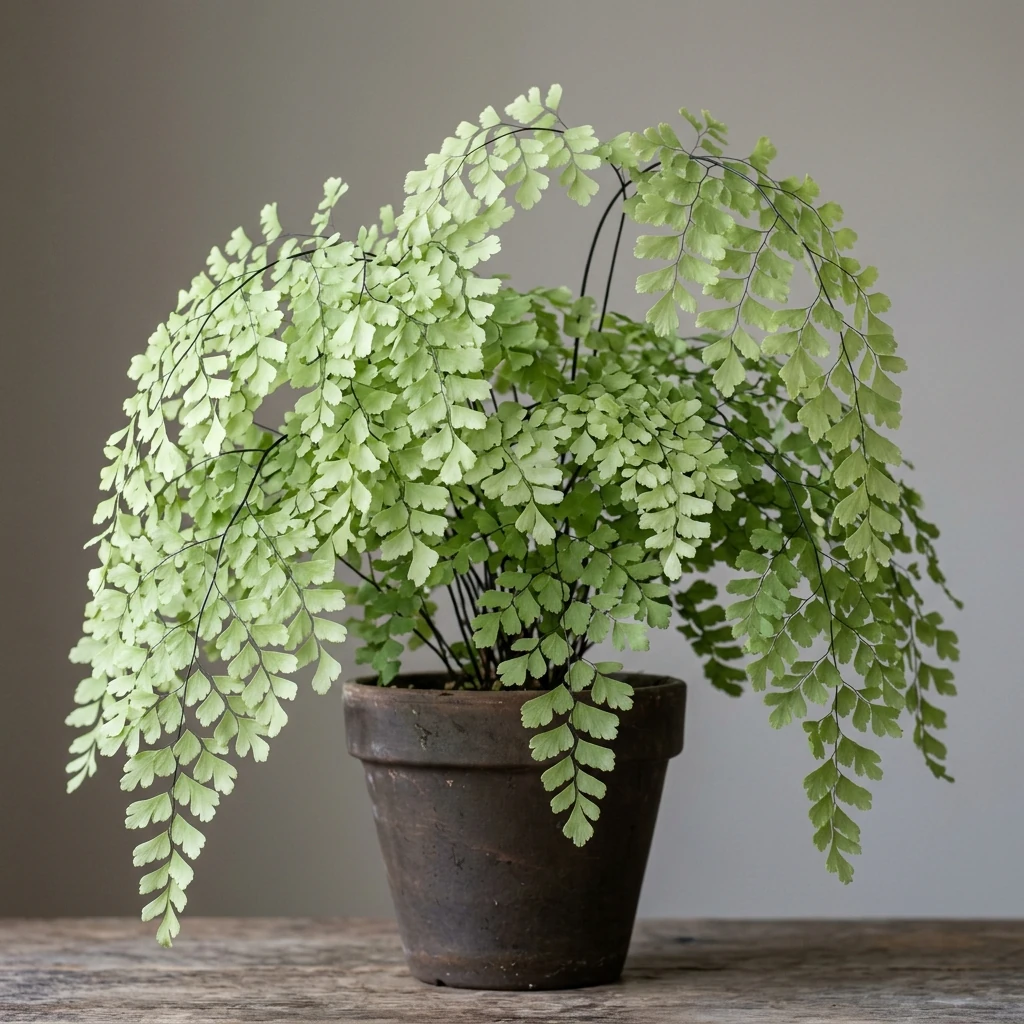
How to Identify Delta Maidenhair
Identify Delta Maidenhair immediately by its elegant and distinctive frond structure. Native to humid forest floors or mossy rocks, it features exquisite leaf patterns optimized to thrive under dappled canopy light.
-
✓
Distinctive Features: Arching, triangular (delta-shaped) fronds packed with tiny, delicate, wedge-shaped leaflets.
-
✓
Typical Coloration: Lively apple-green leaflets suspended on glossy, hair-thin purple-black stems.
-
✓
Potential Confusions: Often confused with Southern Maidenhair, but distinguished by its highly triangular frond outline and more compact potting habit.
11-Step Professional Care Guide
💧 【Watering & Moisture】 Water consistently to keep soil evenly damp. It is highly sensitive to hard municipal tap water; always use rainwater, distilled water, or filtered soft water.
☀️ 【Sunlight & Exposure】 Requires bright, filtered indirect sunlight. Place near a north- or east-facing window. Never expose to direct afternoon sun.
🪴 【Ideal Soil Mix】 Blend 60% premium peat moss, 30% perlite, and 10% vermiculite. Excellent drainage is vital to prevent root rot while retaining water.
🌡️ 【Temperature & Ventilation】 Ideal range is 16°C to 24°C (60°F - 75°F). Keep away from air conditioning vents and dry winter heating systems.
✂️ 【Pruning & Grooming】 Clip away any dry, crispy, or yellowing fronds at the base to make space for fresh, tightly coiled green croziers sprouting from the crown.
🧪 【Fertilization】 Feed sparingly. Apply a liquid organic houseplant fertilizer diluted to one-quarter strength once every 6 weeks from spring to summer.
🏺 【Potting & Container】 Double-potting is a great trick: place the plastic pot inside a larger ceramic pot lined with damp moss to maintain local humidity.
🌱 【Propagation】 Divided easily in spring by separating the dense rhizome clumps. Keep the new divisions warm, moist, and covered under plastic for two weeks.
🐛 【Common Pests】 Scale insects and mealybugs can nestle at the base of the delicate leaf stems. Treat gently with insecticidal soap or organic neem spray.
🦠 【Common Diseases】 Highly susceptible to crown rot and root rot if soil is compacted or pot lacks drainage holes. Ensure water drains instantly.
🎓 【Botanist Advice】 The Delta Maidenhair will shrivel in hours if the soil dries out even once. If you struggle with watering, use a self-watering pot with a wick system to keep the soil consistently damp.
Frequently Asked Questions
Q: Can I water my Delta Maidenhair with tap water?
A: It is highly sensitive to fluoride, chlorine, and minerals in hard tap water, which cause brown edges. Use rainwater, distilled water, or filtered water for best results.
Q: What should I do if my Delta Maidenhair shrivels completely due to missed watering?
A: Do not throw it away! Cut all shriveled fronds to the soil level, place the pot in a bowl of lukewarm water for 20 minutes to rehydrate, cover with a clear plastic bag, and new shoots will often appear.
Q: Is the Delta Maidenhair safe for cats?
A: Yes, Nephrolepis and Adiantum raddianum are 100% non-toxic and completely safe for cats and dogs.
Q: Why are the leaves of my Delta Maidenhair turning yellow?
A: Yellow leaves typically indicate overwatering or soggy, air-depleted soil. Let the topsoil surface dry barely before watering, and ensure the pot drains freely.
Keep Your Delta Maidenhair Silky Green & Growing!
Use the Plant AI App to identify ferns immediately from your camera, diagnose crispy leaves, set precise moisture & watering alarms, and ask our AI Botanist expert care questions.