Climbing Fern Care & Identification Guide
The magnificent Climbing Fern (Lygodium palmatum), also known as the American Climbing Fern, is a highly spectacular and unique native of Eastern North America, celebrated as the continent's only true climbing fern. Unlike standard clump-forming ferns, it features extremely long, flexible, thread-like leaf stems (rachis) that twine around adjacent branches and shrubs, growing up to 10-15 feet. Its delicate, hand-shaped sterile leaflets contrast beautifully with its tiny, highly dissected fertile leaflets. It requires highly acidic, consistently damp sandy-peaty soils and dappled sun.





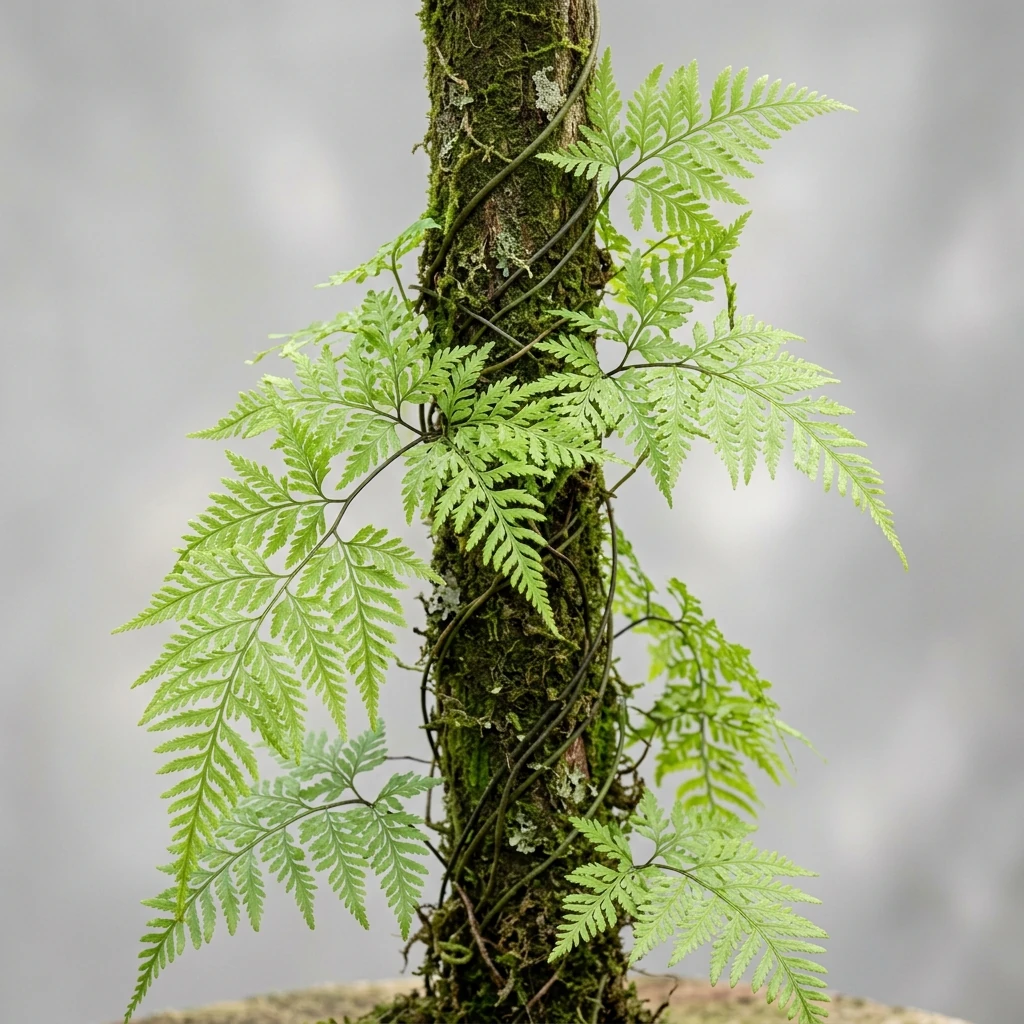
How to Identify Climbing Fern
Identify Climbing Fern immediately by its elegant and distinctive frond structure. Native to humid forest floors or mossy rocks, it features exquisite leaf patterns optimized to thrive under dappled canopy light.
-
✓
Distinctive Features: Climbing, twining thin thread-like stems with hand-shaped, palmate star-like green leaves.
-
✓
Typical Coloration: Soft light green to yellowish-green delicate foliage, with brownish fertile tips.
-
✓
Potential Confusions: Looks like climbing ivy rather than a fern; easily distinguished from true ivy by its lack of woody stems and tiny sporangia.
11-Step Professional Care Guide
💧 【Watering & Moisture】 Keep soil consistently damp. Needs high local humidity; mist frequently or use a humidifier to protect its thin leaves.
☀️ 【Sunlight & Exposure】 Requires bright, filtered indirect light or dappled morning sun. Needs slightly more light than standard ferns to climb.
🪴 【Ideal Soil Mix】 Requires a highly acidic, gritty organic mix. Blend 50% peat moss, 30% coarse sand, and 20% organic compost.
🌡️ 【Temperature & Ventilation】 Cold-hardy (USDA Zone 5-9). Thrives in warm, humid summer climates. Keep away from dry drafts.
✂️ 【Pruning & Grooming】 Cut away old, dry twining vines in late winter. Provide a thin trellis, bamboo stakes, or a companion plant to climb.
🧪 【Fertilization】 Apply a water-soluble balanced organic fertilizer diluted to one-quarter strength once every 6 weeks from spring to summer.
🏺 【Potting & Container】 Looks breath-taking in hanging baskets or pots fitted with climbing trellises. Use pots with excellent drainage.
🌱 【Propagation】 Propagated by dividing the creeping underground rhizome in early spring, ensuring at least one twining stem is attached.
🐛 【Common Pests】 Watch out for spider mites and scale insects hiding in the twining stems. Treat manually with neem oil.
🦠 【Common Diseases】 Leaf spot or fungal rot can occur if leaves are wet and air is stagnant. Ensure gentle room air movement.
🎓 【Botanist Advice】 The Climbing Fern is a true botanical conversation starter. Provide it with a thin wooden trellis or let it twine naturally around a neighboring indoor plant like a weeping fig!
Frequently Asked Questions
Q: How does the Climbing Fern climb?
A: It climbs using its leaf rachis! The central stem of the frond acts like a vine, twining tightly around sticks, trellises, and other plants to climb up to 10-15 feet.
Q: What support does the Climbing Fern need?
A: It needs thin supports! Provide a mesh trellis, thin bamboo stakes, or let it climb on string and adjacent houseplants. It cannot climb on thick walls.
Q: Is the Climbing Fern safe for pets?
A: Yes, Lygodium palmatum is completely non-toxic and pet-safe for cats and dogs.
Q: Why are the leaves turning yellow?
A: Yellowing leaves are usually a sign of low soil acidity or mineral deficiency. Ensure it is planted in highly acidic peat-based soil.
Keep Your Climbing Fern Silky Green & Growing!
Use the Plant AI App to identify ferns immediately from your camera, diagnose crispy leaves, set precise moisture & watering alarms, and ask our AI Botanist expert care questions.