Black Tree Fern Care & Identification Guide
The magnificent Black Tree Fern (Cyathea medullaris), also known as the Hapu'u or Mamaku in New Zealand, is a colossal and awe-inspiring giant, celebrated for its structural jet-black stalks and majestic presence. Originating from moist seaside valleys and coastal forests, it features massive, deeply divided fronds supported by a sturdy black fibrous trunk. Revered in Maori culture, the Black Tree Fern requires stable warmth, abundant moisture, highly organic peaty soil, and exceptional shelter from strong winds.





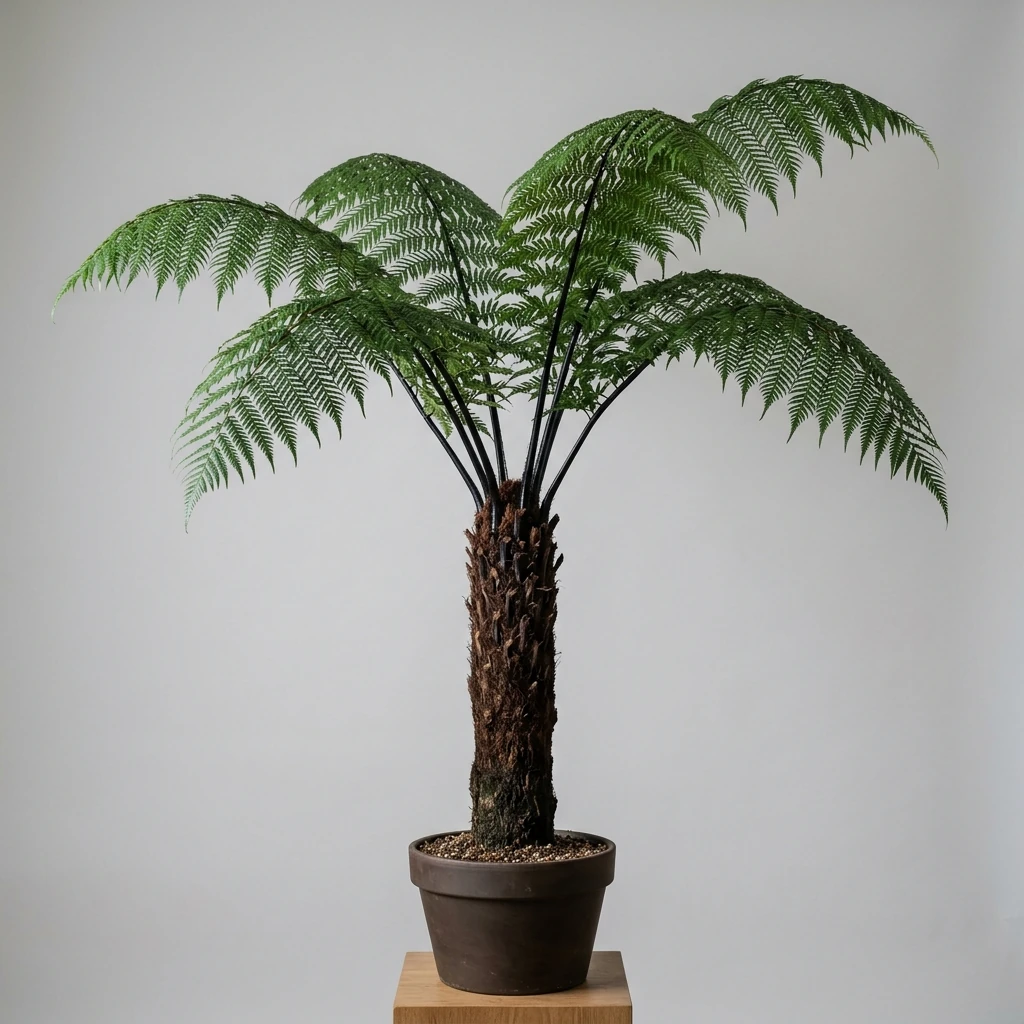
How to Identify Black Tree Fern
Identify Black Tree Fern immediately by its elegant and distinctive frond structure. Native to humid forest floors or mossy rocks, it features exquisite leaf patterns optimized to thrive under dappled canopy light.
-
✓
Distinctive Features: Imposing jet-black fibrous trunk supporting giant, arching fronds with prominent black leaf stalks (stipes).
-
✓
Typical Coloration: Rich emerald green canopy contrasting dramatically with glossy, pure black stalks and stems.
-
✓
Potential Confusions: Unmistakable due to its jet-black stems. Much larger, darker, and more tropical than the common Silver Tree Fern.
11-Step Professional Care Guide
💧 【Watering & Moisture】 Demands massive, constant moisture. Water the soil base deeply, and wash down the fibrous black trunk daily to keep air roots hydrated.
☀️ 【Sunlight & Exposure】 Thrives in bright indirect light to semi-shade. Prefers humid, ocean-like coastal lighting. Protect completely from hot, drying direct noon sun.
🪴 【Ideal Soil Mix】 Prefers a highly organic, rich, acidic peaty loam. Blend 50% peat moss, 30% organic compost, and 20% coarse perlite or vermiculite.
🌡️ 【Temperature & Ventilation】 Ideal range is 12°C to 24°C (54°F - 75°F). Dislikes extreme dry heat and is highly sensitive to hard frost below -2°C (28°F).
✂️ 【Pruning & Grooming】 Cut away old, dry black fronds near the trunk to maintain the tidy, dramatic silhouette. Protect the sensitive growing crown from damage.
🧪 【Fertilization】 Feed once a month during spring and summer with a highly diluted organic liquid fertilizer poured directly over the damp fibrous trunk.
🏺 【Potting & Container】 Young specimens require large, deep, heavy pots to support the massive arching black fronds and prevent tipping. Ensure drainage is unobstructed.
🌱 【Propagation】 Propagated strictly by sowing its fertile spores under warm, humid, sterile glass dome settings. Spores take months to germinate.
🐛 【Common Pests】 Scale insects can occasionally settle on the glossy black stems. Wipe them off manually with a cotton swab dipped in neem oil.
🦠 【Common Diseases】 Crown rot can occur if cold water pools in the crown during dark, stagnant winter phases. Maintain good air movement.
🎓 【Botanist Advice】 Known as 'Mamaku' by the Maori, this majestic fern's young fiddleheads are historically famous as a forest survival food. Plant it in a wind-sheltered spot to prevent its massive black fronds from tearing.
Frequently Asked Questions
Q: Why is it called the Black Tree Fern?
A: Because of its striking color! The leaf stalks (stipes) and the main fibrous trunk are a glossy, jet-black color, which contrasts beautifully with the rich green canopy.
Q: How large can the Black Tree Fern grow?
A: It is a true forest giant! Under optimal coastal conditions, it can reach an imposing height of 50 to 60 feet, with individual fronds stretching up to 15 feet long.
Q: Is the Black Tree Fern safe for cats and dogs?
A: Yes, Cyathea medullaris is completely non-toxic and pet-safe.
Q: Can I grow the Black Tree Fern in a windy location?
A: No, its massive, heavy fronds are easily torn and damaged by strong winds. Always plant it in a sheltered courtyard, damp valley, or wind-protected garden corner.
Keep Your Black Tree Fern Silky Green & Growing!
Use the Plant AI App to identify ferns immediately from your camera, diagnose crispy leaves, set precise moisture & watering alarms, and ask our AI Botanist expert care questions.