Bear's Paw Fern Care & Identification Guide
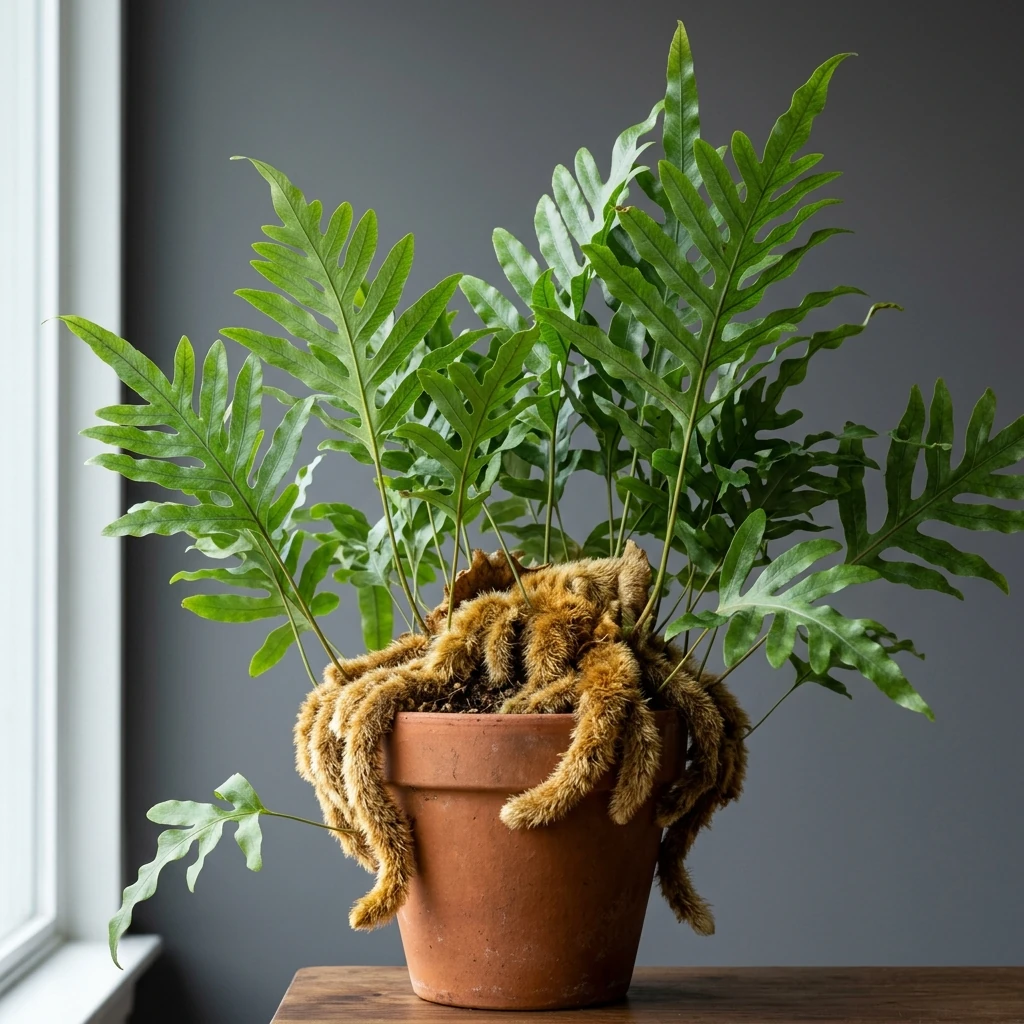
The magnificent Bear's Paw Fern (Aglaomorpha coronans) is a colossal and highly spectacular epiphytic masterpiece, celebrated for its thick, shaggy golden-brown creeping rhizomes that resemble the paws of a grizzly bear. Originating from tropical forest canopies and rocky crevices in Asia, this grand fern features a dual leaf structure, where the broad base fronds clasp the tree trunk like a bird's nest to catch falling organic debris, while the massive, leathery fertile fronds arch majestically outward. In household care, it is absolutely critical that its furry bear paws are never buried in soil, as they require continuous air contact and superb root aeration.





How to Identify Bear's Paw Fern
Identify Bear's Paw Fern immediately by its elegant and distinctive frond structure. Native to humid forest floors or mossy rocks, it features exquisite leaf patterns optimized to thrive under dappled canopy light.
-
✓
Distinctive Features: Thick, densely hairy, golden-brown creeping rhizomes that crawl over the pot edge, supporting massive, leathery deeply lobed fronds.
-
✓
Typical Coloration: Lively grass-green foliage contrasting with the rich copper-golden shag of the crawling paw-like rhizomes.
-
✓
Potential Confusions: Unmistakable due to its colossal size and thick shaggy paws. Far larger and sturdier than the common Rabbit's Foot Fern.
11-Step Professional Care Guide
💧 【Watering & Moisture】 Water moderately. Allow the chunk potting medium to dry out slightly between waterings. Avoid wetting the shaggy root crown directly; water the surrounding bark to prevent rot.
☀️ 【Sunlight & Exposure】 Requires bright, filtered indirect light or partial morning sun. Direct afternoon sun will instantly bleach the leathery green leaves.
🪴 【Ideal Soil Mix】 Epiphytic. Never plant in standard soil! Use an ultra-porous mix of 50% coarse orchid bark, 30% peat moss, and 20% charcoal and perlite to ensure maximum air gaps.
🌡️ 【Temperature & Ventilation】 Ideal range is 16°C to 28°C (61°F - 82°F). Protect from freezing temperatures and dry heating drafts. Requires excellent continuous air circulation.
✂️ 【Pruning & Grooming】 Cut away old, dry outer fronds near the shaggy paws. Do not damage or prune the crawling golden paws which serve as the fern's life support.
🧪 【Fertilization】 Apply a water-soluble balanced liquid fertilizer diluted to one-quarter strength once every 8 weeks in spring and summer. Pour behind the shield leaves.
🏺 【Potting & Container】 Suspended wire baskets or shallow wide bowls are perfect, allowing the thick bear paws to crawl and drape freely over the container edges.
🌱 【Propagation】 Propagated by carefully slicing a section of the thick shaggy rhizome in spring. Ensure each division has at least one active crown and roots.
🐛 【Common Pests】 Scale insects can occasionally settle along the midribs of the giant fronds. Wipe off manually with a cotton swab dipped in neem oil.
🦠 【Common Diseases】 Extreme risk of rhizome rot if buried deeply in heavy clay soil. The furry paws must sit completely on top of the bark medium.
🎓 【Botanist Advice】 The Bear's Paw Fern is a true showstopper. Mount it on a mossy cedar board or grow it in a wide hanging basket—just remember: keep the furry paws completely above the potting mix!
Frequently Asked Questions
Q: Can I bury the furry 'bear paws' in the soil?
A: Absolutely not! Those furry paws are creeping rhizomes. If buried in soil, they will rapidly suffocate and rot. They must sit completely on top of the potting medium, secured with wire or moss.
Q: Why does my Bear's Paw Fern have dry leaves at the base?
A: Those are natural nest leaves! They are designed to dry up and form a brown, papery basket to trap falling forest debris, which decomposes and fertilizes the plant. Never remove them.
Q: Is the Bear's Paw Fern safe for dogs and cats?
A: Yes, Aglaomorpha coronans is completely non-toxic and pet-safe.
Q: What is the best potting mix for this giant epiphytic fern?
A: A highly porous, bark-heavy mix: 50% coarse orchid bark, 30% peat moss, and 20% charcoal/perlite. Never use standard potting soil.
Keep Your Bear's Paw Fern Silky Green & Growing!
Use the Plant AI App to identify ferns immediately from your camera, diagnose crispy leaves, set precise moisture & watering alarms, and ask our AI Botanist expert care questions.