Alpine Holly Fern Care & Identification Guide
The magnificent Alpine Holly Fern (Polystichum lonchitis) is a legendary high-altitude evergreen marvel, native to rocky limestone screes, alpine crevices, and cold subalpine forests. Highly adapted to survive harsh alpine winds and heavy snow cover, this resilient beauty features rigid, leathery, and narrow spear-shaped fronds edged with sharp, spine-like teeth. To replicate its pristine montane home, the Alpine Holly Fern requires cool summer temperatures, superior drainage in a gritty, gravelly rock substrate, and consistent, modest moisture that never pools around the root crown.





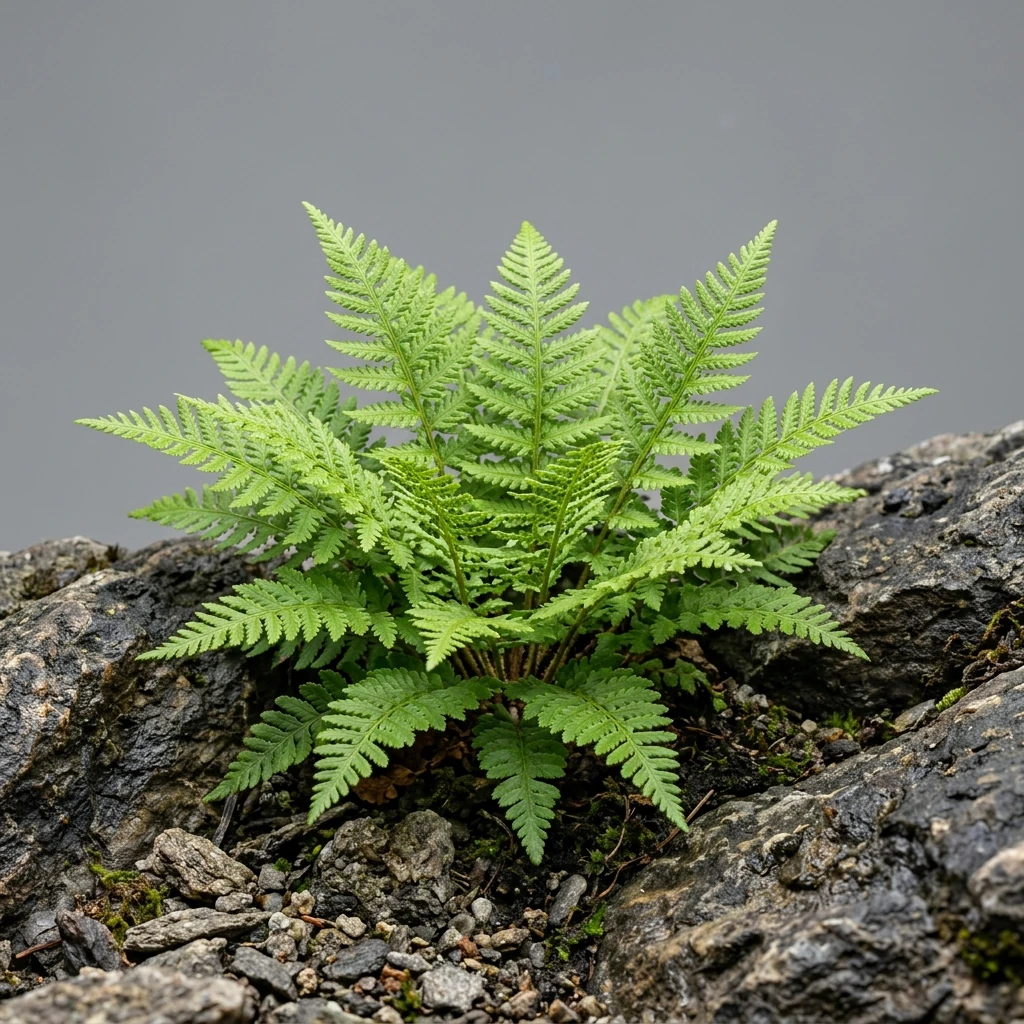
How to Identify Alpine Holly Fern
Identify Alpine Holly Fern immediately by its elegant and distinctive frond structure. Native to humid forest floors or mossy rocks, it features exquisite leaf patterns optimized to thrive under dappled canopy light.
-
✓
Distinctive Features: Rigid, strictly upright, narrow spear-like fronds lined with tightly spaced, spine-tipped leathery leaflets.
-
✓
Typical Coloration: Deep, glossy olive-green, with pale brown protective scales along the short, tough leaf stalks.
-
✓
Potential Confusions: Often confused with Christmas Fern, but distinguished by its much narrower, stiffly rigid fronds, sharp spiny margins, and high alpine rock heritage.
11-Step Professional Care Guide
💧 【Watering & Moisture】 Water moderately. Replicate alpine rain drainage by allowing surplus water to escape instantly. Never allow the soil to stay swampy, but keep roots cool and damp.
☀️ 【Sunlight & Exposure】 Prefers partial shade to cool dappled light. Highly sensitive to hot, direct afternoon sun, which will bleach the dark green leaves.
🪴 【Ideal Soil Mix】 Demands superior, gritty drainage. Combine 40% organic compost, 30% perlite or pumice, and 30% fine gravel, shale, or crushed limestone to mimic rocky slopes.
🌡️ 【Temperature & Ventilation】 Extremely cold-hardy (USDA Zone 3). Prefers cool summer climates and dislikes hot, humid indoor conditions. Ensure outstanding ventilation.
✂️ 【Pruning & Grooming】 Minimal pruning required. Simply clip off any winter-damaged outer leaves in early spring to keep the tight, central rosette looking tidy.
🧪 【Fertilization】 Apply a highly diluted organic liquid fertilizer only once in late spring. Excessive nutrients will weaken its naturally compact and rigid structure.
🏺 【Potting & Container】 Terracotta pots are ideal, providing excellent root aeration. Use shallow pots lined with pebbles to ensure flawless drainage.
🌱 【Propagation】 Propagated by carefully dividing mature multi-crown clumps in early spring, or by sowing spores in a cool, damp, sterile gritty medium.
🐛 【Common Pests】 Highly resistant to pests, but watch for occasional scale insects along the thick midrib. Wipe scales away using a cotton swab dipped in soapy water.
🦠 【Common Diseases】 Extreme risk of crown rot and root rot if kept in heavy, compacted, poorly drained clay soil. Superior gritty soil is mandatory.
🎓 【Botanist Advice】 The Alpine Holly Fern is a dream for outdoor alpine troughs, shaded rock gardens, or rock wall crevices. Plant it at a slight angle to prevent water from pooling in its crown!
Frequently Asked Questions
Q: Why are the leaves of my Alpine Holly Fern so rigid and prickly?
A: This is a natural evolutionary adaptation! The rigid, leathery texture and spiny margins protect the plant from harsh alpine winds, drying cold, and grazing animals in its high-altitude habitat.
Q: Does Alpine Holly Fern prefer alkaline soil?
A: Yes! In the wild, Polystichum lonchitis is highly calcareous, frequently growing in limestone cracks. Adding dolomite lime or crushed limestone to its potting mix helps it thrive.
Q: Is the Alpine Holly Fern safe for pets?
A: Yes, it is completely non-toxic and pet-safe for cats, dogs, and all other household animals.
Q: What should I do if my Alpine Holly Fern is struggling in hot summer weather?
A: It dislikes high summer heat. Move it to the coolest, most shaded spot in your garden, place it near cool stonework, and ensure its roots remain cool and well-aerated.
Keep Your Alpine Holly Fern Silky Green & Growing!
Use the Plant AI App to identify ferns immediately from your camera, diagnose crispy leaves, set precise moisture & watering alarms, and ask our AI Botanist expert care questions.