Bishop's Cap Care & Identification Guide
The magnificent Bishop's Cap (Astrophytum myriostigma) is a highly prized botanical masterpiece universally admired by desert c...





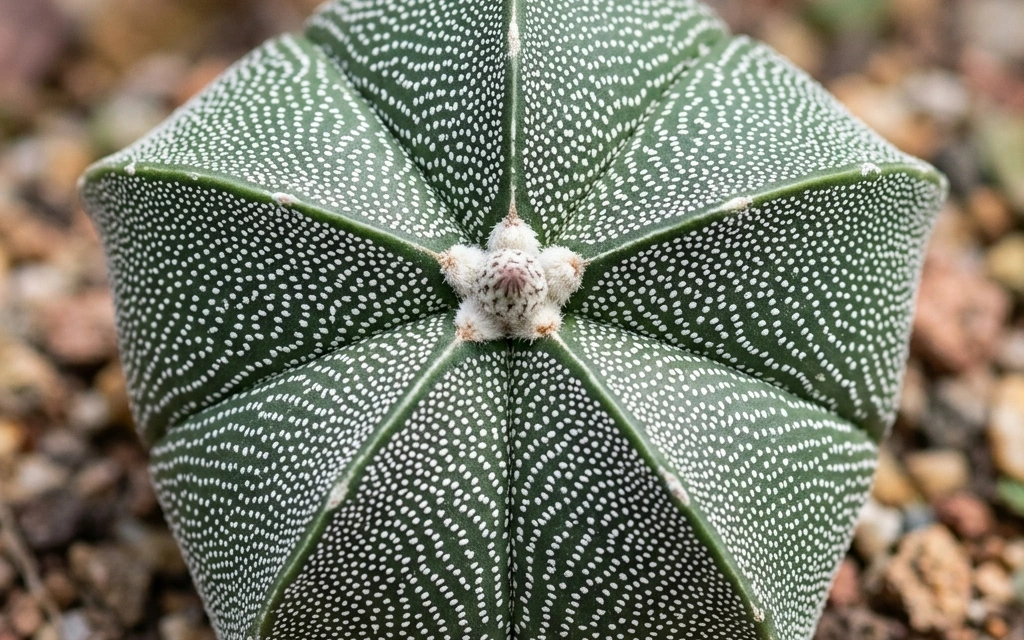
How to Identify Bishop's Cap
Identify Bishop's Cap easily by its distinct stem structure. Native to dry rocky canyons, its body features unique areole formations that adapt to severe light intensity.
-
✓
Distinctive Features: Symmetrical ribbed columns or round globes, wrapped in sharp golden-yellow or grey radial spines.
-
✓
Typical Coloration: Glaucous blue-grey, waxy jade green, or metallic purplish-bronze under sun stress.
-
✓
Potential Confusions: Often confused with other clustering succulents, but distinguished by the presence of genuine spine areoles.
11-Step Professional Care Guide
Bishop's Cap requires a highly measured water supply. Water thoroughly only when the entire gravelly potting medium is 100% dry. Its vertical ribs or globular body will look slightly thinner or shriveled during dry spells. Based on requirements: Very Low. Never allow the roots to sit in stagnant water as it leads to pythium root rot. Restrict watering significantly to once every 8 weeks in winter dormant phases.
Bishop's Cap requires Bright, Consistent Indirect Light. Provide consistent, direct morning sun to keep the plant column tight and symmetrical. If kept in deep shade, the stems will stretch out rapidly toward light (etiolation), resulting in weak, pale growth.
The optimal substrate is a loose, gravelly, exceptionally fast-draining potting soil. Based on requirements: Fast-draining mineral grit. A standard high-aeration cactus recipe consists of 70% mineral grit (pumice, lava rock, coarse sand, perlite) and 30% organic peat moss or loam (pH 6.0-7.5) to prevent moisture trapping.
Thrives in standard warm environmental conditions: 12°C - 28°C. Protect from freezing temperatures, heavy frosts, and cold drafts in winter. Maintain winter protection above 10°C (50°F) to prevent cell collapse and floppy decay.
Bishop's Cap requires absolutely no active pruning. Gently remove any dried weeds, organic debris, or faded flowers from around the base of the stems using long sterile metal tweezers. Avoid touching the sharp spines with bare skin.
Feed Bishop's Cap very sparingly. Apply a balanced liquid organic cactus fertilizer diluted to quarter strength once in late spring and once in mid-summer during active active vegetative growth. Avoid nitrogen-heavy formulas which cause bloated, weak stems. Do not fertilize in winter.
Choose an unglazed clay or terracotta container with multiple large bottom drainage holes. Terracotta allows excess soil moisture to breathe and evaporate safely, protecting roots. Repot every 2 to 3 years in spring using a pot that is 1 inch wider.
Propagate Bishop's Cap primarily by seeds in spring. For clustering species, propagate easily by separating offsets or pups from the mother plant in spring. Let the cut calluses dry in shade for 3 to 5 days, and plant upright in dry cactus soil.
Inspect spine clusters and rib crevices regularly for cottony mealybugs, spider mites, or scale insects. Treat immediately by dabbing with rubbing alcohol or spraying with mild insecticidal soap every 7 days for 3 weeks.
Fungal stem and root rot caused by wet soil and high humidity is the primary killer. Base turns yellow, soft, and collapses. Prevent this entirely by allowing soil to dry. Spray with organic copper fungicide if fungal spots occur.
Avoid touching the white skin; the chalky white dots act as a vital natural sunscreen. Wiping them off leaves permanent green scars prone to sunburn.
Frequently Asked Questions
Q: How often should I water my Bishop's Cap?
A: You should only water your Bishop's Cap when the gravelly potting medium is 100% dry. Avoid overhead watering to prevent rot in the crown.
Q: What is the best soil mix for Bishop's Cap?
A: The best soil is a highly porous gritty mix consisting of 70% mineral substrate (pumice, perlite, gravel) and 30% organic coco peat.
Q: Does Bishop's Cap require full direct sun?
A: Yes, most Bishop's Cap species thrive in bright direct sun. Provide at least 4-6 hours of direct morning sun daily to keep spination dense.
Q: What should I do if my Bishop's Cap base turns soft?
A: A soft, yellowing base indicates root rot from overwatering. Stop watering immediately, cut away mushy roots, apply fungicide, and repot.
Keep Your Bishop's Cap Symmetrical & Safe!
Use the Plant AI App to identify cacti immediately from your camera, diagnose pest scales, set precise watering reminders, and ask our AI Botanist expert care questions.