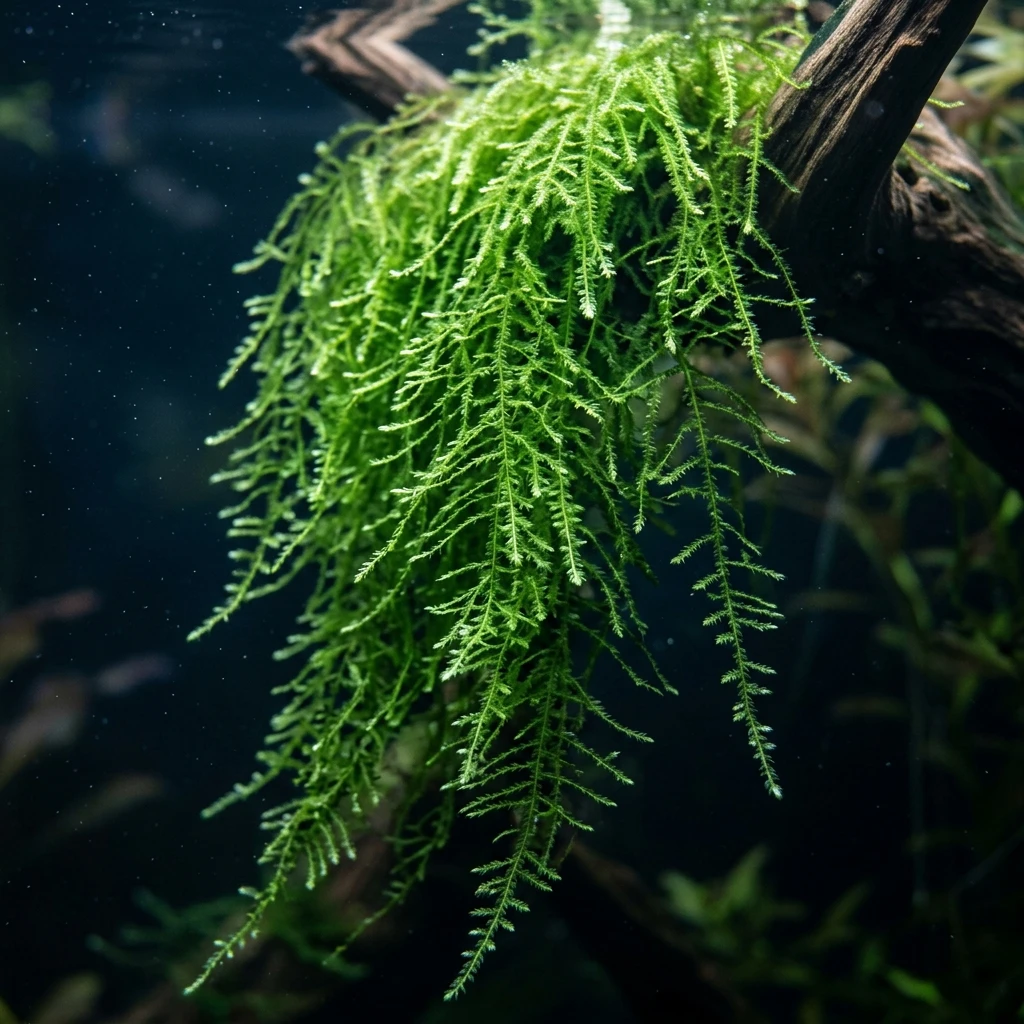
Weeping Moss
Scientific Name: Vesicularia ferriei
Weeping Moss is an exceptionally beautiful, cascading aquatic moss species native to tropical Southeast Asia. Prize-worthy for its gorgeous teardrop-shaped waxy leaves that grow dense and weep gracefully downwards from hardscape, it is the premier choice for creating water forest trees and spectacular cascading cliffs in Nature Aquarium layouts.
Lighting Needs
Low to Moderate
Water Parameters
Aquatic (pH 6.0-7.8)
Optimal Substrate
Epiphytic (Driftwood / Rock)
Hardy Temperature
15°C - 26°C
Toxicity Level
Pet Friendly (Non-toxic)
How to Identify Weeping Moss
Use our structural morphological markers to verify the identity of your Weeping Moss in any local nursery or wild wetland:
-
✔
Overall Visual Shape: Dynamic vertical hanging fronds with teardrop-shaped scale-like leaves that gracefully weep downward.
-
✔
Leaf Morphology: Small, scale-like round waxy dark green leaves that grow dense and cascade vertically down from thin branches.
-
✔
Root & Anchoring Structure: Rootless; develops tiny brown anchoring rhizoids that slowly weave tightly into wood and stone crevices.
Complete Cultivation & Spawning Guide
Follow our detailed scientific water parameters and care guides to keep your Weeping Moss thriving.
pH: 6.0 - 7.8, GH: 3 - 15 dGH. Extremely resilient, adapting easily to soft or hard water conditions.
Low. Grows perfectly without pressurized CO2, though carbon injection induces faster growth and thicker stems.
Low to Moderate. Very adaptable; bright light speeds up growth, while low light keeps the compact rosette shape.
Cut off old, yellowing, or damaged leaves at the base of the stem. Clean dead organic debris to prevent siltation.
An water-column feeder. Relies on liquid macro and micro nutrients; substrate fertilizers are ineffective.
Do not bury in soil! Tie or glue the moss onto driftwood or rocks. Submerging rhizoids in soil will rot the plant.
Optimal temperature is 15°C to 26°C (59°F - 78.8°F). Sensitive to heat; starts turning brown and rotting above 28°C.
Requires steady water circulation. Good current prevents organic waste and algae spores from landing on delicate fronds.
Its tough, bitter leaves are completely fish-proof. Provides excellent hiding places for shrimp and breeding fish.
Slow growth makes it susceptible to hair algae. Keep water clean and employ Siamense Algae Eaters or Amano shrimps.
Best attached to midground rocks or roots. Leave spacing of 3 to 4 inches from neighboring clumps to allow perfect spread.
Common Diseases & Treatment
🚨 Weeping Failure (Shading)
Common Cause: Moss fronds grow messy and lose their natural downward weeping shape, stretching horizontally instead.
Professional Cure: Caused by insufficient light or overcrowding. Trim the top layers to force new, compact vertical weeping shoots.
🚨 High Temp Browning
Common Cause: Moss fronds turn pale brown, dry up, and die in the water column.
Professional Cure: Caused by high water temperatures above 28°C. Lower water temperature using a chiller or fan immediately.
Frequently Asked Questions
❓ Why is it called Weeping Moss?
The name comes from its highly unique teardrop-shaped leaves that cascade and weep downwards from the branches, mimicking a weeping willow tree underwater.
❓ How do I create a tree waterfall effect?
Glue small portions of Weeping Moss onto the branching ends of a bonsai driftwood tree. As it grows, it will cascade downwards, creating a beautiful weeping foliage crown.
❓ What is the difference between Weeping Moss and Christmas Moss?
Weeping Moss has a highly distinct, cascading drooping habit with teardrop leaves, whereas Christmas Moss has flat triangular branches that grow in a layered horizontal structure.
❓ Does it need regular trimming?
Yes. Regular trimming with sharp curved scissors is highly recommended to thin out the mats, preventing the bottom layers from suffocating due to lack of light.