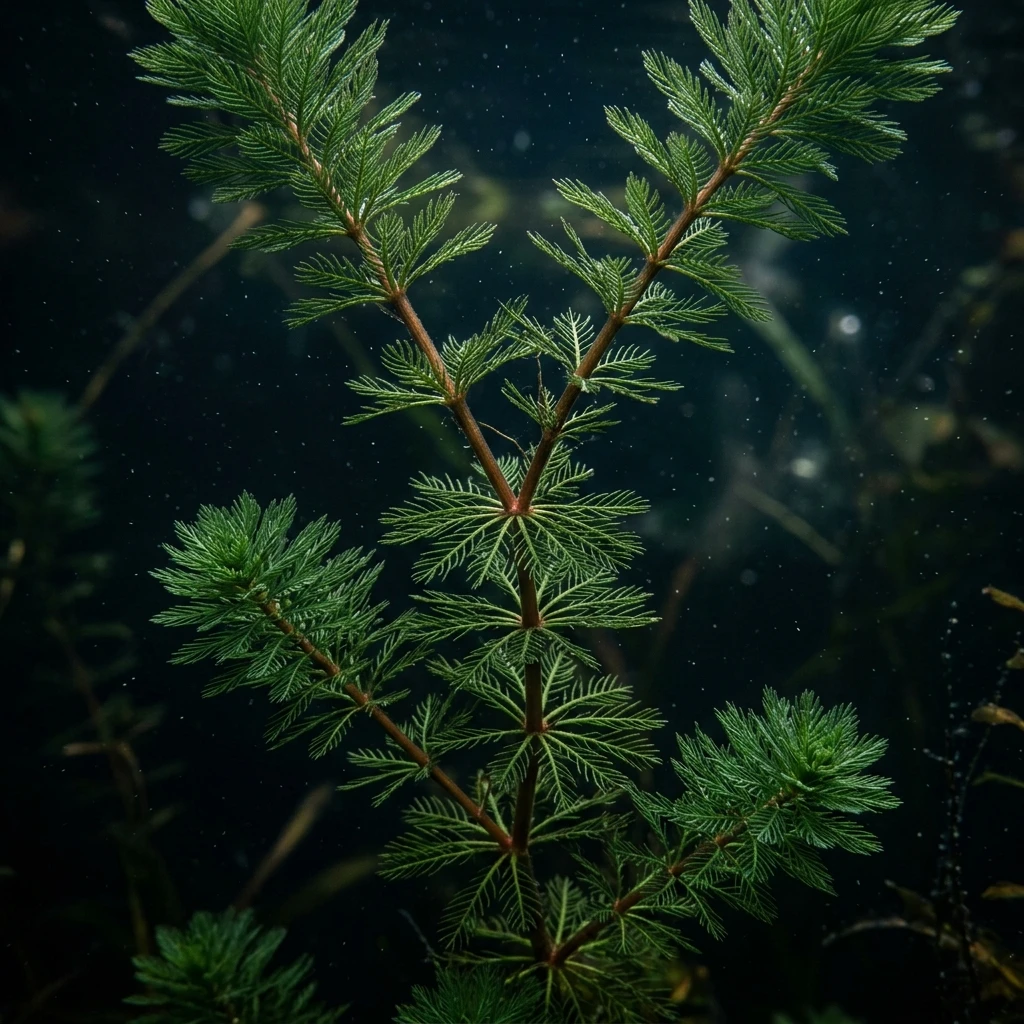
Eurasian Milfoil
Scientific Name: Myriophyllum spicatum
Eurasian Milfoil is a highly decorative, feather-plumed background species native to slow-moving waters across Europe, Asia, and North Africa. Prized for its gorgeous, comb-like olive-green leaves arranged in perfect whorls, it forms beautiful, branching underwater screens. An outstanding natural water purifier, it absorbs excess nitrates and phosphates at lightning speed, keeping aquarium water crystal clear.
Lighting Needs
Moderate to High
Water Parameters
Aquatic (pH 6.5-8.0)
Optimal Substrate
Nutrient-rich substrate
Hardy Temperature
10°C - 26°C
Toxicity Level
Pet Friendly (Non-toxic)
How to Identify Eurasian Milfoil
Use our structural morphological markers to verify the identity of your Eurasian Milfoil in any local nursery or wild wetland:
-
✔
Overall Visual Shape: Elegant tall vertical plumes of feathery olive-green to reddish comb-like leaves.
-
✔
Leaf Morphology: Finely-divided feathery comb-like leaves arranged in whorls of 4 around long, branching vertical stems.
-
✔
Root & Anchoring Structure: Slender, spreading anchoring roots that grasp the bottom soil firmly.
Complete Cultivation & Spawning Guide
Follow our detailed scientific water parameters and care guides to keep your Eurasian Milfoil thriving.
pH: 6.5 - 8.0, GH: 5 - 20 dGH. Highly adaptable to soft, hard, or slightly alkaline freshwater setups.
Low to Moderate. pressuring CO2 is not required but enhances leaf density and induces elegant reddish hues on the growing tips.
Moderate to High. Intense full-spectrum lighting keeps the fine comb leaves tight, preventing lower leaf decay.
Trim the tall tops using sharp aquascaping scissors. Replant the cut stems to multiply your aquatic hedge.
A heavy water-column feeder. Requires regular dosing of liquid iron and comprehensive macro/micro elements.
Planted stems root quickly in sand, gravel, or aquasoil. Benefit from occasional root fertilizer tabs.
Optimal temperature is 10°C to 26°C (50°F - 78.8°F). Exceptional cold water tolerance; highly resistant in outdoor ponds.
Requires moderate to strong circulation. Good current prevents organic silt and algae from clinging to feathery leaves.
Offers superb spawning media and protective cover for community fish, ornamental shrimps, and delicate fry.
Acts as an elite nitrate filter, effectively suppressing green hair algae. Stock Amano shrimp to graze on fine leaf pinnules.
Best planted in clusters in the background. Space individual stems 1 inch apart to prevent lower canopy shading.
Common Diseases & Treatment
🚨 Lower Leaf Shedding
Common Cause: The lower leaves turn black, rot, and fall off, leaving a bare bottom stem.
Professional Cure: Caused by light blockage from overgrown top layers. Prune the tops regularly and increase space between stems.
🚨 Silt Accumulation
Common Cause: Fine feathery leaves get coated with brown dust or organic mulm, suffocating the plant.
Professional Cure: Poor water filtration or circulation. Increase current, perform water changes, and deploy helper shrimps to clean leaves.
Frequently Asked Questions
❓ How does it help with algae control?
It is an incredibly fast grower that absorbs massive amounts of nitrogen and phosphorus directly from the water, starving out nuisance algae.
❓ How do I prune Eurasian Milfoil?
Simply cut the stem at your desired height. The remaining stem will shoot out multiple new branches, creating a bushier appearance.
❓ Can it survive in cold outdoor ponds?
Yes! Myriophyllum spicatum is extremely hardy and can easily overwinter in outdoor ponds, even under ice, as long as the water doesn't freeze solid.
❓ Why are the tips turning red?
Under very high lighting and high chelated iron supplementation, the growing tips will develop beautiful coppery-red tips.