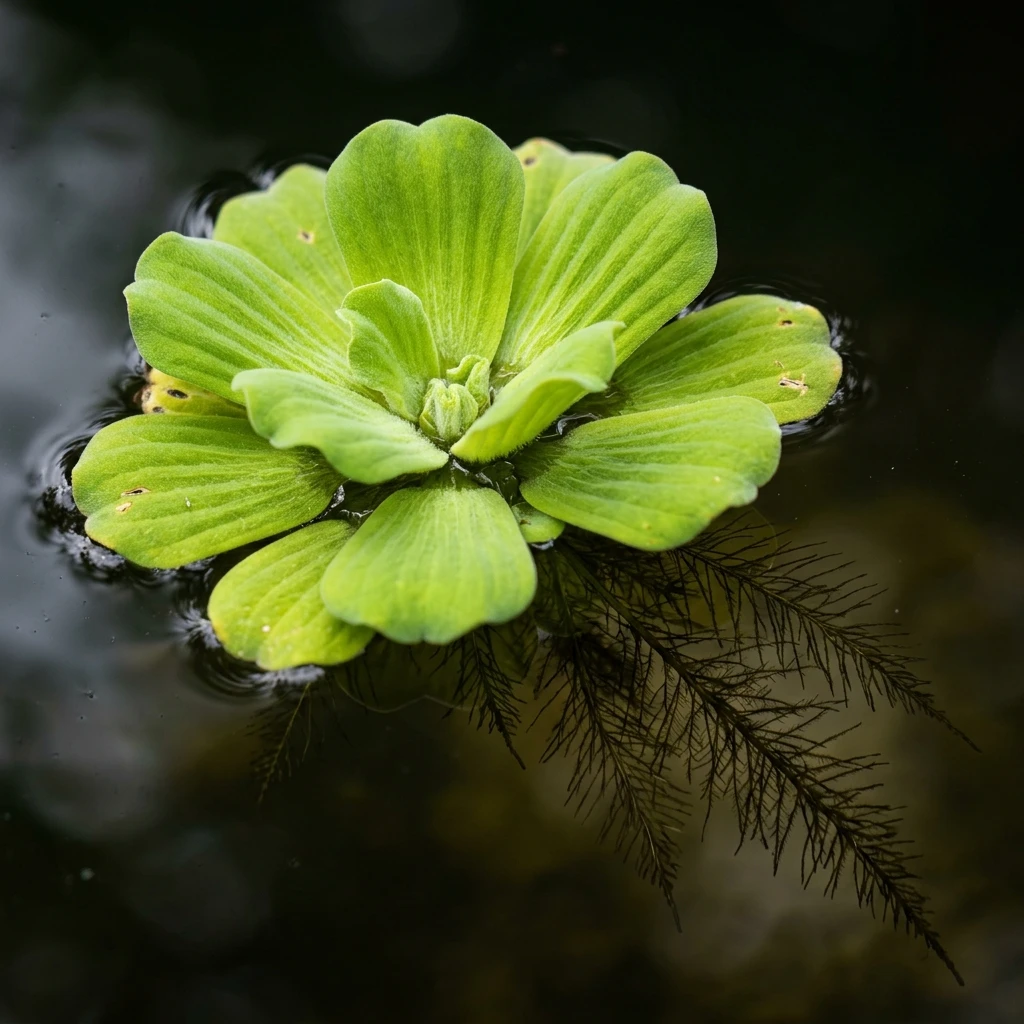
Pistia stratiotes

Water Lettuce Growing & Care Guide

Water Lettuce is a striking, fast-growing floating plant famous for its soft, velvety, rosette of light-green leaves. Floating elegantly on the water surface, its long feathery roots act as highly efficient biological filters, absorbing nitrates and offering premium shelter for fish.


Lighting Icon
Lighting Moderate to High
Water Hardness Icon
Water Hardness Floating (pH 6.5-7.5)
Substrate Icon
Substrate Floating (No soil needed)
Temperature Icon
Water Temp 15°C - 30°C
Toxicity Warning Icon
Toxicity Toxic to Pets (Oxalates)
Botanical macro photography of Water Lettuce (Pistia stratiotes) - Plant AI care database

How to Identify Water Lettuce

Water Lettuce (Pistia stratiotes) is an iconic aquatic species. Recognizing its key structures is crucial for successful aquascaping and thriving growth.

  • Visual Shape & Growth: Rosette-forming floating plant resembling a small head of cabbage floating on the surface.
  • Leaf Morphology: Spongy, ribbed, velvety light-green leaves covered in tiny soft hairs that repel water.
  • Root & Anchoring Structure: Long, trailing, heavily branched feathery black or dark-purple root systems hanging in the water.
💡 Plant AI Tip: Take a photo with Plant AI to identify aquatic weeds and diagnose fungal spot diseases in 1 second.

Complete Cultivation & Spawning Guide

Follow our detailed scientific water parameters and care guides to keep your Water Lettuce thriving.

pH: 6.5 - 7.5, GH: 4 - 12 dGH. Prefers stable freshwater ponds or open aquariums with low surface agitation.
Sucks CO2 directly from the air, meaning it has zero water CO2 requirements. Highly efficient at cleaning tank water.
Prefers high to moderate light. Under strong sunlight or high-PAR aquarium LED, it forms large, robust rosettes.
Thin out excess rosettes regularly to prevent them from completely covering the surface and blocking light to submersed plants.
A heavy feeder that rapidly absorbs water nitrates. Requires regular liquid fertilizer dosing if leaves start to pale.
Strictly floating. Under no circumstances should it be anchored to substrate or soil. Requires open surface space.
Optimal temperature is 15°C to 30°C (59°F - 86°F). Highly sensitive to frost; must be brought indoors during winter.
Requires calm water surfaces. Strong water flow, filter splashes, or surface current will toss it around and rot the leaves.
Roots offer excellent protection for baby fish. Large herbivorous fish like Koi may graze on its trailing roots.
In closed tanks, water condensation dripping from the glass lid will cause leaf rot. Keep the tank open or highly ventilated.
Gently place on the water surface. Ensure the leaves remain dry during introduction to avoid initial rot.

Are your Water Lettuce leaves turning yellow, dissolving or rotting?

Manage surface cover. Prevent condensation dripping on leaves and provide adequate ventilation.

Diagnose My Aquatics

Common Diseases & Treatment

Condensation Leaf Rot

Symptoms: Yellow-brown mushy spots develop on leaves, causing the rosette to collapse.

Action: Improve air circulation, remove the aquarium cover lid, or ensure filter output does not splash water on leaves.

Feathery Root Die-off

Symptoms: Roots turn white, break off easily, or rot away.

Action: Indicates severe nutrient deficiency (specifically iron/nitrogen) or high chlorine/salinity. Dose liquid fertilizer.

Frequently Asked Questions

Is Water Lettuce legal in all states?

No, in some warm regions (e.g. Florida, Texas) it is classified as an invasive species due to its fast growth. Always check local environmental regulations before outdoor pond planting.

Why is my Water Lettuce turning yellow and shrinking?

Yellowing and shrinking is almost always caused by nutrient starvation (high efficiency at stripping nitrates) or lack of adequate light. Dose comprehensive liquid fertilizer.

How do I control its rapid growth?

Simply use a net to scoop out and discard excess rosettes weekly. Never dump them into local natural waterways.

Can Water Lettuce survive winter outdoors?

No, it is a tropical plant and will die under frost or near-freezing temperatures. Bring a few small rosettes indoors to overwinter in a brightly lit tank.

Master advanced aquascaping. Start today!

Get Started for Free