Water Iris Growing & Care Guide
Yellow Water Iris is an exceptionally robust, vertical marginal plant celebrated for its majestic sword-shaped leaves and spectacular, bright yellow blossoms. Growing up to 3-4 feet tall, it makes an elite structural background anchor for bog gardens, pond margins, and shallow water margins, naturally absorbing massive excess pond nutrients while stabilizing muddy shorelines.




How to Identify Water Iris
Water Iris (Iris pseudacorus) has key botanical markers. Recognizing these features is crucial for successful aquascaping and thriving growth.
-
✔
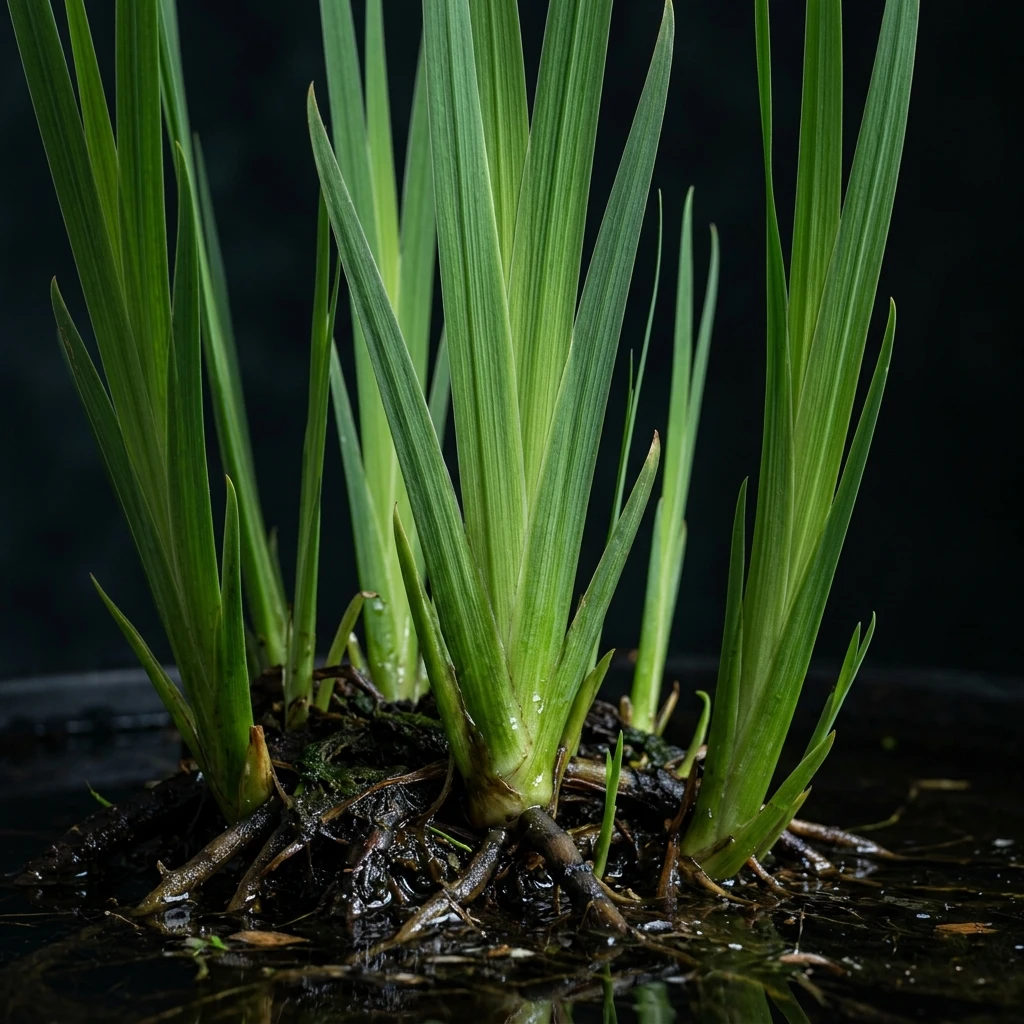
Visual Shape & Growth: Erect fan-shaped clumps of sword-like green leaves, with brilliant yellow iris flowers blooming on tall stalks.
-
✔
Leaf Morphology: Sword-shaped, rigid grayish-green leaves (up to 3 feet long) arranged in a flat, fan-like rosette clump.
-
✔
Root & Anchoring Structure: Thick, creeping, highly fibrous horizontal rhizomes that form dense, soil-binding root networks.
Complete Cultivation & Spawning Guide
Follow our detailed scientific water parameters and care guides to keep your Water Iris thriving.
Common Diseases & Treatment
Iris Borer Damage
Symptoms: Larvae tunnel into the leaves and migrate down to chew the rhizomes, causing rhizome rot.
Fungal Leaf Spot (Didymellina)
Symptoms: Circular brown spots with gray centers expand across the leaves, causing the blades to wither and turn crispy.
Frequently Asked Questions
Why is my Water Iris not blooming?
The most common cause is insufficient sunlight. Water Iris needs full direct sun and rich soil nutrients to produce blooms.
Is Water Iris toxic to pets?
Yes, the entire plant, especially the creeping rhizomes, contains iridin, which is toxic to dogs, cats, and horses.
Can it grow outside of water?
Yes! Water Iris is highly adaptable and can grow in moist garden beds, though it grows largest and healthiest in shallow standing water.
How do I control its spread?
It spreads quickly via seeds and creeping rhizomes. Plant in heavy plastic pots and prune dead flower heads before they form seed pods.