Water Hyacinth Growing & Care Guide
Water Hyacinth is an exceptionally beautiful, fast-growing tropical floating plant famous for its swollen, bulbous petioles and stunning violet-blue summer blossoms. floating elegantly on ponds or open tanks, its massive black root system acts as an elite biological filter, purifying water column toxins.





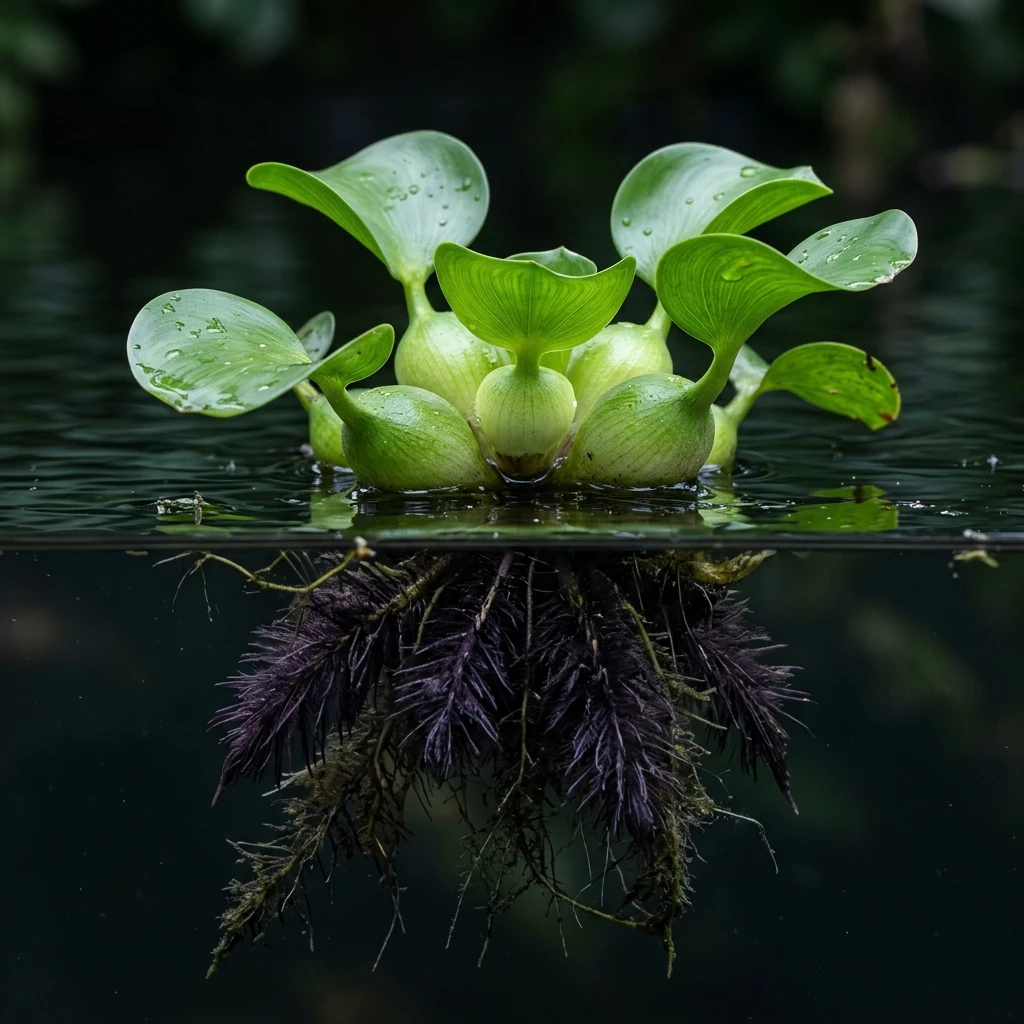
How to Identify Water Hyacinth
Water Hyacinth (Eichhornia crassipes) is an iconic aquatic species. Recognizing its key structures is crucial for successful aquascaping and thriving growth.
-
✔
Visual Shape & Growth: Bulbous, floating rosettes with glossy green leaves and spectacular upright lavender-blue flowers.
-
✔
Leaf Morphology: Glossy, thick, rounded green leaves with highly swollen, air-filled bulbous leaf stems.
-
✔
Root & Anchoring Structure: Extremely dense, heavily branched, feathery purple-black roots that hang deep into the water.
Complete Cultivation & Spawning Guide
Follow our detailed scientific water parameters and care guides to keep your Water Hyacinth thriving.
Common Diseases & Treatment
Chlorosis (Iron Starvation)
Symptoms: Leaves turn pale green, yellow, or white while veins remain green.
Bulb Rot (Condensation)
Symptoms: The bulbous petioles turn brown, mushy, and rot.
Frequently Asked Questions
Why is Water Hyacinth illegal in some states?
Due to its rapid growth, it can quickly choke out rivers and lakes, blocking navigation and killing native fish. It is strictly banned in several US states. Never release it into natural waters.
Why is my Water Hyacinth not blooming?
Blooms require extremely high, direct solar light (at least 6-8 hours of direct sun) and warm temperatures above 24°C. Indoor tanks rarely receive enough light to trigger flowering.
How does it reproduce?
It reproduces very rapidly by sending out runners that form new clonal rosettes. It also reproduces via seeds that sink to the pond bottom.
Is Water Hyacinth toxic to cats and dogs?
Yes, it contains calcium oxalate crystals which can cause mild to moderate oral irritation and vomiting if ingested by land pets.