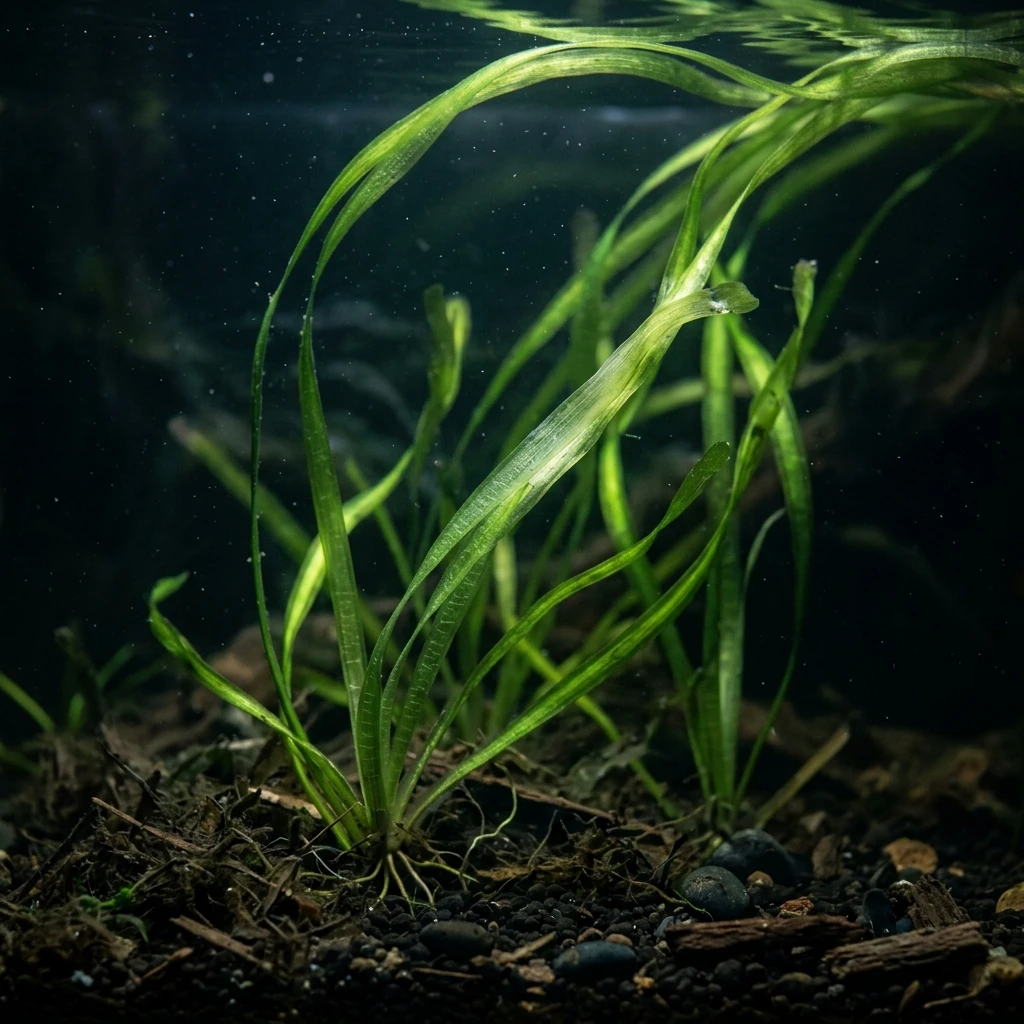
Vallisneria spiralis

Vallisneria Spiralis Growing & Care Guide

Vallisneria Spiralis, classically known as Italian Eelgrass, is the definitive background plant of the freshwater hobby. Famous for its long, ribbon-like, twisting green leaves, it propagates rapidly via runners, forming a beautiful, dense natural forest backdrop that frames aquarium scapes perfectly.


Lighting Icon
Lighting Moderate to High
Water Hardness Icon
Water Hardness Aquatic (pH 6.5-8.5)
Substrate Icon
Substrate Nutrient-rich gravel/sand
Temperature Icon
Water Temp 15°C - 30°C
Toxicity Warning Icon
Toxicity Pet Friendly (Non-toxic)
Botanical macro photography of Vallisneria Spiralis (Vallisneria spiralis) - Plant AI care database

How to Identify Vallisneria Spiralis

Vallisneria Spiralis (Vallisneria spiralis) is an iconic aquatic species. Recognizing its key structures is crucial for successful aquascaping and thriving growth.

  • Visual Shape & Growth: Long, vertical, strap-like light green leaves rising directly from a central root crown.
  • Leaf Morphology: Linear, ribbon-like leaves with beautiful longitudinal veins, twisting gently like a spiral spiral.
  • Root & Anchoring Structure: Thick, fibrous white root system designed to anchor deeply into aquarium gravel or sand.
💡 Plant AI Tip: Take a photo with Plant AI to identify aquatic weeds and diagnose fungal spot diseases in 1 second.

Complete Cultivation & Spawning Guide

Follow our detailed scientific water parameters and care guides to keep your Vallisneria Spiralis thriving.

pH: 6.5 - 8.5, GH: 4 - 20 dGH. Enjoys moderately hard, alkaline water with dissolved mineral content.
Low demand. Does not need pressurized CO2. Highly sensitive to liquid glutaraldehyde-based carbon products (which melt it).
Moderate to high light. Under strong lighting, it grows exceptionally long and develops rich, deep green foliage.
Never cut Vallisneria leaf blades in half as the cut leaf will eventually rot. Instead, prune whole leaves from the base crown.
A heavy root feeder. Requires nutrient-rich substrate. Insert root fertilizer tabs near the base every few months.
Requires a deep sand or gravel bed. Plant the roots, but ensure the green crown (base of leaves) is completely above the substrate.
Thrives in a wide temperature range, from 15°C to 30°C (59°F - 86°F). Hardy and adaptable to temperate outdoor setups.
Enjoys moderate current. Leaves sway beautifully in the filter output, creating a highly dynamic aquatic visual effect.
Ideal for community tanks, cichlid aquariums, and goldfish habitats as fish find it difficult to tear the fibrous leaves.
Long leaves can gather hair algae. Keep nutrients balanced and use Amano shrimp or Siamese Algae Eaters to maintain them.
Space individual crowns 2 to 3 inches apart in the background. It will quickly fill in gaps by sending out stolons.

Are your Vallisneria leaves melting, turning yellow or transparent?

Secure your root crown. Ensure it is not buried too deep and dose essential iron and root tabs.

Diagnose My Aquatics

Common Diseases & Treatment

Vallisneria Melt (Chemical Shock)

Symptoms: Leaves turn transparent, yellow, and disintegrate into mushy threads.

Action: Caused by dosing liquid carbon (Excel) or copper-based treatments. Perform water change, stop chemicals; roots will eventually regrow.

Crown Suffocation

Symptoms: Leaves rot at the base and float away.

Action: Caused by planting the crown too deeply in the gravel. Pull the plant upward until the green crown base is visible.

Frequently Asked Questions

Why is my Vallisneria melting?

Vallisneria is highly sensitive to liquid algaecides or liquid carbon (like Excel). Dosing these chemicals strips the cellular structure of Vallisneria, causing it to melt. It is also sensitive to copper.

Can I trim the leaves if they grow too long?

While you can trim them, cutting a leaf blade will cause the tip to turn brown and the rest of the leaf to slowly decay. It is best to prune the entire leaf from the crown base or let the leaves float across the surface.

How do I plant Vallisneria correctly?

Dig a small hole in the gravel, place the roots in, and cover them. Then, gently pull the plant upward until the white crown (where the leaves meet the roots) is completely above the soil level.

How fast does it propagate?

Very fast. Once established in a nutrient-rich substrate, it sends out underground runners (runners) that sprout new plantlets, quickly forming a dense grass wall.

Master advanced aquascaping. Start today!

Get Started for Free