Acorus calamus

Sweet Flag Growing & Care Guide

Sweet Flag is an ancient, highly aromatic grass-like vertical marginal plant prized for its sword-shaped leaves that release a gorgeous, sweet tangerine-like fragrance when crushed. Thriving in bog filters and pond edges, this robust species features creeping rhizomes that serve as an elite biological water filter, absorbing massive excess pond nutrients while stabilizing muddy shorelines.


Lighting Icon
Lighting Full Sun to Partial Shade
Watering Icon
Water Parameter Wet soil to Shallow Water
Substrate Icon
Substrate Muddy clay / organic silt
Temperature Icon
Water Temp 10°C - 28°C
Toxicity Warning Icon
Toxicity Mildly Toxic to Pets (Contains Beta-asarone)
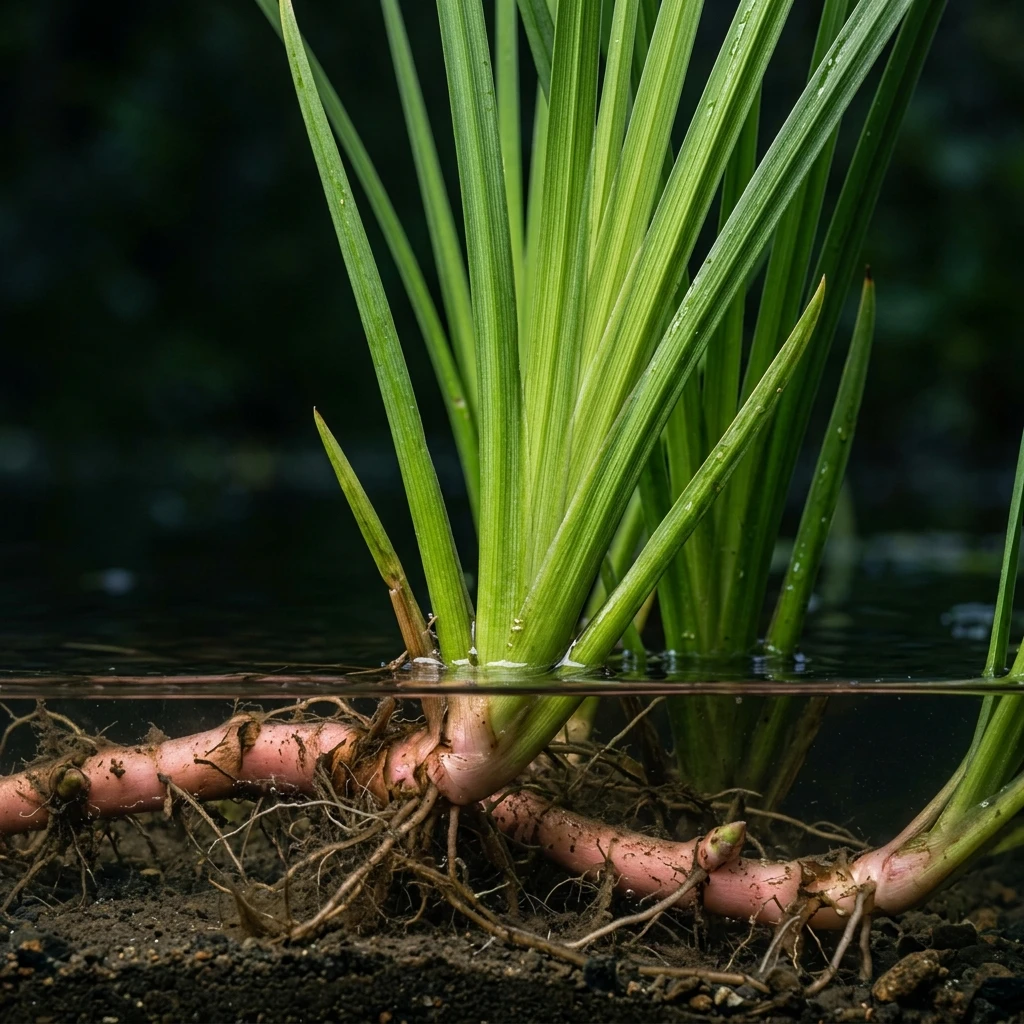
Botanical macro photography of Sweet Flag (Acorus calamus) - Plant AI care database

How to Identify Sweet Flag

Sweet Flag (Acorus calamus) has key botanical markers. Recognizing these features is crucial for successful aquascaping and thriving growth.

  • Visual Shape & Growth: Dense upright clumps of tall, grass-like sword-shaped green leaves with wavy margins.
  • Leaf Morphology: Sword-shaped, glossy bright green leaves (up to 3-4 feet tall) with a prominent central midrib and wavy edges.
  • Root & Anchoring Structure: Thick, creeping, highly aromatic pinkish rhizomes covered in fibrous anchoring roots.
💡 Plant AI Tip: Take a photo with Plant AI to identify aquatic weeds and diagnose fungal spot diseases in 1 second.

Complete Cultivation & Spawning Guide

Follow our detailed scientific water parameters and care guides to keep your Sweet Flag thriving.

pH: 5.5 - 7.5. Exceptionally adaptable. Tolerates high organic levels and performs beautifully in bog filtration filters.
Low. Grows emersed, drawing all its carbon dioxide directly from the surrounding air.
Full sun to partial shade. Prefers full sun for dense leaf growth, but tolerates partial shade with minor leaf stretching.
Cut off old, yellowing, or wind-damaged leaf blades at the base. Prune aggressively in late autumn to clear dead foliage.
An elite bio-filter. Absorbs massive excess nitrates. Supplemental fertilization is rarely needed in established ponds.
Requires muddy clay or organic silt. Press the thick rhizomes horizontally into the soil, keeping the top half exposed.
Optimal temperature is 10°C to 28°C (50°F - 82.4°F). Extremely cold hardy; rhizomes survive freezing winter soils easily.
Tolerates slow to moderate currents. Creeping roots are outstanding for shoreline erosion control.
Provides excellent shallow shelter for fish fry and tadpoles. Creeping rhizomes stabilize muddy shorelines, providing secure spawning sites.
Elite nutrient consumer, starving pond algae of excess nitrates and phosphates. Shades shallow waters.
Plant in shallow water (0 to 6 inches deep over the crown). Space individual rhizomes 12 to 18 inches apart.

Are your Sweet Flag leaf tips turning brown, dry or losing their sweet fragrance?

Ensure roots are constantly wet, check for red spider mites, and avoid burying rhizomes too deeply in mud.

Diagnose My Aquatics

Common Diseases & Treatment

Rhizome Rot (Fungal)

Symptoms: The thick pinkish rhizome turns soft, brown-black, and loses its aromatic citrus scent.

Action: Caused by burying the rhizome completely in dense, oxygen-starved mud. Plant horizontally with the top half exposed.

Leaf Blight

Symptoms: Brown, dry patches expand from the leaf tips downward, causing the blades to wither and turn crispy.

Action: Prune affected leaves, ensure constant water coverage over roots, and spray with organic copper fungicide if severe.

Frequently Asked Questions

Why is it called Sweet Flag?

The sword-like leaves and thick rhizomes contain aromatic essential oils that release a sweet, spicy, citrus-tangerine scent when crushed.

Can it grow in dry garden borders?

No. Sweet Flag is an obligate wetland plant. It requires constantly wet, soggy soil or shallow standing water, and will die quickly in dry soil.

Is Sweet Flag toxic?

Yes, it contains beta-asarone, which is mildly toxic to dogs, cats, and horses if ingested in large quantities.

How do I propagate Sweet Flag?

Propagate easily in spring by digging up the creeping rhizome, cutting it into sections with a sterilized blade (ensuring each section has a leaf bud), and replanting.

Master advanced aquascaping. Start today!

Get Started for Free