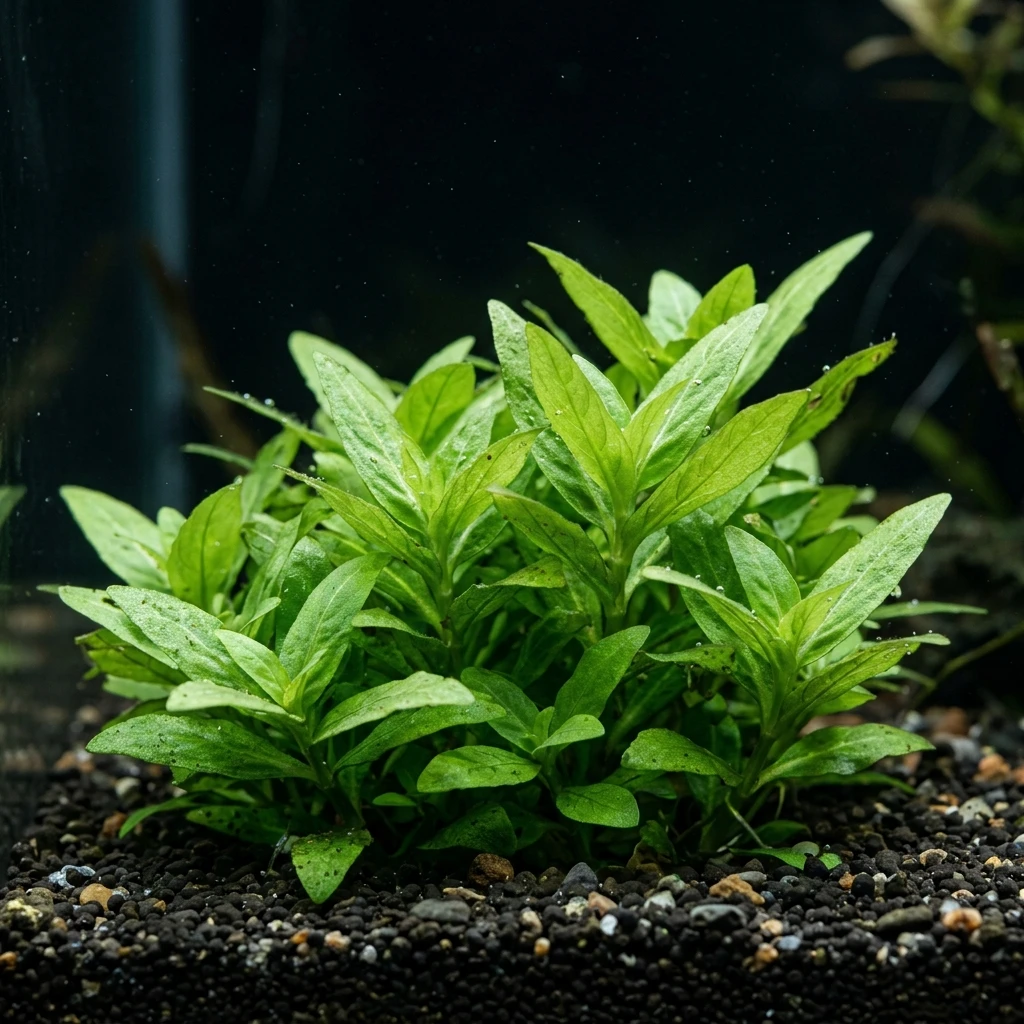
Staurogyne repens

Staurogyne Repens Growing & Care Guide

Staurogyne Repens is a bushy, compact foreground plant native to the Amazon, prized for its creeping woody stems and star-like opposite thick leaves. Highly resilient and slow-growing, it is a spectacular foreground contrast plant that can be easily trimmed to form low, dense green hedges around rocks.


Lighting Icon
Lighting Moderate Light
Water Hardness Icon
Water Hardness Aquatic (pH 6.0-8.0)
Substrate Icon
Substrate Sand or aquasoil
Temperature Icon
Water Temp 20°C - 28°C
Toxicity Warning Icon
Toxicity Pet Friendly (Non-toxic)
Botanical macro photography of Staurogyne Repens (Staurogyne repens) - Plant AI care database

How to Identify Staurogyne Repens

Staurogyne Repens (Staurogyne repens) has key botanical markers. Recognizing these features is crucial for successful aquascaping and thriving growth.

  • Visual Shape & Growth: Bushy, low-growing vertical or creeping stems covered in opposite, compact oval leaves.
  • Leaf Morphology: Small, thick, spatulate or oval bright-green leaves (approx. 1-2 centimeters long) arranged in opposite pairs.
  • Root & Anchoring Structure: Extremely robust, extensive white anchoring roots that shoot deeply and hold tightly to the substrate.
💡 Plant AI Tip: Take a photo with Plant AI to identify aquatic weeds and diagnose fungal spot diseases in 1 second.

Complete Cultivation & Spawning Guide

Follow our detailed scientific water parameters and care guides to keep your Staurogyne Repens thriving.

pH: 6.0 - 8.0, GH: 4 - 15 dGH. Extremely resilient, adapting easily to soft or hard water conditions.
Low to moderate. Can grow without CO2, but pressurized CO2 injection promotes highly compact, dense, and fast-creeping growth.
Moderate to high. Strong light keeps the carpet flat and compact; under lower light, it grows slightly taller but still carpets.
Trim the vertical stems aggressively to force the plant to crawl horizontally. Replant the cuttings to propagate.
Absorbs nutrients through both leaves and roots. Responds beautifully to weekly comprehensive liquid fertilizers, especially potassium.
Thrives in nutrient-rich aquasoil but can also carpet on fine gravel or sand if root tabs are regularly supplied.
Optimal temperature is 20°C to 28°C (68°F - 82°F). Sensitive to extreme cold below 18°C.
Enjoys steady water circulation to keep its dense carpet free from detritus accumulation and organic waste.
Perfect for community community setups. Ideal shelter and grazing ground for dwarf shrimps and community fish. Safe from grazers.
Its dense green foliage can catch green spot algae. Employ Amano shrimps, Cherry shrimps, and keep parameters stable.
Separate the pot into small plugs. Plant plugs 1 inch apart in the foreground; it will quickly merge into a solid green hedge.

Is your Staurogyne Repens growing tall, dropping leaves or turning yellow?

Trim aggressively near substrate, ensure solid root tabs, and maintain clean water flow.

Diagnose My Aquatics

Common Diseases & Treatment

Potassium Deficiency

Symptoms: Mature leaves develop tiny, dark-rimmed holes that grow larger, causing the leaf to drop.

Action: Dose water column potassium sulfate or comprehensive liquid fertilizer weekly.

Stem Melting

Symptoms: Stems turn soft, black, and decay at the substrate line.

Action: Caused by compacted, anaerobic substrate or burying the stem too deep. Clean the gravel and replant healthy cuttings.

Frequently Asked Questions

How do I make Staurogyne Repens carpet?

Trim the vertical shoots. This forces the plant to send its energy into lateral branches that crawl horizontally along the substrate.

Why is my Staurogyne growing tall?

This is a classic sign of insufficient lighting. The plant is stretching upward toward the light source. Increase light intensity or prune tops.

Can Staurogyne grow emersed?

Yes! It grows exceptionally well emersed in damp soil, where it forms dense terrestrial carpets and blooms beautiful tiny white flowers.

Is it safe for shrimp?

Yes, it is entirely non-toxic, pet-friendly, and offers safe hiding spots and biofilm grazing surfaces.

Master advanced aquascaping. Start today!

Get Started for Free