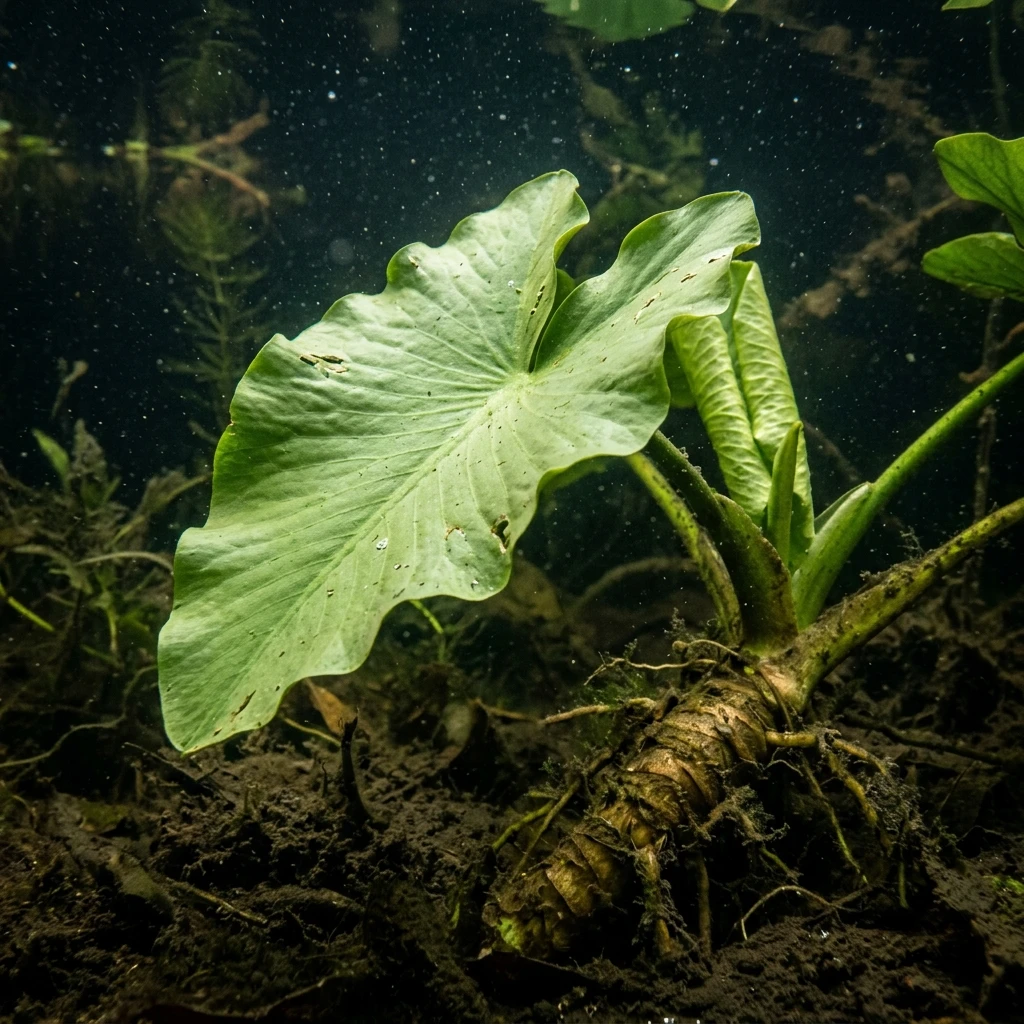
Spatterdock
Scientific Name: Nuphar advena
Spatterdock, also known as Yellow Pond Lily, is a majestic, vertical water lily species native to lakes and slow-moving streams of North America. Prize-worthy for its gorgeous vertical rosettes of heart-shaped semi-transparent waxy green underwater leaves, it shoots up thick stalks displaying waxy floating leaves and bright yellow globular flowers on the surface, adding unparalleled structural depth.
Lighting Needs
Moderate to High
Water Parameters
Aquatic (pH 6.0-7.8)
Optimal Substrate
Nutrient-rich clay/mud
Hardy Temperature
15°C - 28°C
Toxicity Level
Pet Friendly (Non-toxic)
How to Identify Spatterdock
Use our structural morphological markers to verify the identity of your Spatterdock in any local nursery or wild wetland:
-
✔
Overall Visual Shape: Grand, majestic vertical rosettes of heart-shaped semi-transparent waxy green underwater leaves and yellow globular flowers.
-
✔
Leaf Morphology: Huge heart-shaped, slightly wavy opposite leaves (underwater leaves are translucent and bright green; floating leaves are thick, opaque, and waxy).
-
✔
Root & Anchoring Structure: Massive, thick spongy horizontal creeping rhizomes anchored deeply in mud.
Complete Cultivation & Spawning Guide
Follow our detailed scientific water parameters and care guides to keep your Spatterdock thriving.
pH: 6.0 - 7.8, GH: 4 - 15 dGH. Highly adaptable to soft or moderately hard freshwater setups.
Low to Moderate. pressuring CO2 is not required but enhances leaf density and induces elegant reddish hues on the growing tips.
Moderate to High. Brighter light produces extremely compact, deeply-indented burgundy leaves; low light yields loose green leaves.
Clip old, decaying, or leggy fronds at the base. Harvest baby plantlets that form on leaf margins to multiply.
An water-column feeder. Relies on liquid macro and micro nutrients; substrate fertilizers are secondary.
Requires rich aquasoil or clay-based substrates enriched with comprehensive root tabs.
Optimal temperature is 15°C to 28°C (59°F - 82.4°F). Sensitive to severe cold shocks below 15°C.
Requires gentle to moderate current. Too strong current will break the delicate feathery stems.
Its tough waxy leaves are highly resistant to plant-eating fish. Safe for community and shrimp setups.
Fast growth makes it a brilliant nutrient sponge, starving out hair algae. Clean debris using cherry or Amano shrimps.
Best planted in the background. Space individual crowns 2 to 3 inches apart in the background.
Common Diseases & Treatment
🚨 Rhizome Rot (Burial)
Common Cause: The massive blocky rhizome turns soft, black, and decays, causing all leaf stems to float away.
Professional Cure: Rhizome buried too deeply in dense, anaerobic soil. Pull it slightly upward until the top half of the rhizome is exposed.
🚨 Underwater Leaf Spot
Common Cause: Translucent underwater leaves develop black circular patches that thin out and rot.
Professional Cure: Triggered by mold or decaying organic debris on leaves. Trim infected leaves, increase water circulation, and stock Amano shrimps.
Frequently Asked Questions
❓ How big does Spatterdock grow?
In an aquarium, it grows very large. underwater leaves can reach 8 inches, and floating leaf stems can grow several feet high to reach the surface, requiring a large tank.
❓ Why are some leaves transparent and others thick?
This is a specialized adaptation. Submerged (underwater) leaves are highly translucent and thin to capture low light, while emersed (floating) leaves are thick and waxy to resist sun scorch.
❓ How do I plant its massive rhizome?
Dig a small trench in the mud, place the roots in, and cover them. Gently position the thick blocky rhizome at a 45-degree angle, keeping the top half visible above the soil.
❓ Does it flower underwater?
No. Spatterdock produces beautiful, bright yellow globular flower buds that must rise completely above the water surface to open and pollinate.