Red Butterfly Rotala Growing & Care Guide
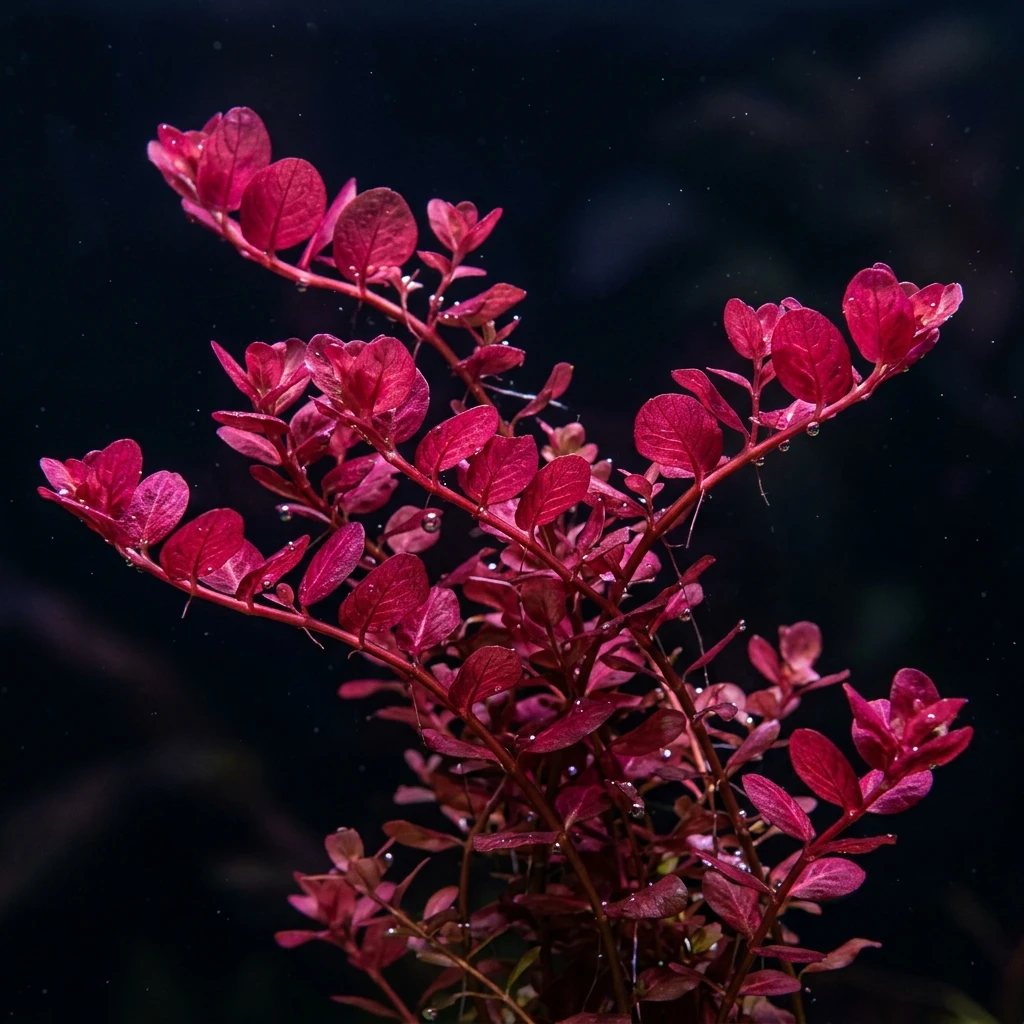
Red Butterfly Rotala is a spectacular, delicate vertical stem species native to Southern India, prized as the absolute king of aquascaping red plants. Highly demanding, it features gorgeous, translucent round leaves that turn a brilliant scarlet-red under intense lighting and chelated iron, serving as the ultimate vibrant background centerpiece in professional Dutch and nature-style layouts.





How to Identify Red Butterfly Rotala
Red Butterfly Rotala (Rotala macrandra) has key botanical markers. Recognizing these features is crucial for successful aquascaping and thriving growth.
-
✔
Visual Shape & Growth: Dense upright vertical stems densely packed with delicate, wavy round brilliant scarlet-red leaves.
-
✔
Leaf Morphology: Translucent, egg-shaped to round leaves (approx. 0.5-1 inch long) with wavy edges showing intense red coloration.
-
✔
Root & Anchoring Structure: Fine, highly fibrous vertical roots anchoring into soil, sensitive to substrate compaction.
Complete Cultivation & Spawning Guide
Follow our detailed scientific water parameters and care guides to keep your Red Butterfly Rotala thriving.
Common Diseases & Treatment
Stem Rot & Melting
Symptoms: Stems turn dark, soft, and dissolve, losing all leaves starting from the bottom.
Tip Stunting (Chlorosis)
Symptoms: The active crown growth tip turns pale yellow, twists, or stops growing completely.
Frequently Asked Questions
Why is my Red Butterfly Rotala turning green?
It is a clear sign of insufficient lighting or excessive nitrates. To maintain its brilliant red, increase light intensity, inject CO2, and limit nitrate levels.
How do I plant it correctly?
Always plant individual stems separately using aquascaping tweezers. Leaving space between stems allows light to reach the bottom foliage and prevents lower leaf drop.
Can it survive in a low-tech tank?
No. Rotala macrandra is highly demanding. It will quickly lose its color, melt, and die without high light, soft water, and pressurized CO2.
How do I prune it?
Cut the stems at the desired height. The bottom section will sprout two new side shoots, while the cut top can be replanted into the soil.