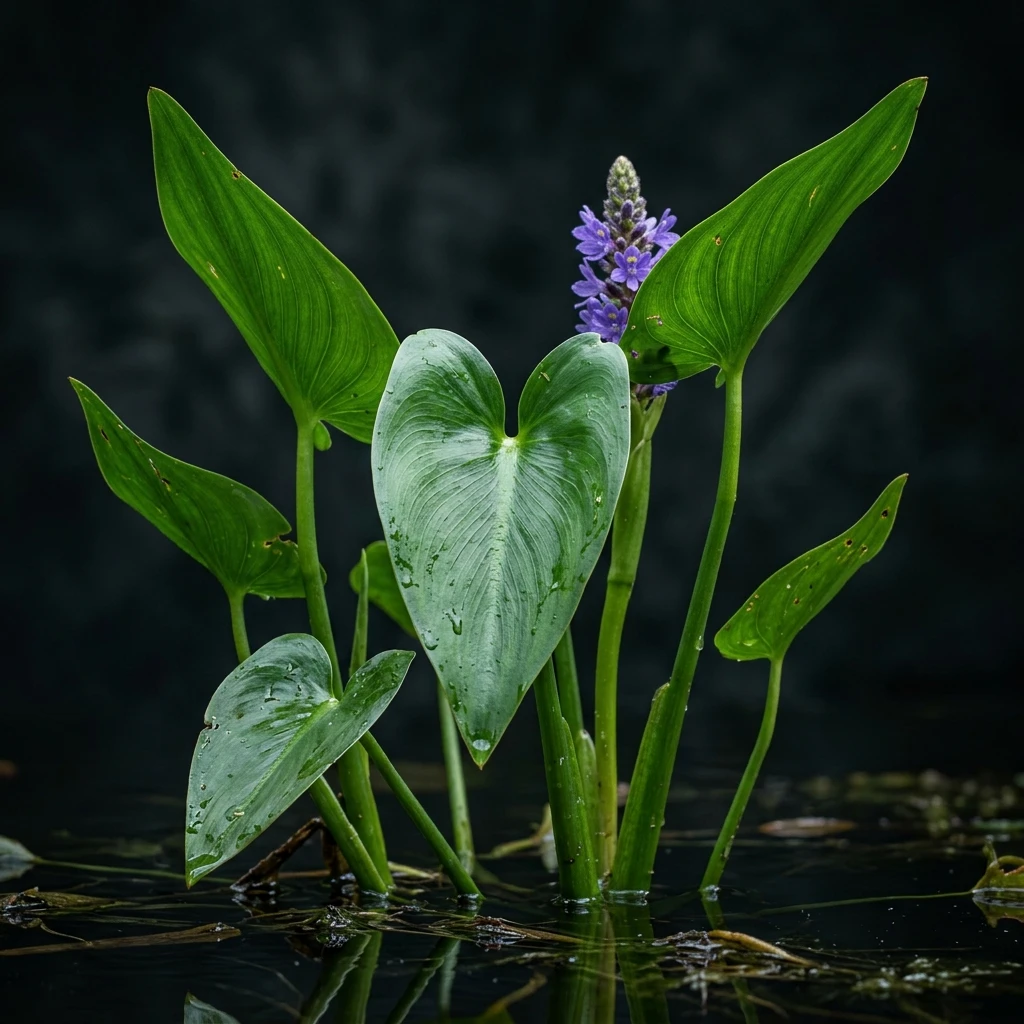
Pontederia cordata

Pickerel Weed Growing & Care Guide

Pickerel Weed is an exceptionally beautiful, robust vertical marginal species native to wetlands of the Americas. It is celebrated for its heart-shaped shiny green leaves and striking spikes of soft violet-blue flowers that bloom continuously from summer to autumn. An elite wildlife magnet, it provides critical shelter for fish and attracts hummingbirds and butterflies to pond margins.


Lighting Icon
Lighting Full Sun to Partial Shade
Watering Icon
Water Parameter Wet soil to Shallow Water
Substrate Icon
Substrate Heavy clay / muddy pond soil
Temperature Icon
Water Temp 15°C - 30°C
Toxicity Warning Icon
Toxicity Pet Friendly (Non-toxic)
Botanical macro photography of Pickerel Weed (Pontederia cordata) - Plant AI care database

How to Identify Pickerel Weed

Pickerel Weed (Pontederia cordata) has key botanical markers. Recognizing these features is crucial for successful aquascaping and thriving growth.

  • Visual Shape & Growth: Dense clumps of glossy, heart-shaped upright leaves with tall spikes of violet-blue flowers rising above.
  • Leaf Morphology: Shiny, dark green heart-shaped to lance-shaped leaves (up to 7-10 inches long) on long, thick stems.
  • Root & Anchoring Structure: Thick, fibrous creeping rhizomatous root system that anchors firmly in muddy shorelines.
💡 Plant AI Tip: Take a photo with Plant AI to identify aquatic weeds and diagnose fungal spot diseases in 1 second.

Complete Cultivation & Spawning Guide

Follow our detailed scientific water parameters and care guides to keep your Pickerel Weed thriving.

pH: 6.0 - 7.5. Performs exceptionally well in organic-rich pond edges, naturally absorbing excess water nutrients.
Low. Grows emersed, drawing all its carbon dioxide directly from the surrounding air.
Full sun to partial shade. Requires full sun for profuse, vibrant violet-blue flowering. Flowering is sparse in shade.
Cut off dead leaves and faded blue flower spikes at the base of the stem to promote continuous summer blooming.
A heavy feeder. Absorbs excess pond nitrates. In clean ponds, insert slow-release fertilizer tabs near the roots.
Requires heavy clay or rich pond mud. Plant rhizomes horizontally in large containers to secure roots.
Extremely cold hardy. Optimal temperature is 15°C to 30°C (59°F - 86°F). Rhizomes survive freezing winters if kept below the ice line.
Tolerates slow to moderate currents. Creeping roots are outstanding for shoreline erosion control.
Provides magnificent cover and shade for pickerel fish (hence its name), bass, frogs, and dragonflies.
Elite bio-filter, absorbing massive nitrates and phosphates. Shades pond margins, reducing green water algae.
Plant in shallow water (2 to 12 inches deep). Space individual containers 18 to 24 inches apart.

Are your Pickerel Weed leaves turning pale green or are the blue flower spikes drying up?

Move to a full sun position, check water levels to avoid root drying, and insert nitrogen-rich root tabs.

Diagnose My Aquatics

Common Diseases & Treatment

Leaf Spot (Cercospora)

Symptoms: Small, dark brown spots appear on the heart-shaped leaves, merging into larger dead patches.

Action: Remove and destroy infected leaves, maximize direct sun, and ensure good air movement around the plant clumps.

Root Rot

Symptoms: Creeping rhizomes turn soft, black, and decompose in stagnant, highly compacted anaerobic mud.

Action: Caused by stagnant, poorly oxygenated mud. Grow in loose sand-soil mixes with moderate water movement.

Frequently Asked Questions

How did Pickerel Weed get its name?

It is named after the Pickerel fish (a type of pike), which is frequently found seeking shelter and spawning grounds inside the dense underwater stems of this plant.

Can it grow in dry soil?

No. Pickerel Weed requires constantly saturated wet soil or standing water. Soil drying will cause the leaves to wilt, turn brown, and die.

Is Pickerel Weed invasive?

It is a vigorous grower but easily managed. Planting it in submerged containers will restrict the rhizomes and keep it from spreading excessively.

Are the seeds edible?

Yes! The nutritious seeds can be eaten raw, roasted like nuts, or boiled like rice. Young green leaf stalks can also be cooked as greens.

Master advanced aquascaping. Start today!

Get Started for Free