Marsh Pennywort
Scientific Name: Hydrocotyle vulgaris
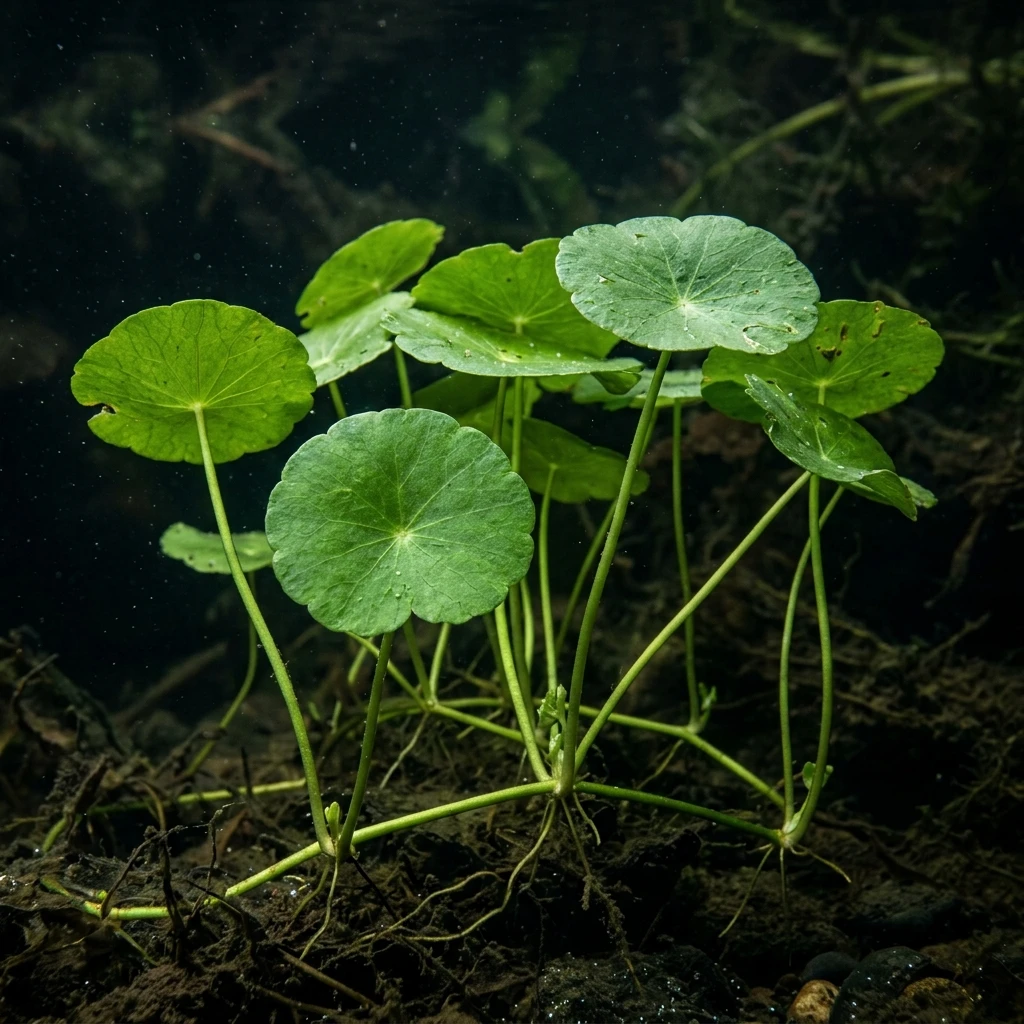
Marsh Pennywort, or Common Pennywort, is a whimsical, highly decorative vertical creeping species native to wetlands across Europe and North Africa. Prized for its perfect circular, umbrella-like shiny green shield leaves that resemble tiny floating coins, it grows horizontally via creeping nodes. Thriving both completely submerged or floating, it adds an unmatched wild, organic look.
Lighting Needs
Moderate to High
Water Parameters
Aquatic (pH 6.0-7.8)
Optimal Substrate
Nutrient-rich sand/soil
Hardy Temperature
10°C - 28°C
Toxicity Level
Pet Friendly (Non-toxic)
How to Identify Marsh Pennywort
Use our structural morphological markers to verify the identity of your Marsh Pennywort in any local nursery or wild wetland:
-
✔
Overall Visual Shape: Highly whimsical creeping vertical runners with perfect circular umbrella-like shiny green shield leaves.
-
✔
Leaf Morphology: Perfect peltate circular shiny light green leaves (approx 1-2 inches wide) that grow horizontally from climbing nodes.
-
✔
Root & Anchoring Structure: Extremely fine, creeping white capillary roots shooting from every nodes.
Complete Cultivation & Spawning Guide
Follow our detailed scientific water parameters and care guides to keep your Marsh Pennywort thriving.
pH: 6.0 - 7.8, GH: 4 - 15 dGH. Adaptable to soft or moderately hard freshwater setups.
Low. Grows perfectly well without pressurized CO2, though minor carbon supplementation speeds up its slow growth rate.
Moderate to High. Intense full-spectrum lighting keeps the leaves compact and deepens the gorgeous green grass marbling.
Cut the creeping runner into sections using sharp scissors. Replant the cut sections; each node will shoot a new runner.
A heavy water-column feeder. Relies on liquid macro and micro nutrients; substrate fertilizers are secondary.
Grows best in nutrient-rich aquasoil or fine sand. Fibrous root system develops rapidly to anchor the creeping runners.
Optimal temperature is 10°C to 28°C (50°F - 82.4°F). Exceptional cold water tolerance; highly resistant in outdoor ponds.
Enjoys moderate current. Steady water flow delivers carbon and trace minerals directly to its broad foliage layers.
Its tough waxy leaves are highly resistant to plant-eating fish. Safe for community and shrimp setups.
Fast growth makes it a brilliant nutrient sponge, starving out hair algae. Clean debris using cherry or Amano shrimps.
Best planted in the mid-ground. Space individual crowns 2 to 3 inches apart in the background.
Common Diseases & Treatment
🚨 Shield Border Rot
Common Cause: Circular shield leaves develop yellow margins, turn brown, and decay.
Professional Cure: Caused by sudden water chemistry shocks or extreme heat. Keep water cool (under 28°C) and maintain stable water parameters.
🚨 Runner leggy stretching
Common Cause: The space between leaf nodes becomes very long, and leaves look thin and fragile.
Professional Cure: Insufficient lighting. Increase lighting intensity to keep runners compact and creeping close to the bottom.
Frequently Asked Questions
❓ Can it grow completely submerged?
Yes! When grown fully submerged, it develops beautiful circular shield leaves that creep horizontally across the substrate or weave between driftwood.
❓ Why are the circular leaves turning yellow?
This is usually caused by nitrogen or iron deficiency. Ensure regular liquid macro/micro fertilization and adequate lighting.
❓ How do I control its rapid spreading?
Simply trim the creeping horizontal runner stems using sharp scissors. It is an extremely easy plant to prune and keep in check.
❓ Does it need soil?
No. Hydrocotyle vulgaris can grow happily floating on the surface of the water, absorbing all its nutrients directly from the water column.