Pellia Growing & Care Guide
Pellia, or Monosolenium Tenerum, is a gorgeous, vertical semi-transparent liverwort species native to temperate and subtropical Asia. Prized for its broad, flat Y-shaped bright green leaf ribbons, it grows slowly on hardscape and forms extremely dense, soft clumps that add a highly textured, wild organic appearance to nature-style layouts.





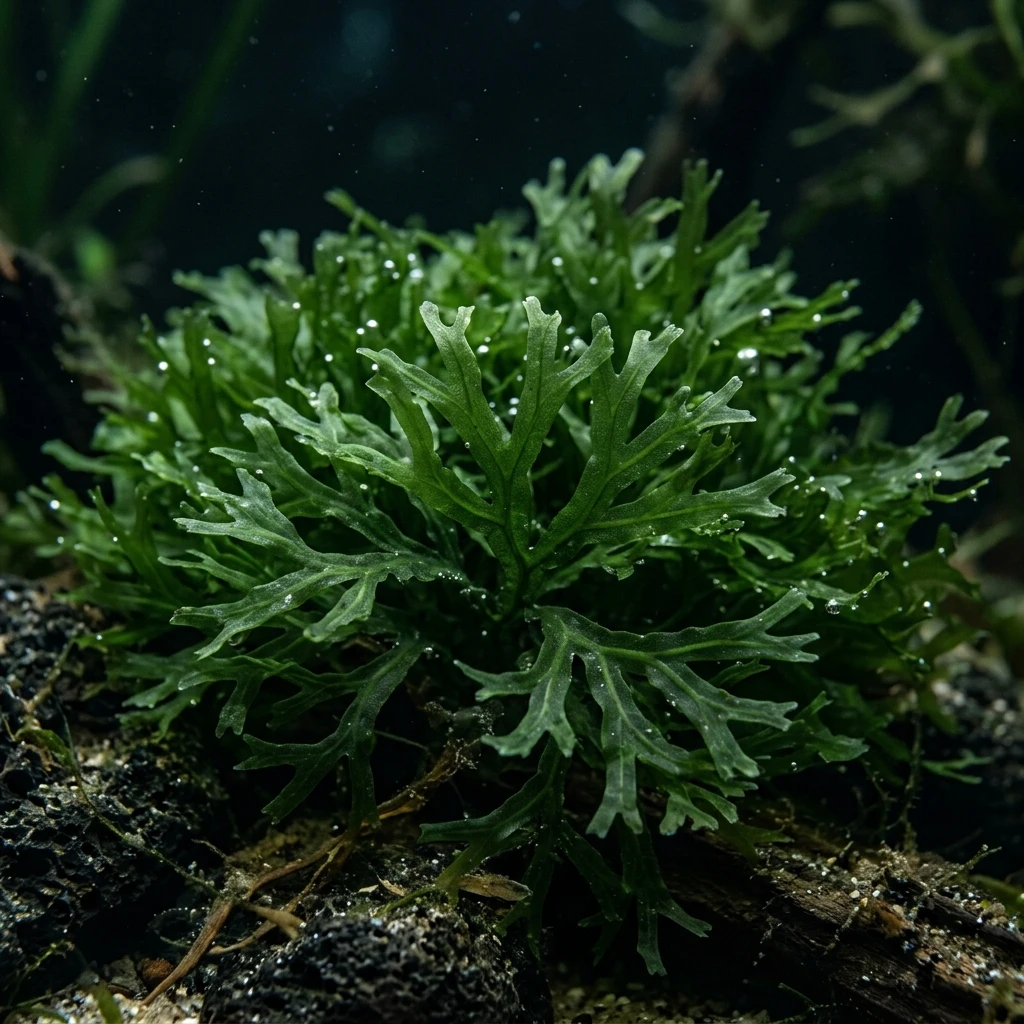
How to Identify Pellia
Pellia (Monosolenium tenerum) has key botanical markers. Recognizing these features is crucial for successful aquascaping and thriving growth.
-
✔
Visual Shape & Growth: Compact vertical clumps of broad, flat Y-shaped bright green leaf ribbons.
-
✔
Leaf Morphology: Broad, flat green leaf ribbons (approx. 0.2 inch wide) showing a Y-shaped branching pattern.
-
✔
Root & Anchoring Structure: Completely rootless; relies on external mesh, line, or glue to remain bound to hardscape.
Complete Cultivation & Spawning Guide
Follow our detailed scientific water parameters and care guides to keep your Pellia thriving.
Common Diseases & Treatment
Clump Crumbling
Symptoms: The green leaf ribbons become extremely brittle, breaking apart and dissolving.
High Temp Decay
Symptoms: Broad ribbons turn pale yellow-brown and dissolve in warm water above 28°C.
Frequently Asked Questions
What is the difference between Pellia and Susswassertang?
Pellia has broader, thicker, Y-shaped branching ribbons with a visible dark midrib, whereas Susswassertang has rounder, thinner, translucent leaves without a midrib.
How do I plant Pellia?
Use superglue gel or dark thread to secure it to lava rocks or driftwood. Since it is heavier than water, it will eventually form a beautiful, heavy mound on its own.
Can it grow in a low-tech tank?
Yes! Pellia is exceptionally hardy and requires very little light or carbon dioxide, making it ideal for low-tech shrimp setups.
How fast does it grow?
Under moderate light and nutrients, it is a moderate grower, typically producing one or two new branching ribbons every week.