Needleleaf Ludwigia Growing & Care Guide
Needleleaf Ludwigia, native to North American wetlands, is an exceptionally graceful vertical stem species. prizeworthy for its extremely narrow, lanceolate leaves that transition from bright green to a spectacular, fiery yellow-red under high light. Thriving under moderate to high parameters, it forms dense, bushy midground clouds that add unmatched texture to aquascapes.





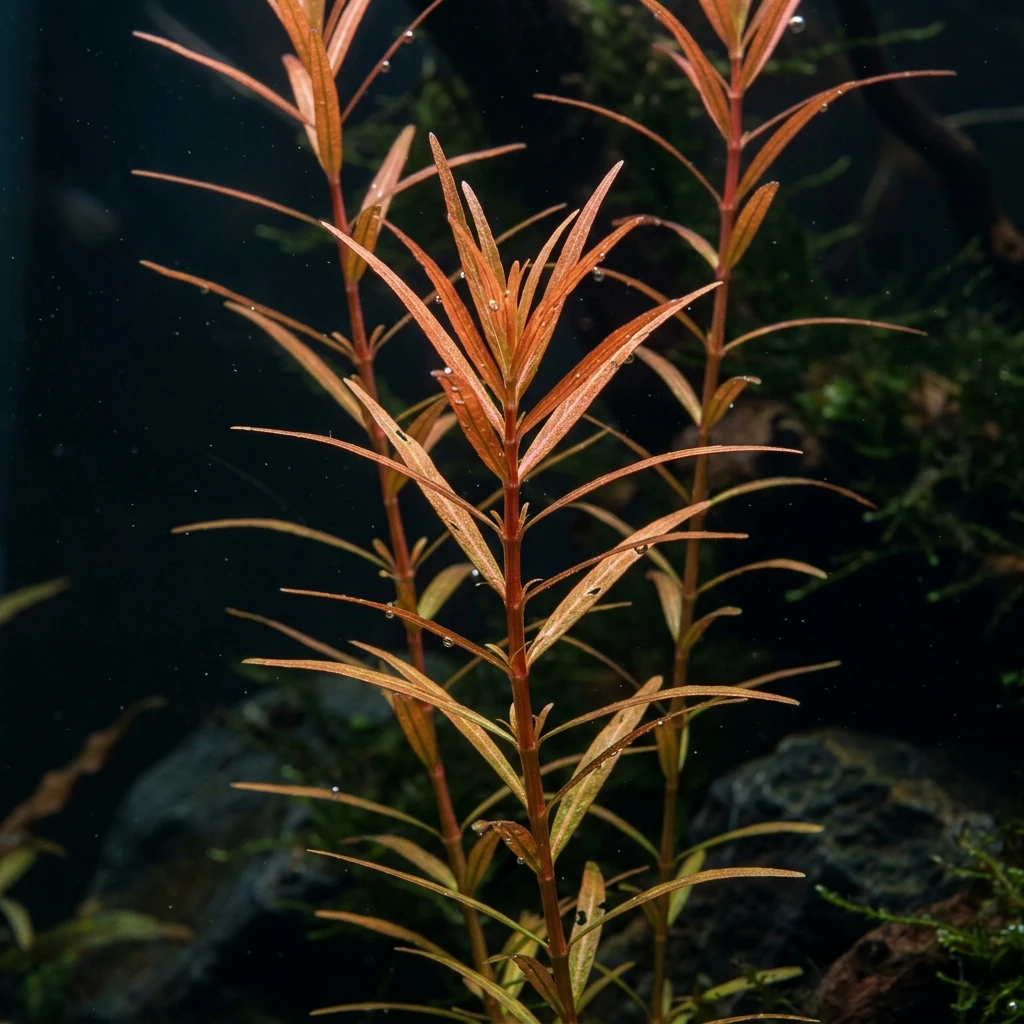
How to Identify Needleleaf Ludwigia
Needleleaf Ludwigia (Ludwigia arcuata) has key botanical markers. Recognizing these features is crucial for successful aquascaping and thriving growth.
-
✔
Visual Shape & Growth: Upright vertical stems with dense whorls of narrow, needle-like green-to-fiery-red leaves.
-
✔
Leaf Morphology: Very narrow, linear-lanceolate leaves (approx. 1-1.5 inches long) that show intense orange-red tips.
-
✔
Root & Anchoring Structure: Extremely strong, vertical fibrous roots that anchor deeply into substrate.
Complete Cultivation & Spawning Guide
Follow our detailed scientific water parameters and care guides to keep your Needleleaf Ludwigia thriving.
Common Diseases & Treatment
Lower Leaf Melting
Symptoms: Bottom leaves turn brown and melt away, leaving bare lower stems.
Iron Deficiency (Chlorosis)
Symptoms: New leaves emerge pale green or white, lacking their signature orange-red tips.
Frequently Asked Questions
How do I make my Needleleaf Ludwigia turn fiery red?
High light, low nitrates, and robust iron dosing are key. CO2 injection also dramatically accelerates the red pigment accumulation.
Can I grow it in a low-tech tank?
Yes! Unlike Rotala Wallichii, Needleleaf Ludwigia is highly resilient and can grow in low-tech setups, though it will remain mostly bronze-green.
What is the difference between Arcuata and Brevipes?
Arcuata has slightly narrower, longer needle-like leaves and develops a more brilliant, fiery red tip under strong light compared to Brevipes.
How fast does it grow?
Under ideal conditions (CO2 and high light), it is a very fast grower, requiring regular trimming every 1 to 2 weeks.