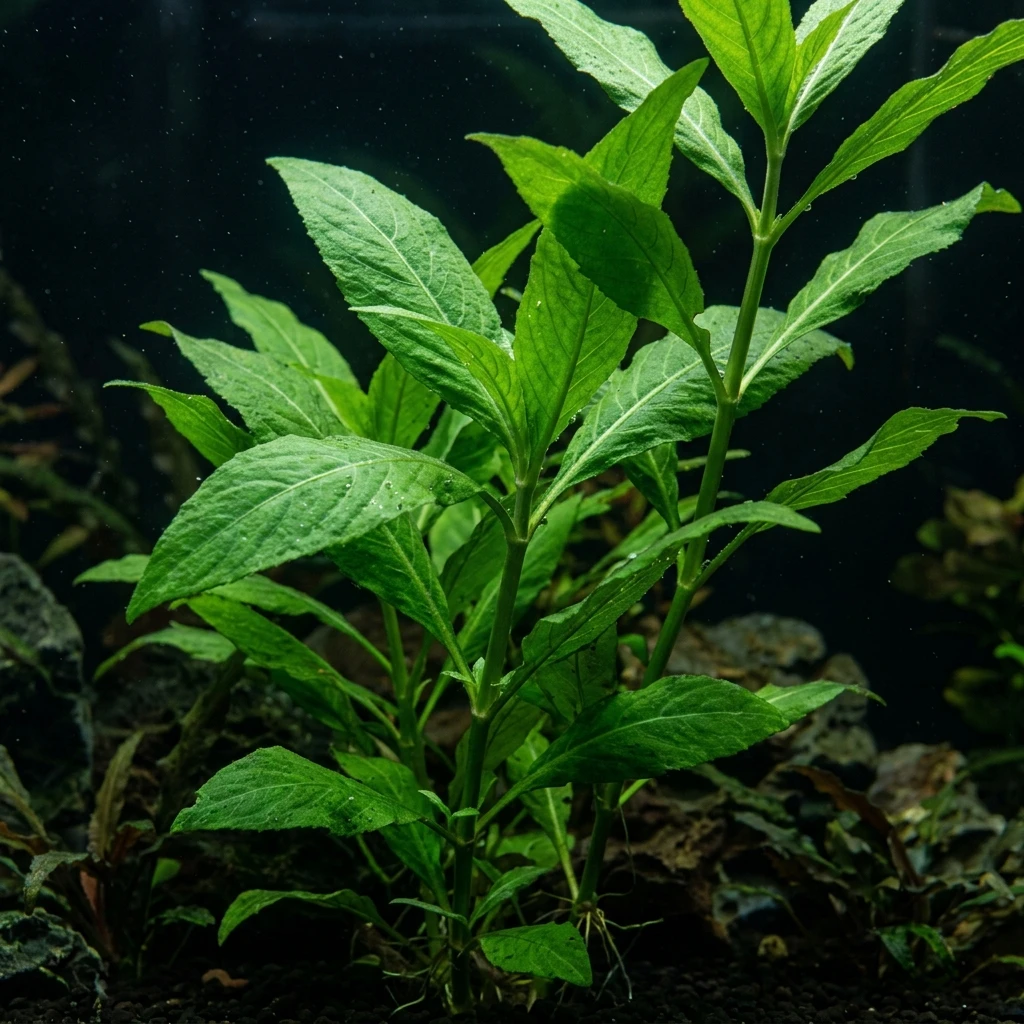
Hygrophila corymbosa

Giant Hygro Growing & Care Guide

Giant Hygro is a massive, structural stem plant with large, willow-like green leaves. Native to Southeast Asia, it is a spectacular background anchor that rapidly absorbs excess nutrients. It is highly valued for its absolute hardiness and ability to break through the water surface to flower in open setups.


Lighting Icon
Lighting Moderate Light
Water Hardness Icon
Water Hardness Aquatic (pH 6.0-7.8)
Substrate Icon
Substrate Nutrient-rich clay/soil
Temperature Icon
Water Temp 20°C - 28°C
Toxicity Warning Icon
Toxicity Pet Friendly (Non-toxic)
Botanical macro photography of Giant Hygro (Hygrophila corymbosa) - Plant AI care database

How to Identify Giant Hygro

Giant Hygro (Hygrophila corymbosa) has key botanical markers. Recognizing these features is crucial for successful aquascaping and thriving growth.

  • Visual Shape & Growth: Large, thick vertical stems covered in opposite, long willow-like bright green leaves.
  • Leaf Morphology: Large, lance-shaped, leathery bright-green leaves that can grow up to 5 inches long.
  • Root & Anchoring Structure: Extremely robust, thick white-green roots designed to anchor deeply into heavy sand or soil beds.
💡 Plant AI Tip: Take a photo with Plant AI to identify aquatic weeds and diagnose fungal spot diseases in 1 second.

Complete Cultivation & Spawning Guide

Follow our detailed scientific water parameters and care guides to keep your Giant Hygro thriving.

pH: 6.0 - 7.8, GH: 4 - 15 dGH. Extremely resilient, adapting easily to soft or hard water conditions.
Low. Grows perfectly without CO2. Supplemental carbon can be added to support its massive leaf biomass.
Moderate to high. Strong light prevents bottom leaves from dropping and promotes compact leaf spacing.
Trim the main stem top to promote dense lateral branching. Replant top cuttings to easily propagate this robust species.
Heavy potassium feeder. If potassium is low, leaves will develop tiny pinholes and drop off. Dose potassium weekly.
Enjoys a deep, nutrient-rich substrate. Add root fertilizer tabs near the base every few months to support its massive root system.
Optimal temperature is 20°C to 28°C (68°F - 82°F). Sensitive to extremely cold water below 18°C.
Enjoys moderate current. Steady water flow delivers essential water column nutrients to its massive foliage layers.
Its tough, leathery leaves make it cichlid-resistant. Provides excellent cover for community fish and shrimp.
Broad leaf surfaces can gather green spot algae under high light. Keep phosphates balanced and employ Nerite snails.
Best planted in the background. Space individual stems at least 2 to 3 inches apart to accommodate their massive leaf spread.

Is your Giant Hygro leaves developing pinholes, dropping or turning yellow?

Dose potassium immediately, optimize substrate nutrition, and prune the large canopy.

Diagnose My Aquatics

Common Diseases & Treatment

Potassium Pinholes

Symptoms: Mature leaves develop tiny, dark-rimmed holes that grow larger, causing the leaf to drop.

Action: The definitive sign of potassium deficiency. Dose liquid potassium sulfate or comprehensive liquid fertilizer weekly.

Emersed to Submersed Transition Melt

Symptoms: Broad leaves turn brown and melt away shortly after planting.

Action: Caused by acclimating from emersed nursery growth. Prune melted leaves; new submersed lanceolate leaves will sprout soon.

Frequently Asked Questions

Why is my Giant Hygro dropping its lower leaves?

This is caused by either severe potassium deficiency (leaves develop pinholes first) or light starvation (the large top leaves shade the bottom). Trim top stems and dose potassium.

Can Giant Hygro grow out of water?

Yes! In open tanks, it will grow out of the water, producing thick, hairy green leaves and blooming beautiful violet-blue flowers along the stems.

How large does Giant Hygro grow?

It is a massive plant, easily reaching a height of 15 to 20 inches, with leaves up to 5 inches long. It requires a medium to large aquarium.

Is it safe for aquarium shrimp?

Yes, it is entirely non-toxic, pet-friendly, and offers safe hiding spots and biofilm grazing surfaces for dwarf shrimps.

Master advanced aquascaping. Start today!

Get Started for Free