Marsilea hirsuta

Four Leaf Clover Growing & Care Guide

Four Leaf Clover is a fascinating, easy-to-grow carpet plant native to Australia. Its leaf morphology is uniquely dynamic, transitioning from single-lobed leaves under low light to traditional four-leaf clover shapes under high PAR, creating a highly diverse and whimsical ground cover for low-tech and high-tech aquascapes alike.


Lighting Icon
Lighting Low to Moderate
Water Hardness Icon
Water Hardness Aquatic (pH 6.0-7.5)
Substrate Icon
Substrate Fine sand or aquasoil
Temperature Icon
Water Temp 18°C - 28°C
Toxicity Warning Icon
Toxicity Pet Friendly (Non-toxic)
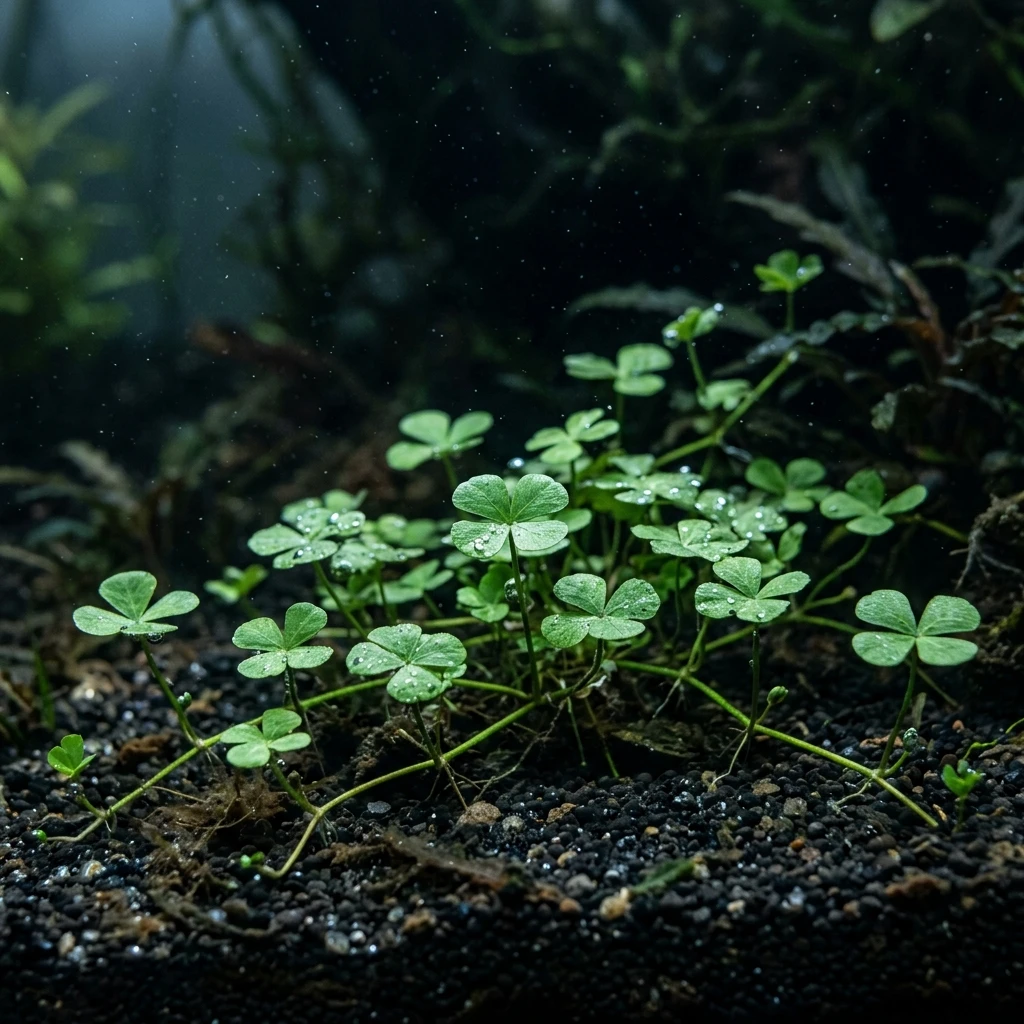
Botanical macro photography of Four Leaf Clover (Marsilea hirsuta) - Plant AI care database

How to Identify Four Leaf Clover

Four Leaf Clover (Marsilea hirsuta) has key botanical markers. Recognizing these features is crucial for successful aquascaping and thriving growth.

  • Visual Shape & Growth: Delicate creeping runner lawn of clover-shaped or single-lobed leaves.
  • Leaf Morphology: Small, variable leaves resembling tiny shamrocks or four-leaf clovers, with a spongy, soft texture.
  • Root & Anchoring Structure: Fine, creeping runner network that rapidly colonizes and binds the substrate.
💡 Plant AI Tip: Take a photo with Plant AI to identify aquatic weeds and diagnose fungal spot diseases in 1 second.

Complete Cultivation & Spawning Guide

Follow our detailed scientific water parameters and care guides to keep your Four Leaf Clover thriving.

pH: 6.0 - 7.5, GH: 3 - 12 dGH. Exceptionally adaptable, thriving in soft to moderately hard freshwater setups.
Low. Grows perfectly well without pressurized CO2, though carbon injection yields far tighter leaf spacing and faster carpet speed.
Low to moderate light. Under strong lighting, it stays short and develops the classic four-leaf clover shape; under lower light, it grows taller with single lobes.
Trim the tallest vertical leaf blades near the base crown to force the plant to crawl horizontally along the substrate.
Absorbs nutrients through both leaves and roots. Responds beautifully to weekly comprehensive liquid fertilizers, especially potassium.
Thrives in nutrient-rich aquasoil but can also carpet on fine sand or gravel if root tabs are regularly supplied.
Optimal temperature is 18°C to 28°C (64°F - 82°F). Highly hardy and can survive cool temperate setups well.
Enjoys steady water circulation to keep its dense carpet free from detritus accumulation and organic waste.
Perfect for community setups. Offers shelter and biofilm grazing for dwarf shrimps and community fish. Safe from grazers.
Slow growth makes it susceptible to Diatoms (brown algae) in new setups. Employ Otocinclus catfish or Nerite snails.
Separate the pot into small plugs. Plant plugs 1 inch apart in the foreground; it will quickly merge into a solid green lawn.

Are your Marsilea leaves turning yellow, leggy or failing to carpet?

Trim the tallest vertical leaf blades, dose comprehensive micro-nutrients, and ensure solid root tabs.

Diagnose My Aquatics

Common Diseases & Treatment

Stunting (Nutrient Starvation)

Symptoms: The entire carpet turns pale green or yellow-white and stops growing.

Action: Dose liquid nitrogen fertilizer and comprehensive iron trace elements weekly.

Needle Melting

Symptoms: Leaves turn soft, translucent, and dissolve rapidly after introducing to a new tank.

Action: Usually occurs during transition. Trim the melted leaves; new submersed leaves will sprout soon.

Frequently Asked Questions

Why does my Marsilea have different leaf shapes?

The leaf shape is highly dynamic and depends on light. Under low light, it grows single-lobed leaves (like Glossostigma). Under strong light, it will grow traditional two, three, or four-leaf clovers.

How fast does Four Leaf Clover carpet?

It is a moderate grower, slower than Glossostigma but much easier to maintain. It forms a solid carpet in 3 to 5 weeks.

Does it need CO2?

No, Marsilea Hirsuta is one of the few foreground carpeting plants that can grow perfectly fine without any CO2 injection.

Is it safe for turtles?

Yes, it is entirely non-toxic and pet-friendly. Turtles may graze on it, which is safe, but they will easily shred the plant.

Master advanced aquascaping. Start today!

Get Started for Free