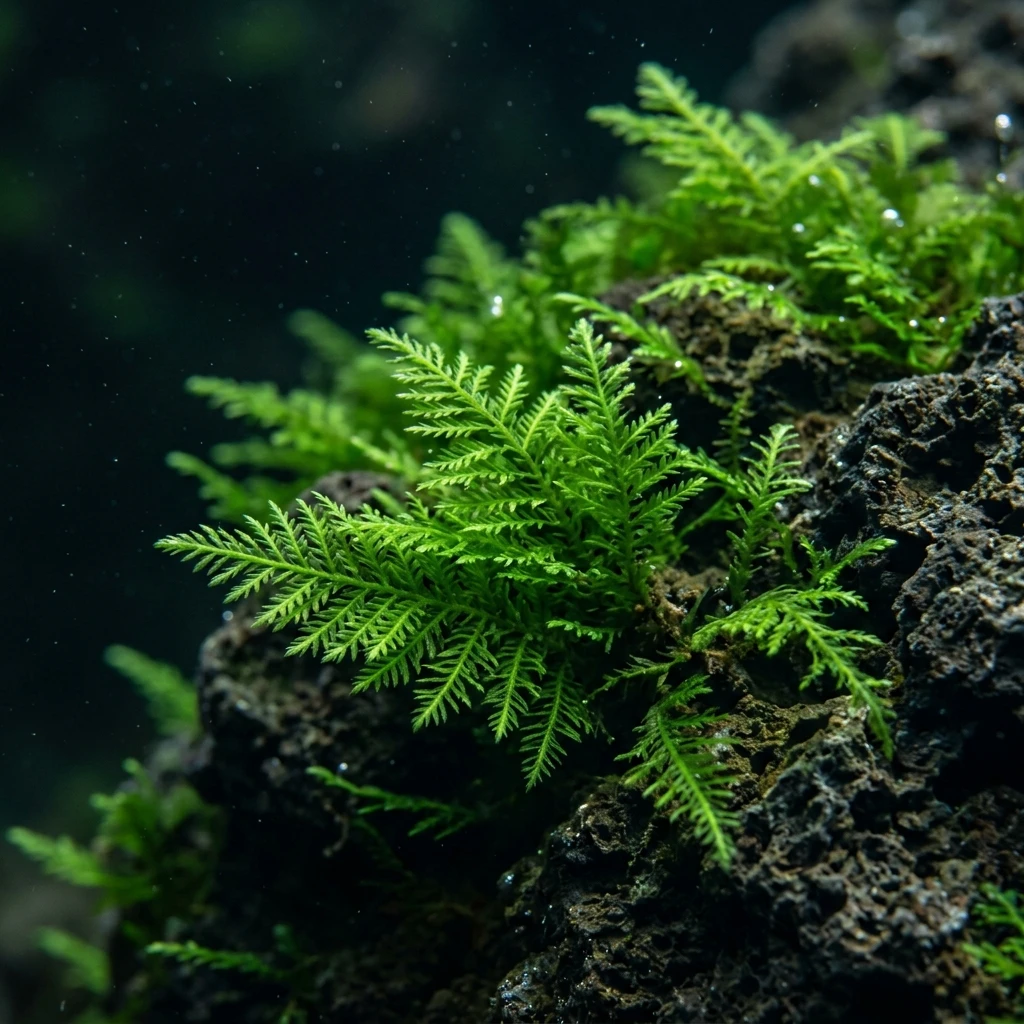
Fissidens fontanus

Phoenix Moss Growing & Care Guide

Phoenix Moss is an exceptionally beautiful, delicate vertical aquatic moss native to North America. Prized for its gorgeous, feather-like deep emerald-green fronds that resemble a fountain's plumes, it grows slowly on hardscape and forms extremely dense, soft clumps that add a highly textured, wild organic appearance to nature-style layouts.


Lighting Icon
Lighting Low to Moderate
Watering Icon
Water Parameter Aquatic (pH 6.0-7.8)
Substrate Icon
Substrate Epiphytic (Driftwood / Rock)
Temperature Icon
Water Temp 15°C - 25°C
Toxicity Warning Icon
Toxicity Pet Friendly (Non-toxic)
Botanical macro photography of Phoenix Moss (Fissidens fontanus) - Plant AI care database

How to Identify Phoenix Moss

Phoenix Moss (Fissidens fontanus) has key botanical markers. Recognizing these features is crucial for successful aquascaping and thriving growth.

  • Visual Shape & Growth: Delicate, flowing vertical clumps of deep green feather-like moss fronds resembling fountain plumes.
  • Leaf Morphology: Finely-divided pinnate moss leaves showing a deep, moody dark-green color.
  • Root & Anchoring Structure: Strong, anchoring dark brown rhizoids that weave tightly into crevices of stones or wood.
💡 Plant AI Tip: Take a photo with Plant AI to identify aquatic weeds and diagnose fungal spot diseases in 1 second.

Complete Cultivation & Spawning Guide

Follow our detailed scientific water parameters and care guides to keep your Phoenix Moss thriving.

pH: 6.0 - 7.8, GH: 3 - 15 dGH. Extremely resilient, adapting easily to soft or hard water conditions.
Low. Grows perfectly without pressurized CO2, though supplemental carbon enhances leaf thickness and size.
Low to moderate lighting. High intensity light will coat its slow-growing leaves with green spot algae.
Cut off old, yellowing, or damaged leaves at the base of the stem. Clean dead organic debris to prevent siltation.
An water-column feeder. Relies on liquid macro and micro nutrients; substrate fertilizers are ineffective.
Do not bury the horizontal rhizoids! Tie or glue the moss onto driftwood or rocks. Submerging rhizoids in soil will rot the plant.
Optimal temperature is 15°C to 25°C (59°F - 77°F). Prefers cooler water; highly sensitive to heat above 28°C.
Requires steady water circulation. Good current prevents organic waste and algae spores from landing on delicate fronds.
Its tough, bitter leaves are completely fish-proof. Provides excellent hiding places for shrimp and breeding fish.
Slow growth makes it susceptible to hair algae. Keep water clean and employ Siamense Algae Eaters or Amano shrimps.
Attach to midground rocks or roots. Leave spacing of 3 to 4 inches from neighboring clumps to allow perfect spread.

Are your Phoenix Moss fronds turning brown, melting or catching hair algae?

Ensure cool water temperature (under 25°C), increase water circulation, and employ Amano shrimps.

Diagnose My Aquatics

Common Diseases & Treatment

Browning (High Temp Shock)

Symptoms: Moss fronds turn pale brown, dry up, and die in the water column.

Action: Caused by high water temperatures above 28°C. Lower water temperature using a chiller or fan immediately.

Filamentous Algae Infestation

Symptoms: Delicate moss fronds get choked by green hair or thread algae, suffocating the plant.

Action: Prune infected areas. Introduce Amano shrimp and balance nitrates/phosphates to starve the algae.

Frequently Asked Questions

Why is it called Phoenix Moss?

The name comes from its gorgeous feather-like fronds, which resemble the tail plumes of the mythical phoenix bird rising elegantly from the hardscape.

How do I propagate it?

Simply cut the moss clump into smaller pieces with sharp scissors, and tie or glue the sections onto new driftwood or rocks.

Can it grow in warm water?

It can survive, but it grows much slower, turns green-brown, and is easily covered in hair algae in water above 26°C. Keep it cool under 25°C.

Is it safe for shrimp?

Yes! Shrimps love grazing on its delicate, finely-divided feathered fronds, which trap rich microscopic organic debris.

Master advanced aquascaping. Start today!

Get Started for Free