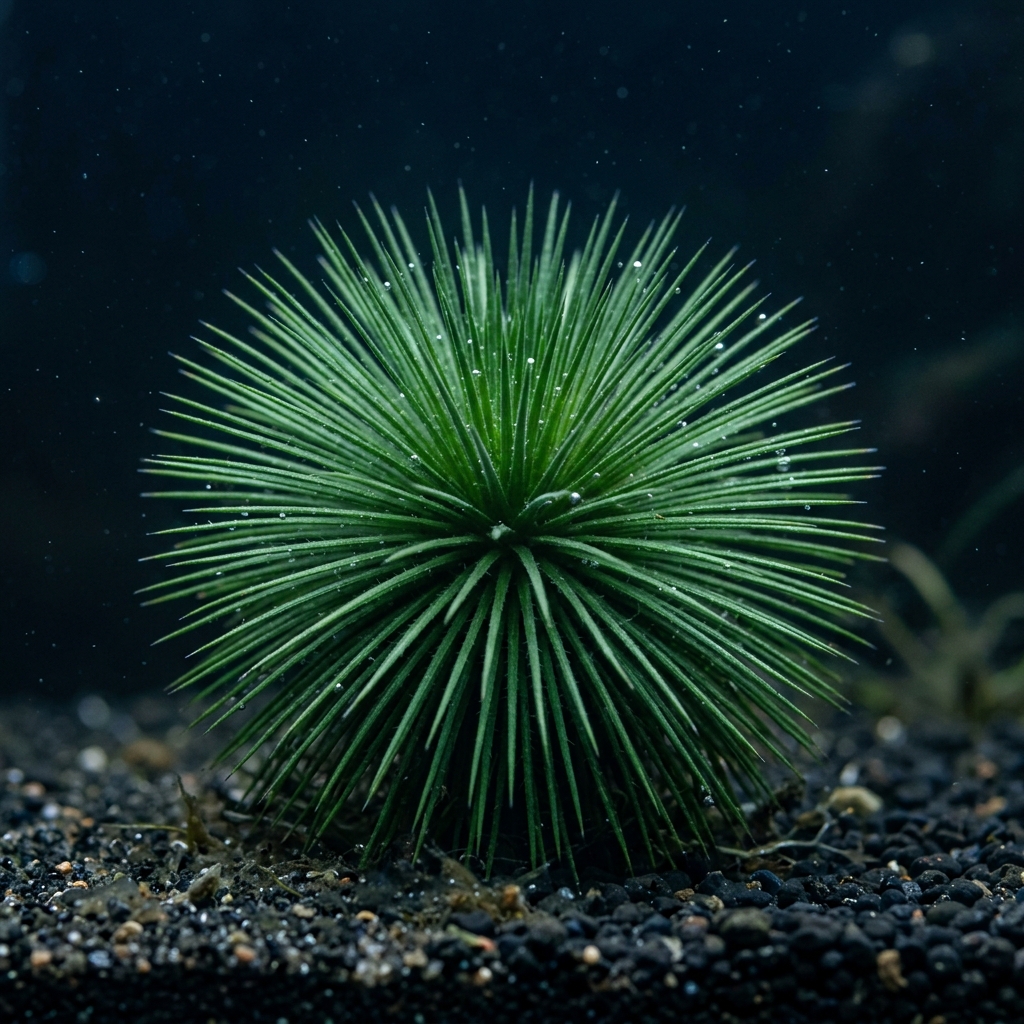
Eriocaulon cinereum

Eriocaulon Cinereum Growing & Care Guide

Eriocaulon Cinereum, also known as the Spinehead or Sea Urchin plant, is a spectacular, ultra-demanding foreground species native to tropical wetlands of Asia. PRIZED for its unique, ball-shaped rosette of vertical needle-like leaves, it resembles a miniature green sea urchin. It requires pressurized CO2, very soft acidic water, and rich nutrients, serving as an elite focal point in professional layouts.


Lighting Icon
Lighting High to Very High
Watering Icon
Water Parameter Soft, Acidic (pH 5.5-6.8)
Substrate Icon
Substrate Nutrient-rich Aquasoil
Temperature Icon
Water Temp 20°C - 26°C
Toxicity Warning Icon
Toxicity Pet Friendly (Non-toxic)
Botanical macro photography of Eriocaulon Cinereum (Eriocaulon cinereum) - Plant AI care database

How to Identify Eriocaulon Cinereum

Eriocaulon Cinereum (Eriocaulon cinereum) has key botanical markers. Recognizing these features is crucial for successful aquascaping and thriving growth.

  • Visual Shape & Growth: Compact, perfect spherical rosette of stiff, vertical green needle-like leaves resembling a sea urchin.
  • Leaf Morphology: Very stiff, linear-lanceolate green needle leaves (approx. 2-3 inches tall) radiating from a central root crown.
  • Root & Anchoring Structure: Extremely large, massive white roots that grow several times larger than the plant itself.
💡 Plant AI Tip: Take a photo with Plant AI to identify aquatic weeds and diagnose fungal spot diseases in 1 second.

Complete Cultivation & Spawning Guide

Follow our detailed scientific water parameters and care guides to keep your Eriocaulon Cinereum thriving.

pH: 5.5 - 6.8, GH: 1 - 4 dGH. Requires very soft, slightly acidic water. Sensitive to dissolved mineral hardness.
Very High. Pressurized CO2 injection (30 ppm) is mandatory to prevent stem melting and support its fast growth rate.
High to Very High. Intense full-spectrum lighting is mandatory to develop and sustain its gorgeous spherical rosette.
Cut off old, yellowing, or damaged leaves at the base of the stem. Clean dead organic debris to prevent siltation.
An water-column feeder. Relies on liquid macro and micro nutrients; substrate fertilizers are ineffective.
Requires rich aquasoil. Provide slow-release root tabs to feed its delicate vertical root network.
Optimal temperature is 20°C to 26°C (68°F - 78.8°F). Prefers cooler water; highly sensitive to heat above 28°C.
Requires steady water circulation. Good current prevents organic waste and algae spores from landing on delicate leaves.
Its tough texture and bitter taste make it highly resistant to plant-eating fish. Safe for community setups.
Slow growth makes it susceptible to hair algae. Keep water clean and employ Amano shrimps or Nerite snails.
Best planted in the foreground. Space individual crowns 2 to 3 inches apart to allow perfect spherical growth.

Are your Eriocaulon leaves melting, turning yellow or splitting at the crown?

Maintain very soft acidic water (GH < 4), inject pressurized CO2, and provide rich root tabs.

Diagnose My Aquatics

Common Diseases & Treatment

Sudden Melting

Symptoms: The central growing point turns black and mushy, causing newly emerging leaves to rot immediately.

Action: Fungal infection caused by sudden water parameter shocks or hard water. Keep GH low and stabilize parameters.

Premature Flowering

Symptoms: The rosette stops growing leaves and shoots up multiple tall white flower spikes (spines).

Action: A stress response usually triggered by nitrogen starvation. Dose nitrogen-rich root tabs near the root zone immediately.

Frequently Asked Questions

Why is my Eriocaulon shooting white spikes?

Eriocaulon shoots flower spikes (spines) when it is stressed, typically due to low nitrogen or sudden water parameter shocks. Cut the spikes off to force leaf growth.

How do I propagate Eriocaulon?

When the plant grows large, it will naturally split into two or three crowns. Carefully uproot it, split the crowns using a razor blade, and replant.

Does it need extremely soft water?

Yes! Eriocaulon cinereum will quickly melt and die in hard water. Use RO (Reverse Osmosis) water to maintain a GH of 1 to 4.

How fast does it grow?

It is an extremely slow grower, typically producing only one or two new needle-like leaves every week.

Master advanced aquascaping. Start today!

Get Started for Free