Anacharis Growing & Care Guide
Anacharis, commonly known as Elodea Densa, is an exceptionally hardy, oxygenating pond and aquarium plant featuring dark-green leafy whorls that absorb waste instantly. It is globally famous for its ultimate resilience, making it the premier plant for aquarium starters, goldfish tanks, and outdoor garden ponds.



How to Identify Anacharis
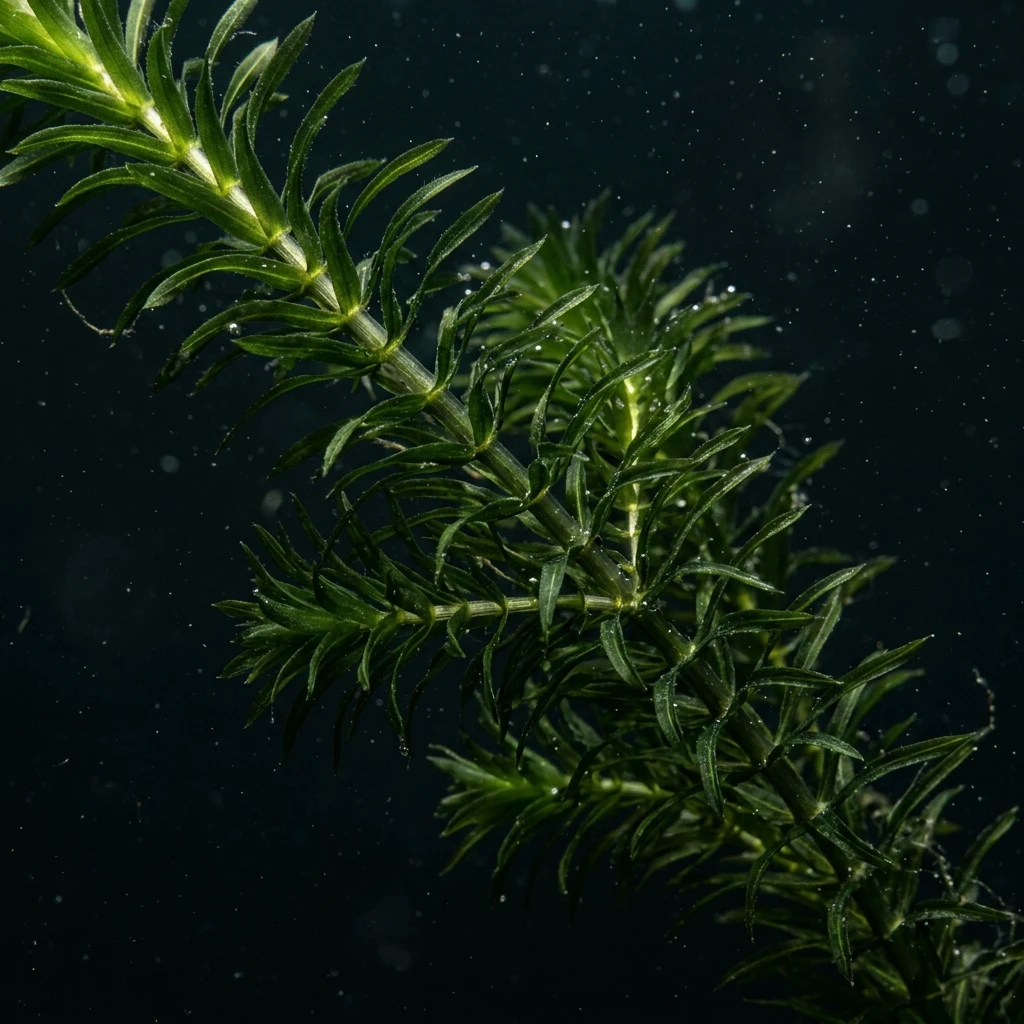
Anacharis (Egeria densa) has key botanical markers. Recognizing these features is crucial for successful aquascaping and thriving growth.
-
✔
Visual Shape & Growth: Long, trailing green stems covered in dense whorls of 4 opposite curved dark-green leaves.
-
✔
Leaf Morphology: Small, linear, bright to dark-green leaves arranged in dense whorls of 4 along a translucent green stem.
-
✔
Root & Anchoring Structure: Very sparse, slender white anchoring roots designed to anchor in sand, though true roots are not required.
Complete Cultivation & Spawning Guide
Follow our detailed scientific water parameters and care guides to keep your Anacharis thriving.
Common Diseases & Treatment
Anacharis Melt (Chemical/Heat Shock)
Symptoms: Stems turn white, translucent, mushy, and dissolve completely into a messy pulp.
Chlorosis (Mineral Deficient)
Symptoms: Leaf whorls turn pale yellow-green and grow very sparse.
Frequently Asked Questions
Why is my Anacharis melting and turning white?
Anacharis melts when exposed to high water temperatures (above 27°C) or when liquid carbon (Excel) is dosed. It is highly sensitive to glutaraldehyde.
Does Anacharis need substrate or roots?
No. It doesn't need roots or soil. It can absorb all nutrients through its leaves. It can float freely at the surface, which is ideal for ponds.
How fast does Anacharis grow?
Very fast. In cool, nutrient-rich water, it can grow up to 1 to 2 inches a day, rapidly outcompeting algae for nutrients.
Is Anacharis legal in all US states?
No, because of its extreme hardiness, it has become invasive in several states. Trade is restricted in states like Washington and Oregon. Check local laws.