Dwarf Hairgrass Growing & Care Guide
Dwarf Hairgrass is a popular foreground plant featuring needle-like leaves that create highly natural grass lawns, perfect for classic Nature Aquariums. Native to wetlands worldwide, this resilient grass propagates rapidly via runners, forming a beautiful, lush green turf that sways dynamically in the filter flow.




How to Identify Dwarf Hairgrass
Dwarf Hairgrass (Eleocharis acicularis) has key botanical markers. Recognizing these features is crucial for successful aquascaping and thriving growth.
-
✔
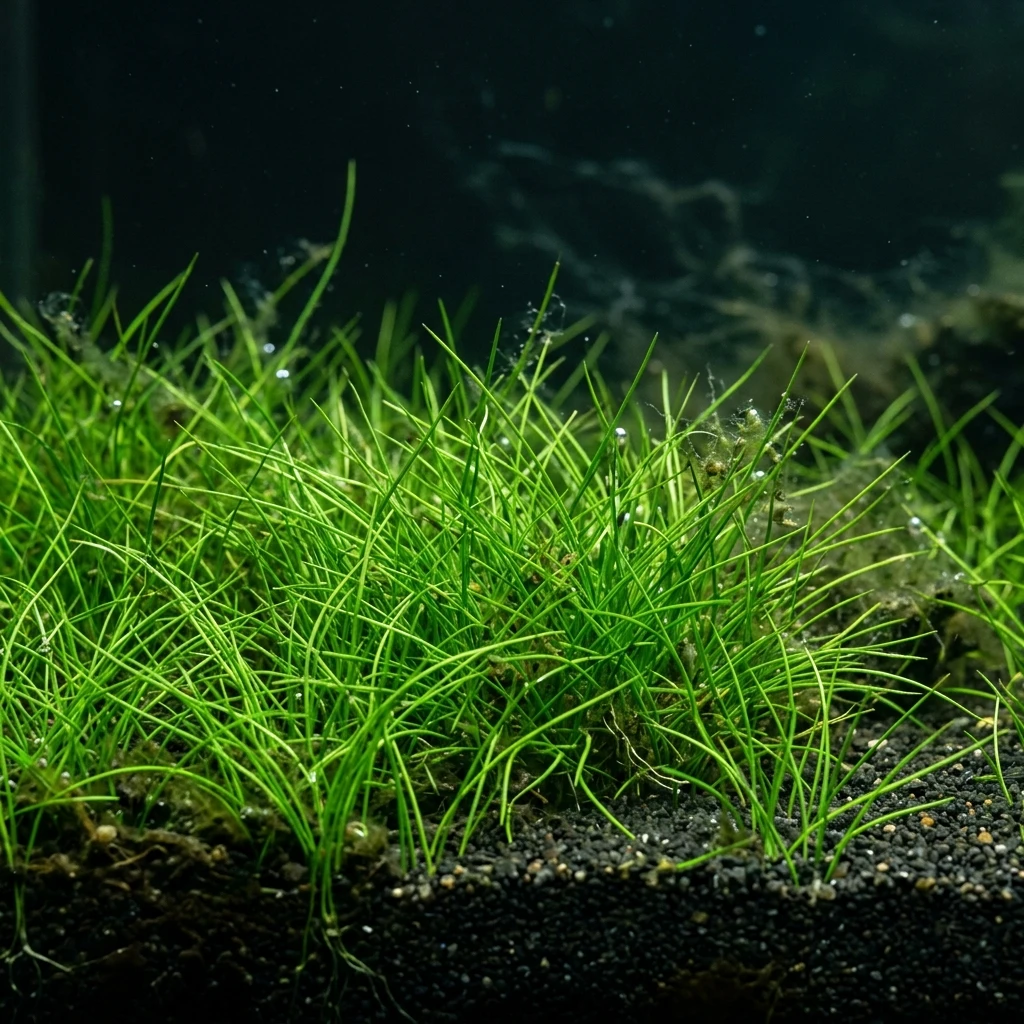
Visual Shape & Growth: Dense green carpet of fine, vertical, hair-like grass blades creeping via runners.
-
✔
Leaf Morphology: Very slender, needle-like bright green leaves rising directly from a dense root crown.
-
✔
Root & Anchoring Structure: Extremely dense, creeping runner network that rapidly colonizes and binds the substrate.
Complete Cultivation & Spawning Guide
Follow our detailed scientific water parameters and care guides to keep your Dwarf Hairgrass thriving.
Common Diseases & Treatment
Algae Choking
Symptoms: Hair algae wraps around the grass blades, choking out light and causing the lawn to turn brown.
Root Suffocation (Anaerobic)
Symptoms: Roots turn black and rot, causing the grass blades to yellow and die.
Frequently Asked Questions
How do I make Dwarf Hairgrass carpet faster?
Aggressive trimming is the secret. Trimming the grass blades down to 0.5 inches forces the plant to send its energy into underground runners, accelerating carpet speed.
How tall does Eleocharis acicularis grow?
Under strong light, it typically stays very short, around 1 to 2 inches. Under low light, it will stretch upward to 3 to 4 inches.
Can I grow it in sand?
Yes, but you must insert root tabs near the root crown every few months, as sand lacks the natural nutrients found in aquasoil.
Does it need CO2?
While not strictly mandatory, CO2 is highly recommended to achieve a dense, thick carpet. Without CO2, the lawn will grow very slowly.