Dwarf Baby Tears Growing & Care Guide
Dwarf Baby Tears is the smallest, most sought-after aquarium carpeting plant in the world, prized for forming dense, light-green grass lawns. Native to Cuba, this spectacular foreground carpet is famous for trapping tiny pearling bubbles, creating a brilliant, shimmering landscape that serves as the gold standard of professional aquascaping.





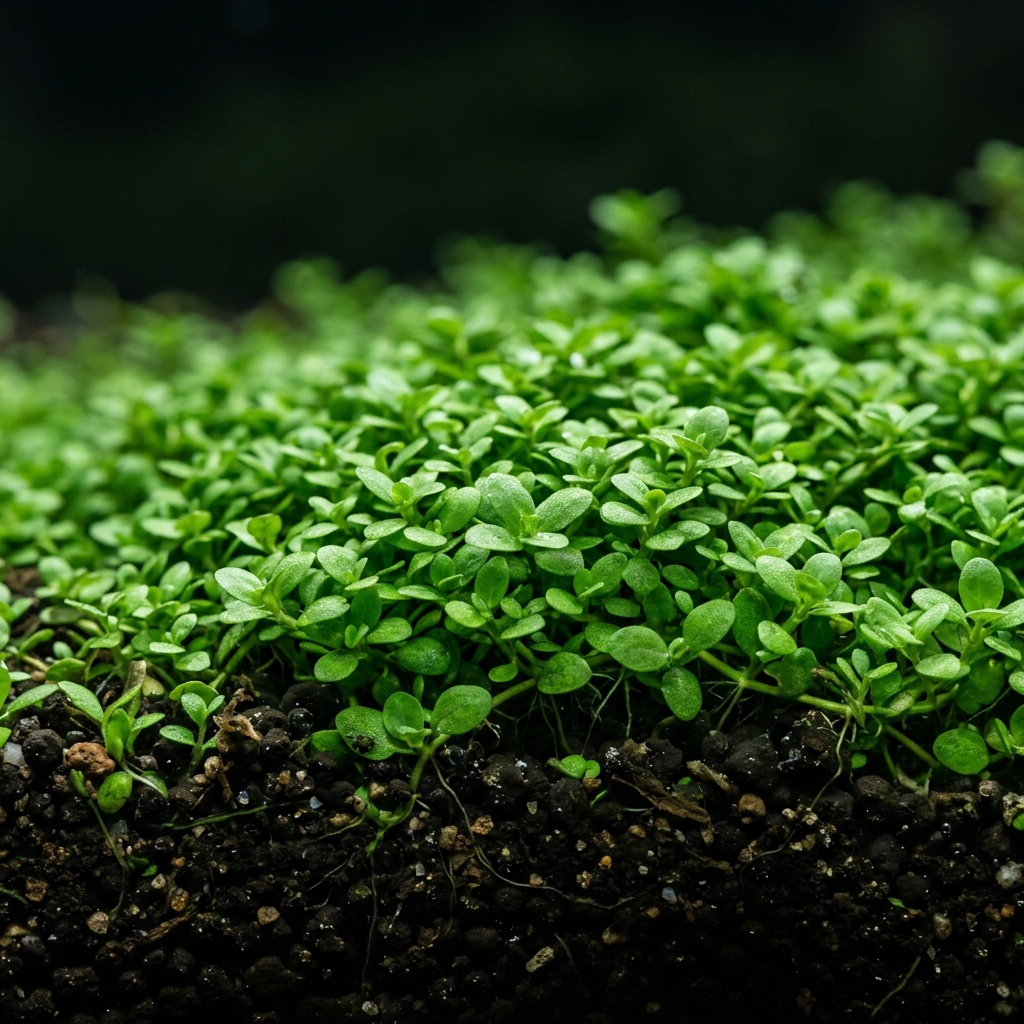
How to Identify Dwarf Baby Tears
Dwarf Baby Tears (Hemianthus callitrichoides 'Cuba') has key botanical markers. Recognizing these features is crucial for successful aquascaping and thriving growth.
-
✔
Visual Shape & Growth: Extremely low, tight creeping carpet of tiny, round light-green leaves.
-
✔
Leaf Morphology: 袖珍-sized leaves, only 1-2 millimeters wide, growing in dense opposite pairs along delicate stems.
-
✔
Root & Anchoring Structure: Very fine, shallow root network designed to anchor in nutrient-rich soft clay beds.
Complete Cultivation & Spawning Guide
Follow our detailed scientific water parameters and care guides to keep your Dwarf Baby Tears thriving.
Common Diseases & Treatment
Carpet Suffocation & Lifting
Symptoms: The bottom layer of the carpet turns brown and rots, causing the entire green patch to float to the surface.
Hair Algae Choking
Symptoms: Green thread-like hair algae wraps around the tiny leaves, suffocating the carpet.
Frequently Asked Questions
How do I keep Dwarf Baby Tears from floating?
Plant in very small plugs deep into fine aquasoil, leaving only a few leaves exposed. Trim regularly to prevent it from growing too thick and becoming buoyant.
Is CO2 mandatory for HC Cuba?
Yes, pressurized CO2 injection is virtually mandatory to grow a healthy, dense carpet. Without CO2, it will wither and fail.
Why is my Dwarf Baby Tears turning yellow?
Yellowing indicates a nutrient deficiency, usually iron or nitrogen, or insufficient lighting. Increase liquid fertilizer dosing and check light PAR.
Can I grow it in dry start method?
Yes! The Dry Start Method (DSM) is highly recommended for this plant, as it allows the roots to anchor firmly in damp soil before flooding the tank.