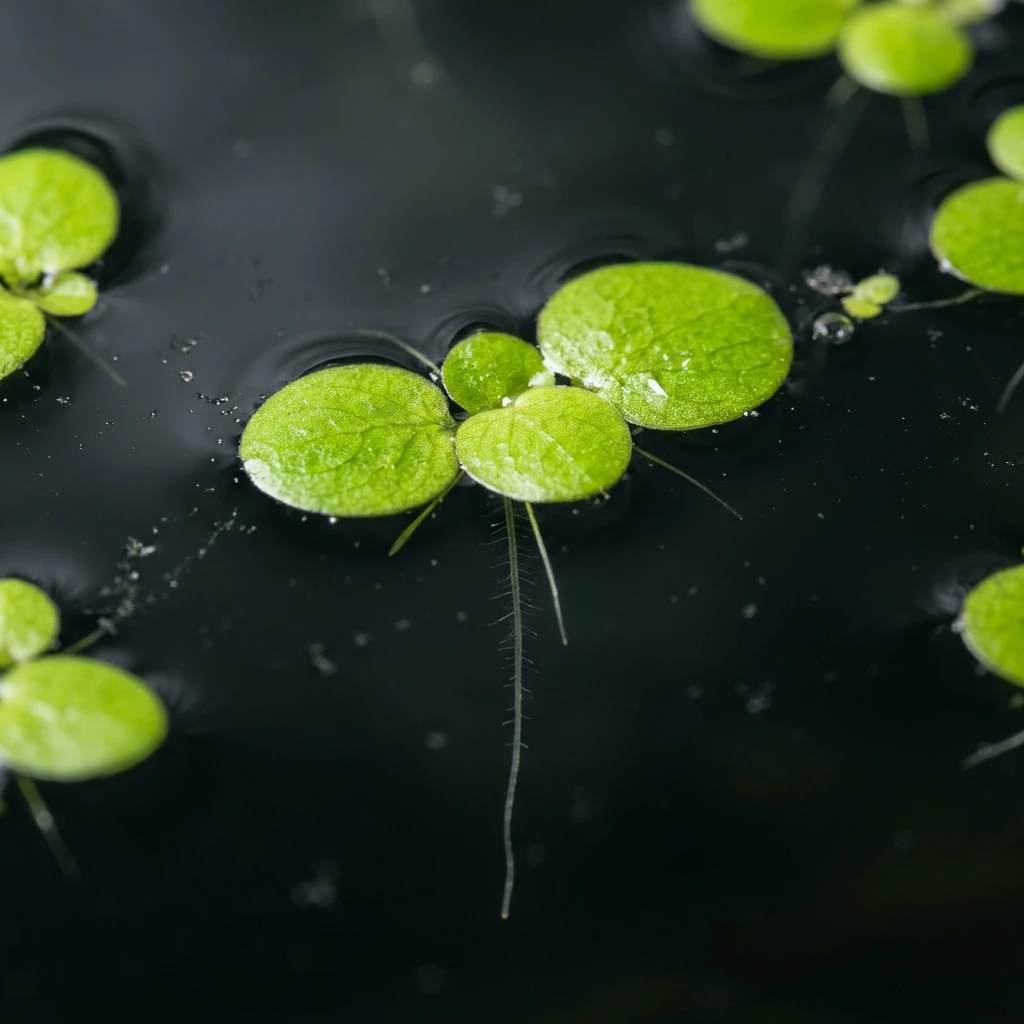
Common Duckweed
Scientific Name: Lemna minor
Common Duckweed is a spectacular, fast-growing floating species found globally on the surface of calm ponds. Prized for its tiny, flat oval green mats that propagate via rapid asexual budding, it is an elite natural water purifier. Armed with a single trailing capillary root, it absorbs huge amounts of nitrogen and heavy water toxins, serving as a natural shelter.
Lighting Needs
Low to High
Water Parameters
Aquatic (pH 5.0-8.0)
Optimal Substrate
Floating (Rootless)
Hardy Temperature
10°C - 32°C
Toxicity Level
Pet Friendly (Non-toxic)
How to Identify Common Duckweed
Use our structural morphological markers to verify the identity of your Common Duckweed in any local nursery or wild wetland:
-
✔
Overall Visual Shape: Spectacular, fast-growing floating green mats of tiny, flat oval leaf fronds with a single hanging capillary root.
-
✔
Leaf Morphology: Tiny, flat egg-shaped green fronds (approx 0.1 inch wide) that float in pairs or clusters on the surface.
-
✔
Root & Anchoring Structure: A single vertical, unbranched purple-translucent capillary root hanging freely in the water column to absorb nutrients.
Complete Cultivation & Spawning Guide
Follow our detailed scientific water parameters and care guides to keep your Common Duckweed thriving.
pH: 5.0 - 8.0, GH: 2 - 20 dGH. Outstanding adaptability, thriving in almost any freshwater environment.
Zero. It has direct access to atmospheric carbon dioxide, requiring no gas carbon supplementation in the water column.
Low to High. Grows exponentially under bright light, but survives easily in low-lit tanks under other floating cover.
Scoop out excess plants weekly using a fine fish net. Highly prolific; propagates independently by producing baby fronds.
A massive water-column feeder. Rapidly absorbs ammonium, nitrates, and phosphates. Extremely useful for开缸 purification.
Completely rootless floating plant. It requires no soil or substrate whatsoever; roots hang freely to absorb water nutrients.
Optimal temperature is 10°C to 32°C (50°F - 89.6°F). Outstanding heat and cold tolerance; survives winter frost.
Prefers completely calm water. Strong currents or splashing water from filters will flip and drown the small fronds.
Provides superb natural shading and hiding spots. Safe for shrimp. Highly eaten by goldfish, cichlids, and turtles.
Elite nitrate sponge. By starving water of excess phosphates, it effectively blocks green hair algae from starting.
Gently release a small portion onto the surface. It will spread naturally to form a beautiful green floating carpet.
Common Diseases & Treatment
🚨 Frond Whitening (Nitrogen Starvation)
Common Cause: Floating green fronds turn pale white, yellow, and lose their green chlorophyll color.
Professional Cure: Triggered by complete exhaustion of nitrates or iron in the water column. Dose comprehensive liquid fertilizer.
🚨 Turbulence Drowning
Common Cause: Duckweed mats get dragged underwater, rot, and accumulate at the bottom.
Professional Cure: Water surface movement is too strong. Use a floating ring or airline tubing to block off calm zones for the plant.
Frequently Asked Questions
❓ How fast does Duckweed propagate?
Under bright light and warm water, it can double its surface coverage every 24 to 48 hours, quickly covering the entire tank surface if left unchecked.
❓ How do I get rid of it?
Remove the bulk using a fine fish net, turn off the filter temporarily to clear the surface, and ensure no single tiny frond remains trapped in filter intakes or decoration crevices.
❓ Is Duckweed good for aquarium water quality?
Yes! It is one of the most efficient biological filters on Earth, absorbing massive amounts of waste (nitrates, ammonia, phosphates) and heavy metals.
❓ Can fish eat Duckweed?
Yes! Goldfish, cichlids, silver dollars, and turtles absolutely love eating fresh duckweed, making it a highly nutritious, organic home-grown food source.