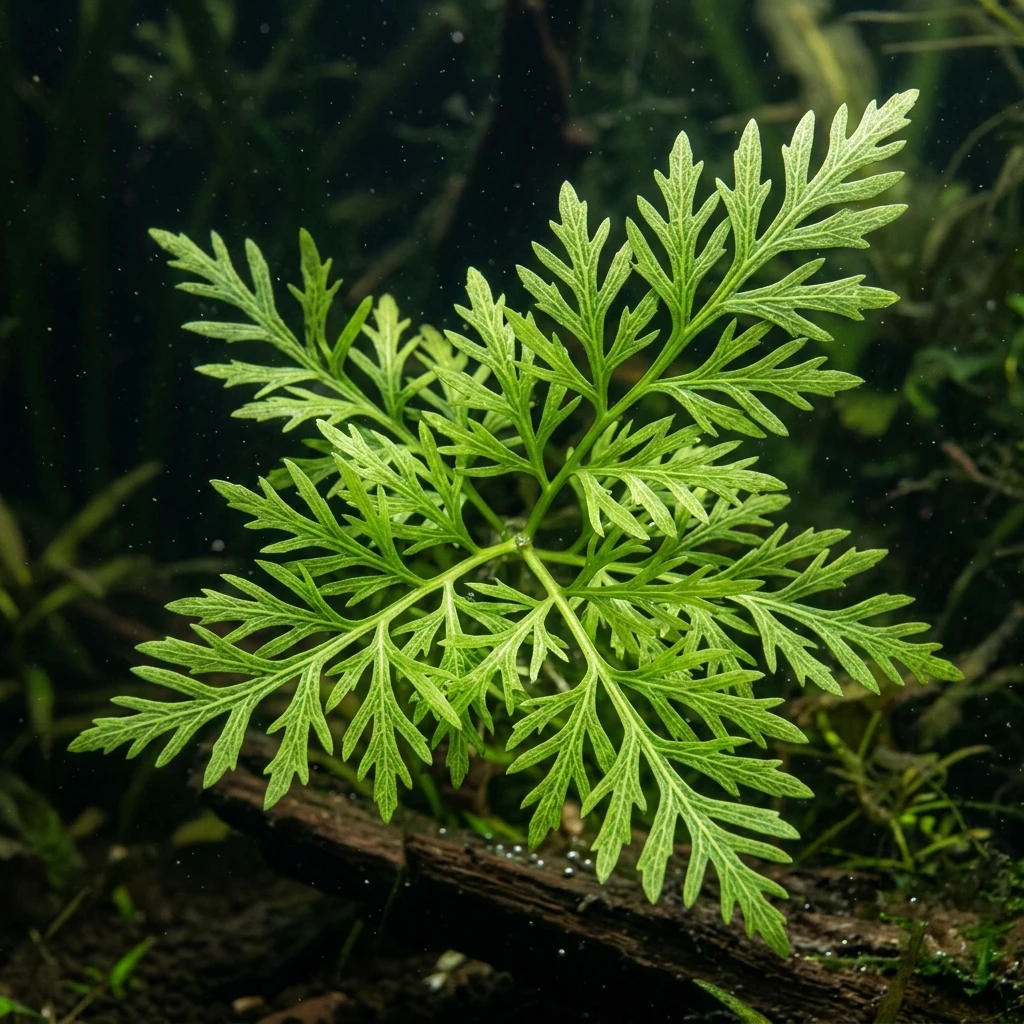
Floating Water Fern
Scientific Name: Ceratopteris cornuta
Floating Water Fern, or Broadleaf Water Sprite, is a highly decorative, incredibly fast-growing species native to tropical wetlands worldwide. Celebrated for its spectacular antler-like, deeply lobed succulent fronds, it can grow fully submerged as a background plant or left floating. An elite nitrate filter, its trailing roots absorb massive water toxins, serving as a natural shelter.
Lighting Needs
Low to Moderate
Water Parameters
Aquatic (pH 6.0-7.8)
Optimal Substrate
Floating or nutrient substrate
Hardy Temperature
18°C - 28°C
Toxicity Level
Pet Friendly (Non-toxic)
How to Identify Floating Water Fern
Use our structural morphological markers to verify the identity of your Floating Water Fern in any local nursery or wild wetland:
-
✔
Overall Visual Shape: Beautiful large floating or vertical rosettes of light green deeply lobed antler-like succulent fronds.
-
✔
Leaf Morphology: Thick, succulent light-green fronds with intricate deeply-lobed segments resembling deer antlers.
-
✔
Root & Anchoring Structure: Massive, bushy trailing purple-black capillary root systems that absorb huge amounts of nitrates directly.
Complete Cultivation & Spawning Guide
Follow our detailed scientific water parameters and care guides to keep your Floating Water Fern thriving.
pH: 6.0 - 7.8, GH: 3 - 15 dGH. Highly adaptable to soft, hard, or slightly alkaline setups.
Low. Grows perfectly without CO2. Supplemental liquid carbon can be dosed occasionally to assist growth.
Low to Moderate. Very adaptable; bright light speeds up growth, while low light keeps the compact rosette shape.
Cut off old, decaying, or leggy fronds at the base. Harvest baby plantlets that form on leaf margins to multiply.
A massive water-column feeder. Requires regular dosing of liquid potassium, nitrogen, and micro-nutrients to support rapid growth.
Can be left floating rootless. If planted submerged, gently push roots into substrate without burying the central rosette heart.
Optimal temperature is 18°C to 28°C (64.4°F - 82.4°F). Sensitive to severe cold shocks below 15°C.
Prefers gentle water circulation. Strong currents can damage its brittle, succulent antler fronds.
Its trailing, bushy root network provides an elite breeding and hiding sanctuary for community fish and fry.
An outstanding nitrate filter, starving out hair algae. Stock Amano shrimps to graze on fine leaf margins.
Can float on the surface, or be planted in the background. Leave 4 inches of space to allow its wide rosette to expand.
Common Diseases & Treatment
🚨 Antler Tip Browning
Common Cause: The tips of the antler-like fronds turn yellow, brown, and rot away.
Professional Cure: Caused by severe nitrogen or potassium starvation. Increase water column liquid fertilization immediately.
🚨 Condensation Rot (Floating)
Common Cause: The central crown of floating rosettes turns black, mushy, and rots.
Professional Cure: Caused by hot water droplets dripping from the tank lid. Keep the tank lid slightly ventilated or lower the water level.
Frequently Asked Questions
❓ Can I plant it in substrate or let it float?
Both! When floating, it grows large surface rosettes with massive trailing root systems. When planted in substrate, it grows vertically into a beautiful, bushy background water sprite.
❓ How does it propagate by itself?
It propagates via adventitious buds. Mature mother fronds will spontaneously grow dozens of tiny, fully-formed baby plantlets on their leaf margins. These detach and float away as independent plants.
❓ Why are the roots turning purple-black?
This is normal and healthy! Its bushy capillary roots naturally develop a beautiful purple-black coloration, which is a sign of active nutrient absorption.
❓ How does it control tank nitrates?
Due to its rapid growth rate, it acts as a highly efficient natural water filter, locking massive amounts of excess nitrates and phosphates directly into its succulent leaf tissues.