Green Cabomba Growing & Care Guide
Green Cabomba is a classic background plant featuring delicate, fan-shaped whorled green leaves that create an incredibly dense, soft-textured underwater forest. Native to the Americas, this highly decorative stem plant is famous for absorbing excess water column nutrients and providing elite shelter for fish fry.



How to Identify Green Cabomba
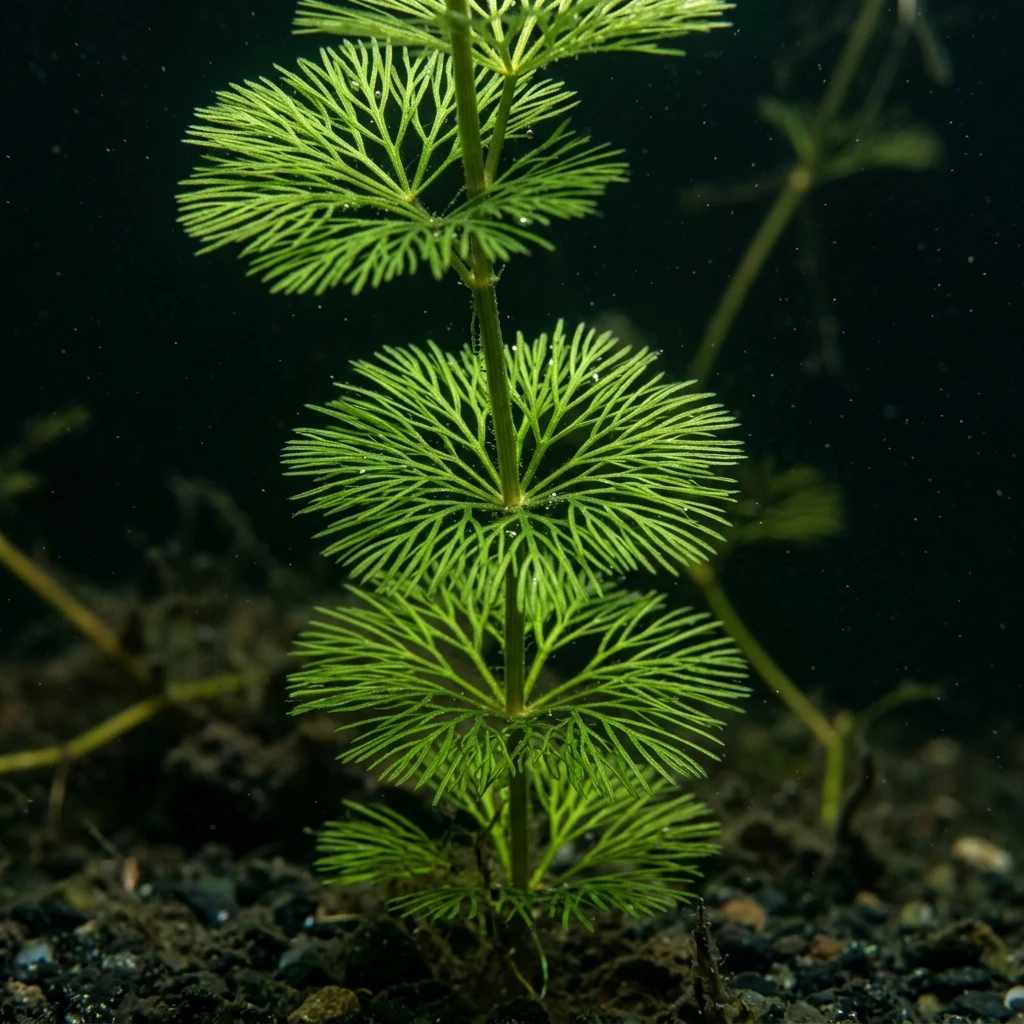
Green Cabomba (Cabomba caroliniana) has key botanical markers. Recognizing these features is crucial for successful aquascaping and thriving growth.
-
✔
Visual Shape & Growth: Stately vertical green stems dense with fan-shaped, finely-divided feathery leaves in neat whorls.
-
✔
Leaf Morphology: Exquisite, fan-like submersed leaves divided into fine, hair-like bright green segments.
-
✔
Root & Anchoring Structure: Fine, fibrous white root system growing from the lower nodes to anchor in sandy beds.
Complete Cultivation & Spawning Guide
Follow our detailed scientific water parameters and care guides to keep your Green Cabomba thriving.
Common Diseases & Treatment
Stem Melting (Hard Water Rot)
Symptoms: Stems turn soft, black, and dissolve from the bottom up, causing the plant to float away.
Needle Shedding
Symptoms: The delicate green needles drop off in massive quantities, creating a messy tank.
Frequently Asked Questions
Why is my Cabomba losing all its leaves?
Cabomba sheds leaves when it doesn't receive enough light, is placed in hard water with high pH, or is exposed to fluctuating temperatures. Ensure soft water and strong lighting.
How do I plant Cabomba without crushing it?
Use fine-tip aquascaping tweezers to hold the stem gently at a lower node, push it straight down into sand or fine gravel, and release carefully.
Is Cabomba legal in the UK and Europe?
In some regions, Cabomba Caroliniana is classified as an invasive species and its trade is banned. Always check your local environmental laws before purchasing.
Does Cabomba need soil?
No, it does not require rich soil. It can grow perfectly well anchored in sand or fine gravel if liquid fertilizers are dosed weekly.