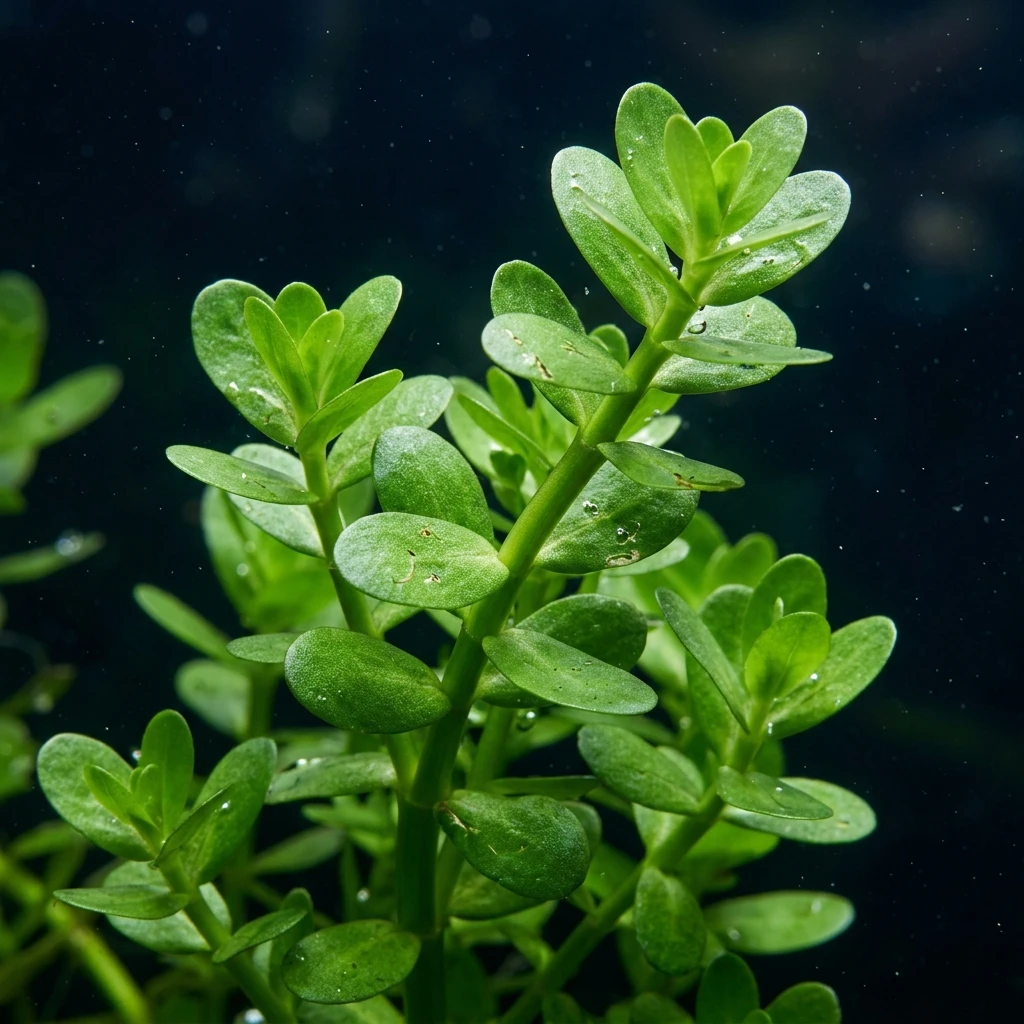
Bacopa monnieri

Moneywort Growing & Care Guide

Moneywort, also known as Bacopa Monnieri, is an ironclad, upright stem plant featuring bright-green, succulent-like rounded leaves. Native to tropical wetlands worldwide, it is exceptionally durable and adapts seamlessly to low-light setups, making it a fantastic beginner plant that grows submerged or emersed.


Lighting Icon
Lighting Moderate Light
Water Hardness Icon
Water Hardness Aquatic (pH 6.5-8.0)
Substrate Icon
Substrate Sand or gravel
Temperature Icon
Water Temp 15°C - 30°C
Toxicity Warning Icon
Toxicity Pet Friendly (Non-toxic)
Botanical macro photography of Moneywort (Bacopa monnieri) - Plant AI care database

How to Identify Moneywort

Moneywort (Bacopa monnieri) has key botanical markers. Recognizing these features is crucial for successful aquascaping and thriving growth.

  • Visual Shape & Growth: Stout, thick vertical green stems covered in opposite, round fleshy green leaves.
  • Leaf Morphology: Small, thick, spatulate or teardrop-shaped bright green leaves resembling tiny green coins.
  • Root & Anchoring Structure: Extremely hardy white roots shooting from stem nodes that anchor deeply in substrate.
💡 Plant AI Tip: Take a photo with Plant AI to identify aquatic weeds and diagnose fungal spot diseases in 1 second.

Complete Cultivation & Spawning Guide

Follow our detailed scientific water parameters and care guides to keep your Moneywort thriving.

pH: 6.5 - 8.0, GH: 5 - 20 dGH. Highly tolerant of hard, alkaline water, and adapts well to slightly brackish setups.
Low. Grows perfectly well without pressurized CO2, though minor carbon supplementation speeds up its slow growth rate.
Prefers moderate light. Under low light, the bottom leaves will slowly yellow and fall off, and stem spacing will widen.
Propagates easily. Simply snip the stem with sharp scissors and insert the cut top into the substrate; the bottom will shoot new branches.
Absorbs nutrients through both roots and leaves. Responds well to micro-nutrient liquid fertilizers, especially iron.
Anchor in sand or gravel. Prefers substrate enriched with root tabs, which supports its thick, vertical root system.
Extremely wide temperature tolerance, from 15°C to 30°C (59°F - 86°F). Can survive cool temperate outdoor pond winters.
Tolerates any water current. Steady flow delivers essential water column nutrients to its opposite fleshy leaves.
Its tough, thick succulent-like leaves make it highly resistant to plant-grazing community fish. Safe for Cichlid tanks.
Slow growth makes it susceptible to Black Beard Algae (BBA). Employ Siamese Algae Eaters or dose Excel locally to treat BBA.
Best planted in the midground or background in clusters of 5 to 8 stems. Space slightly to ensure light reaches the bottom.

Is your Moneywort growing leggy, dropping leaves or rotting at the bottom?

Provide steady moderate light, secure solid root fertilization, and trim long leggy stems.

Diagnose My Aquatics

Common Diseases & Treatment

Bacopa Stem Rot

Symptoms: Stems turn mushy, black, and decay at the substrate line.

Action: Caused by anaerobic substrate conditions or burying the stem too deep. Clean the gravel and replant healthy cuttings.

Iron Chlorosis

Symptoms: New leaves at the crown turn pale white or translucent green.

Action: Indicates a severe iron deficiency. Dose water column iron chelate weekly.

Frequently Asked Questions

Why is my Moneywort losing its bottom leaves?

This is a classic sign of insufficient lighting. The top leaves block light from reaching the bottom, causing old leaves to wither. Increase light or trim tops.

Can Moneywort grow emersed?

Yes! It grows exceptionally well emersed in damp soil, where it forms dense terrestrial carpets and blooms beautiful tiny white or violet flowers.

How fast does Bacopa Monnieri grow?

It is a moderate grower, slower than other stem plants like Rotala. This makes it very easy to manage and maintain in low-tech setups.

Is Bacopa Monnieri safe for aquarium shrimp?

Yes, Bacopa Monnieri is 100% pet-friendly, non-toxic, and its leaves provide a stable surface for shrimp to graze on biofilm.

Master advanced aquascaping. Start today!

Get Started for Free