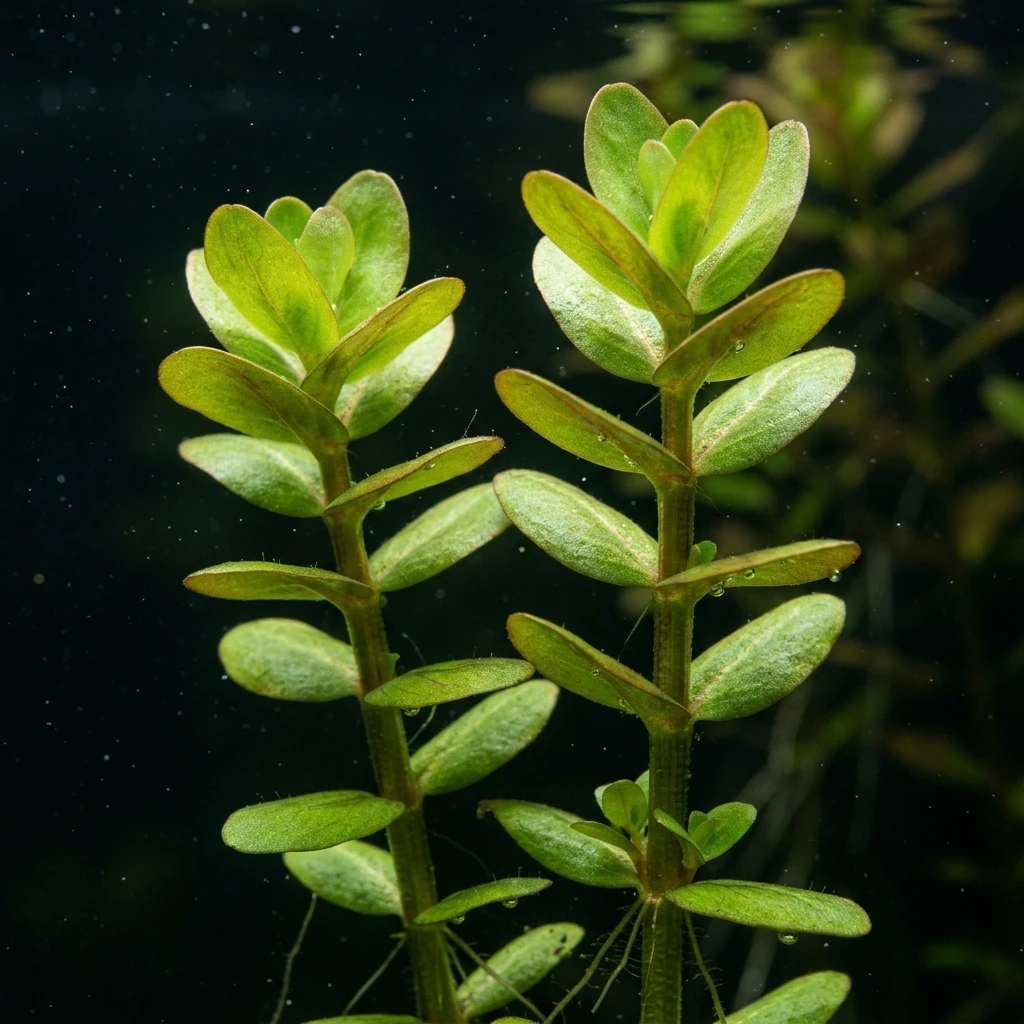
Lemon Bacopa
Scientific Name: Bacopa caroliniana
Lemon Bacopa is an exceptionally beautiful, vertical midground stem species native to wetlands of the southern United States. Celebrated for its unique waxy, round opposite leaves that emit a pleasant citrus scent when crushed, it is incredibly robust. Under intense lighting and low nitrates, its waxy green leaves transform into a gorgeous coppery-bronze or bright yellow, making it a spectacular focal point.
Lighting Needs
Moderate to High
Water Parameters
Aquatic (pH 6.0-7.5)
Optimal Substrate
Nutrient-rich substrate
Hardy Temperature
15°C - 28°C
Toxicity Level
Pet Friendly (Non-toxic)
How to Identify Lemon Bacopa
Use our structural morphological markers to verify the identity of your Lemon Bacopa in any local nursery or wild wetland:
-
✔
Overall Visual Shape: Stiff, vertical fleshy stems with thick, round opposite waxy bright green leaves that smell of citrus when crushed.
-
✔
Leaf Morphology: Fleshy, egg-shaped opposite waxy leaves that turn warm coppery-bronze to bright yellow under high light and low nitrates.
-
✔
Root & Anchoring Structure: Strong white anchoring roots shooting from the nodes and rooting deeply.
Complete Cultivation & Spawning Guide
Follow our detailed scientific water parameters and care guides to keep your Lemon Bacopa thriving.
pH: 6.0 - 7.5, GH: 3 - 15 dGH. Tolerant of a wide range of water hardness and pH conditions.
Low to Moderate. Grows happily without pressurized CO2, but carbon injection induces faster growth and thicker stems.
Moderate to High. Intense full-spectrum lighting is mandatory to trigger and sustain its beautiful yellow-bronze color morphs.
Cut the stem above a leaf node using sharp scissors. Replant the cut top; the bottom stem will sprout two new side shoots.
Requires heavy chelated iron and potassium dosing to support waxy leaf structure. Keep nitrates low for intense color.
Plant in nutrient-rich aquasoil or fine sand. Relies on its strong root network to absorb substrate minerals.
Optimal temperature is 15°C to 28°C (59°F - 82.4°F). Exceptionally hardy; can survive temperatures down to 10°C.
Requires steady water circulation. Good current prevents organic waste and algae spores from landing on broad leaves.
Its tough, thick, waxy leaves are highly resistant to plant-eating fish. Safe for community and shrimp setups.
Slow growth makes it susceptible to spot algae. Keep water clean and employ Siamense Algae Eaters or Amano shrimps.
Best planted in the mid-ground. Space individual stems 1 inch apart in groups of 3 to 5 for the best visual display.
Common Diseases & Treatment
🚨 Lower Leaf Shedding (Shading)
Common Cause: The leaves near the bottom of the stem turn black and drop off, leaving a bare lower stem.
Professional Cure: Caused by overgrown tops blocking light. Prune the top canopy regularly to allow light to reach the base.
🚨 Nitrogen Retention (Dull Green)
Common Cause: Leaves remain a plain, dull green even under bright light, failing to develop coppery-bronze tips.
Professional Cure: Nitrogen levels in the water are too high. Limit nitrate levels and increase chelated liquid iron dosing.
Frequently Asked Questions
❓ Why does it smell like lemon?
Its leaves contain waxy essential oils that release a beautiful, refreshing citrus and lemon aroma when crushed or pruned.
❓ How do I turn it bright yellow-bronze?
Provide very high lighting intensity, inject pressurized CO2, dose chelated iron weekly, and keep nitrates in the water very low (under 5 ppm).
❓ Can it grow emersed?
Yes! In damp marshy setups, terrariums, or pond edges, it grows happily emersed, forming thick, hairy creeping stems and beautiful purple flowers.
❓ Is it safe for shrimps?
Yes! Shrimps love grazing on its thick waxy leaves and climbing the sturdy vertical stems.