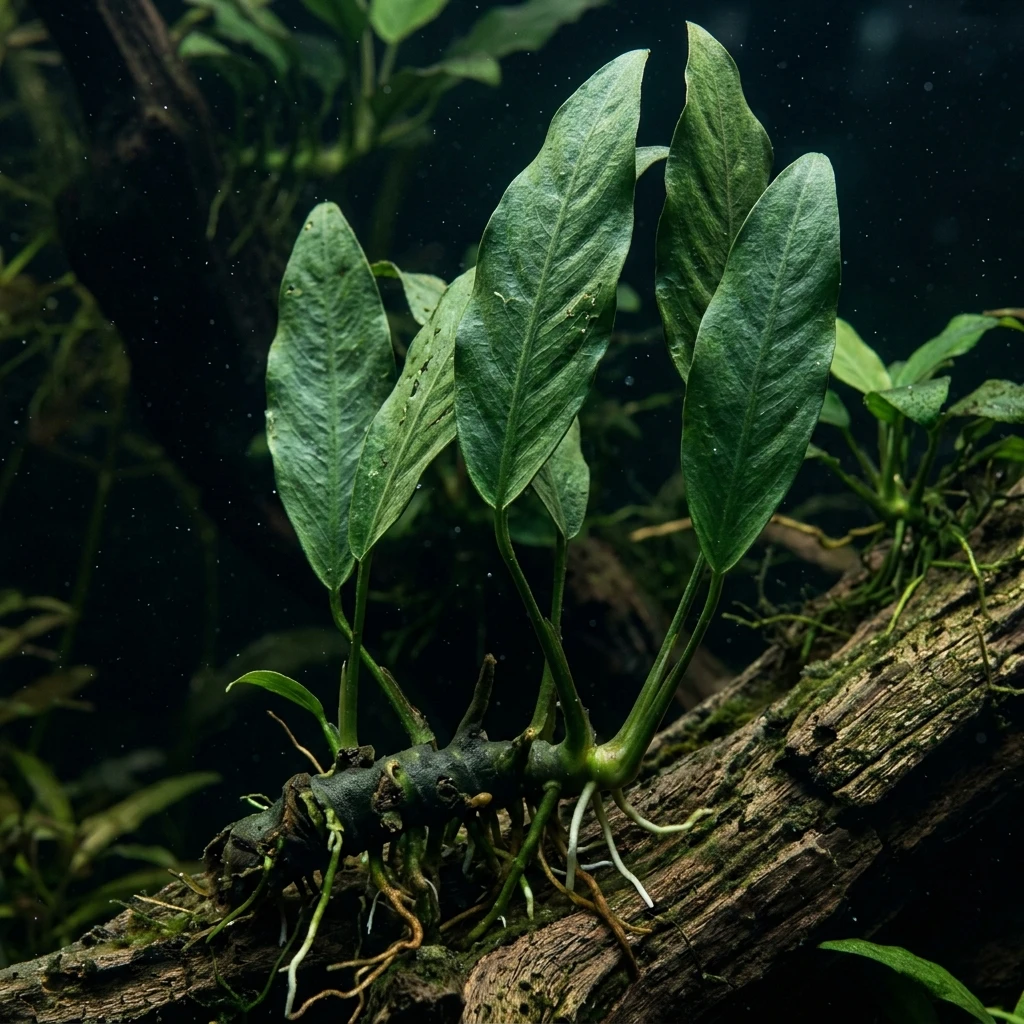
Anubias afzelii

Anubias Congensis Growing & Care Guide

Anubias Congensis, native to West Africa, is a majestic, vertical growing species of water rhizome plant. Celebrated for its slender, spear-like lanceolate leaves, it grows considerably taller than other Anubias varieties, serving as a premier midground or background anchor in large aquariums, prized for its extreme durability and cichlid-proof foliage.


Lighting Icon
Lighting Low to Moderate
Watering Icon
Water Parameter Aquatic (pH 6.0-7.8)
Substrate Icon
Substrate Epiphytic (Driftwood / Rock)
Temperature Icon
Water Temp 20°C - 28°C
Toxicity Warning Icon
Toxicity Pet Friendly (Non-toxic)
Botanical macro photography of Anubias Congensis (Anubias afzelii) - Plant AI care database

How to Identify Anubias Congensis

Anubias Congensis (Anubias afzelii) has key botanical markers. Recognizing these features is crucial for successful aquascaping and thriving growth.

  • Visual Shape & Growth: Stately upright vertical clumps of very hard, spear-shaped elongated dark-green leaves.
  • Leaf Morphology: Slender lanceolate (spear-like) thick green leaves (up to 8-12 inches tall) with smooth edges.
  • Root & Anchoring Structure: Thick creeping horizontal rhizome producing strong anchor roots that bind to rocks or wood.
💡 Plant AI Tip: Take a photo with Plant AI to identify aquatic weeds and diagnose fungal spot diseases in 1 second.

Complete Cultivation & Spawning Guide

Follow our detailed scientific water parameters and care guides to keep your Anubias Congensis thriving.

pH: 6.0 - 7.8, GH: 3 - 18 dGH. Highly adaptable to both soft and hard water setups.
Low. Grows perfectly without pressurized CO2, though supplemental carbon enhances leaf thickness and size.
Low to moderate lighting. High intensity light will coat its slow-growing leaves with green spot algae.
Cut off old, yellowing, or algae-covered leaves at the base of the rhizome using sterilized scissors.
An water-column feeder. Relies heavily on comprehensive liquid fertilizers; substrate feeding is not needed.
Do not bury the horizontal rhizome! Tie or glue the roots onto driftwood or rocks. Submerging the rhizome will rot the plant.
Optimal temperature is 20°C to 28°C (68°F - 82.4°F). Highly sensitive to cold winter shocks below 15°C.
Requires steady water circulation. Good current prevents organic waste and algae spores from landing on broad leaves.
Its tough, fibrous texture makes it virtually indestructible. Safest choice for aggressive Cichlids or Goldfish tanks.
Slow growth makes it prime target for Black Brush Algae. Keep phosphates low, and employ Siamese Algae Eaters.
Best placed in the midground or background. Secure onto tall driftwood structures or back-wall lava rock stacks.

Are your Anubias Congensis leaves yellowing or is the creeping root rotting?

Ensure the green rhizome is not buried in gravel, increase liquid fertilizer, and prune dead foliage.

Diagnose My Aquatics

Common Diseases & Treatment

Anubias Rot (Bacterial)

Symptoms: Creeping rhizome turns soft, mushy, and smelly, with leaves falling off completely.

Action: Caused by burying the rhizome in gravel or low water flow. Cut off rotted tissue and disinfect remaining rhizome in a clean water container.

Iron Deficiency (Chlorosis)

Symptoms: Mature spear leaves lose their deep green color, turning pale lime-green or yellow.

Action: Dose a comprehensive liquid micro-nutrient fertilizer containing chelated iron weekly.

Frequently Asked Questions

How tall does Anubias Congensis grow?

It is one of the tallest Anubias species, easily reaching 8 to 12 inches under stable conditions, making it excellent for background placement.

Can I plant it in the sand?

Only if you bury the roots while keeping the creeping green horizontal rhizome completely exposed above the sand. Tieing it to wood is much safer.

Why are the leaf tips turning yellow?

Yellow leaf tips usually indicate nutrient deficiencies (lack of potassium or nitrogen) or excessive light exposure. Dose liquid fertilizers.

Can it grow in dry soil?

No. It is an obligate wetland plant. Roots must remain constantly wet or submerged to survive.

Master advanced aquascaping. Start today!

Get Started for Free